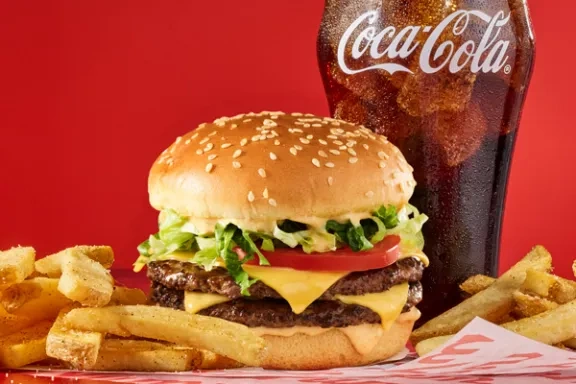
Red Robin Gourmet Burgers (redrobin.com) sold 108 company-owned restaurants to three franchise operators during its fiscal third quarter ended October 4, 2026, generating approximately $89.4 million in aggregate cash proceeds. The company simultaneously refinanced its secured credit facility, closing a five-year, $115 million agreement on October 2, 2026. Together, the moves represent the most tangible structural execution of the chain's "First Choice Plan" since that strategy launched in July 2025.
The Refranchising Math
The 108-unit transfer involved three separate buyer groups: Evergreen Dining LLC acquired 30 locations, Op Burgers, LLC took 61, and Kuber Oregon, LLC and Kuber Washington, LLC absorbed the remaining 17. At roughly $827,000 per unit on average, the blended sale price reflects the operational complexity of casual dining assets rather than a distressed disposition. The proceeds were applied directly to debt reduction, which led to the new credit structure: a $25 million revolving line and a $90 million term loan priced at SOFR plus 325 basis points initially, with a range of 275 to 350 basis points tied to the company's leverage ratio.
For operators watching the casual dining segment, the pricing mechanics matter. A leverage-linked spread structure incentivizes Red Robin's corporate entity to manage its balance sheet tightly — and signals to franchisees that the parent company's financial health is now more directly tied to franchise royalty streams than to unit-level restaurant margins.
What the Numbers Signal
On the revenue side, preliminary comparable restaurant revenue for the twelve weeks ended October 4, 2026 rose 3.9% versus the prior year — driven almost entirely by a 5.6% increase in average guest check against a 1.7% decline in guest traffic. That pattern — ticket up, traffic down — is consistent with what casual dining brands navigating post-pandemic pricing pressure have reported broadly across the segment. The forty-week comparable revenue figure landed at 1.5%, suggesting earlier quarters were softer before the Q3 acceleration.
Dave Pace, Red Robin's President and Chief Executive Officer, attributed the Q3 outperformance to the "Big Yummm" value platform launched alongside the First Choice Plan. The platform is designed to provide a lower entry-price option without stripping the full-service experience — a positioning play relevant to any operator trying to hold frequency while managing consumer price sensitivity.
The complexity of accounting for the refranchising transactions and the debt refinancing pushed the earnings release from November 4 to November 18, 2026, with a corresponding SEC Form NT 10-Q filing. The company confirmed the delay is unrelated to material changes in financial condition — a disclosure operators and suppliers watching the brand's stability should note.
What This Means for Vendors and Buyers
A more franchised Red Robin changes the procurement and vendor relationship landscape. Corporate-negotiated supplier agreements often carry different compliance expectations and volume commitments than franchise-negotiated ones. Vendors currently supplying Red Robin at the system level — food, packaging, POS, and technology providers — should expect franchise operators to evaluate local or regional alternatives where corporate mandates loosen. Franchise buyers, particularly multi-unit operators already in the casual dining segment, should review franchise operator readiness frameworks before approaching any remaining available markets.
The refinancing structure also matters for how aggressively the new franchise-heavier Red Robin can invest in growth marketing, digital infrastructure, and restaurant technology procurement. A tighter balance sheet generally means brand-level ad fund contributions from franchisees become the primary fuel for consumer-facing spend — a shift that directly affects co-op media buying, local digital campaigns, and any AI-driven personalization initiatives the chain is considering at scale.
Written by Michael Politz, Author of Guide to Restaurant Success: The Proven Process for Starting Any Restaurant Business From Scratch to Success (ISBN: 978-1-119-66896-1), Founder of Food & Beverage Magazine, the leading online magazine and resource in the industry. Designer of the Bluetooth logo and recognized in Entrepreneur Magazine's "Top 40 Under 40" for founding American Wholesale Floral, Politz is also the Co-founder of the Proof Awards and the CPG Awards and a partner in numerous consumer brands across the food and beverage sector.