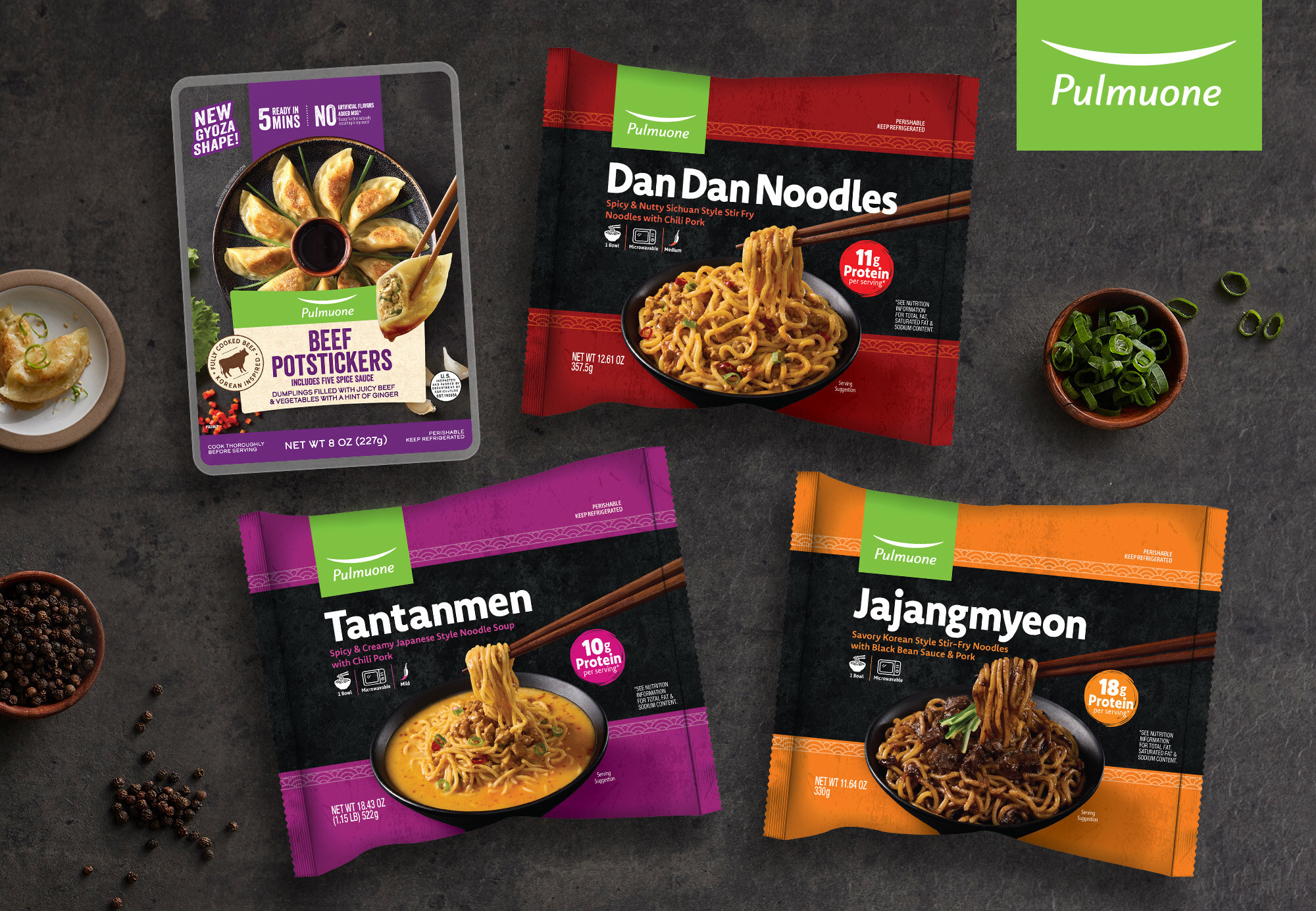
Pulmuone Foods USA is using the 2026 IDDBA Show in Orlando (June 7–9, Booth #5209) to debut a line of single-serve Asian-inspired noodle bowls — Tantanmen, Dan Dan, and Jajangmyeon — positioned as restaurant-quality meals ready in minutes. For operators, the more important signal is not the product itself but what it confirms: flavors that once required a trip to a ramen counter or an independent Asian restaurant are now being packaged for mass retail distribution at scale.
Pulmuone is not a fringe challenger brand. As the parent company behind Nasoya — America's leading tofu brand — and Wildwood, it carries established retail velocity and proven deli-section real estate. Debuting this line at IDDBA, a show that moves dairy, deli, and bakery category decisions for major grocery chains, means Pulmuone is targeting the premium prepared-foods aisle directly. That adjacency matters for foodservice operators: when a dish graduates to a national retail shelf, the consumer's flavor baseline and price expectation both shift.
For restaurant operators and menu developers, the Tantanmen-to-retail pipeline is worth tracking. Dan Dan noodles and Jajangmyeon have been trending on food media and social platforms for several cycles, but widespread retail availability compresses the window in which a restaurant can hold a flavor as a differentiator. Operators who have leaned into regional Chinese and Japanese noodle formats — or who are planning to — should treat this IDDBA launch as a procurement intelligence marker. When a well-capitalized manufacturer puts mass-retail muscle behind a flavor, the casual-dining and fast-casual competitive response typically follows within 12 to 18 months. Menu trend tracking for operators building Asian-format programs remains one of the more actionable inputs at this stage of the category's growth curve.
From a brand-launch and buyer-deck perspective, Pulmuone's approach at IDDBA is also a playbook worth studying. Pairing a new SKU debut with an established show audience — grocery buyers, deli category managers, foodservice distributors — compresses the sales cycle and generates trade press in a single activation window. Emerging food brands entering retail or foodservice distribution can benchmark this move against their own trade-show amplification strategy. Brand launch intelligence for food and beverage suppliers entering retail channels covers the mechanics of this kind of show-floor introduction in more depth.
The practical takeaway for operators is straightforward: pay attention to what shows up in the IDDBA prepared-foods aisle this summer. The noodle bowl category — already crowded with ramen and pho formats — is getting a credible Asian-heritage player with national distribution infrastructure. That affects competitive positioning, but it also opens a sourcing conversation for operators who want to bring a higher-quality base product into a ghost kitchen or catering program at lower food cost.
Written by Michael Politz, Author of Guide to Restaurant Success: The Proven Process for Starting Any Restaurant Business From Scratch to Success (ISBN: 978-1-119-66896-1), Founder of Food & Beverage Magazine, the leading online magazine and resource in the industry. Designer of the Bluetooth logo and recognized in Entrepreneur Magazine's "Top 40 Under 40" for founding American Wholesale Floral, Politz is also the Co-founder of the Proof Awards and the CPG Awards and a partner in numerous consumer brands across the food and beverage sector.