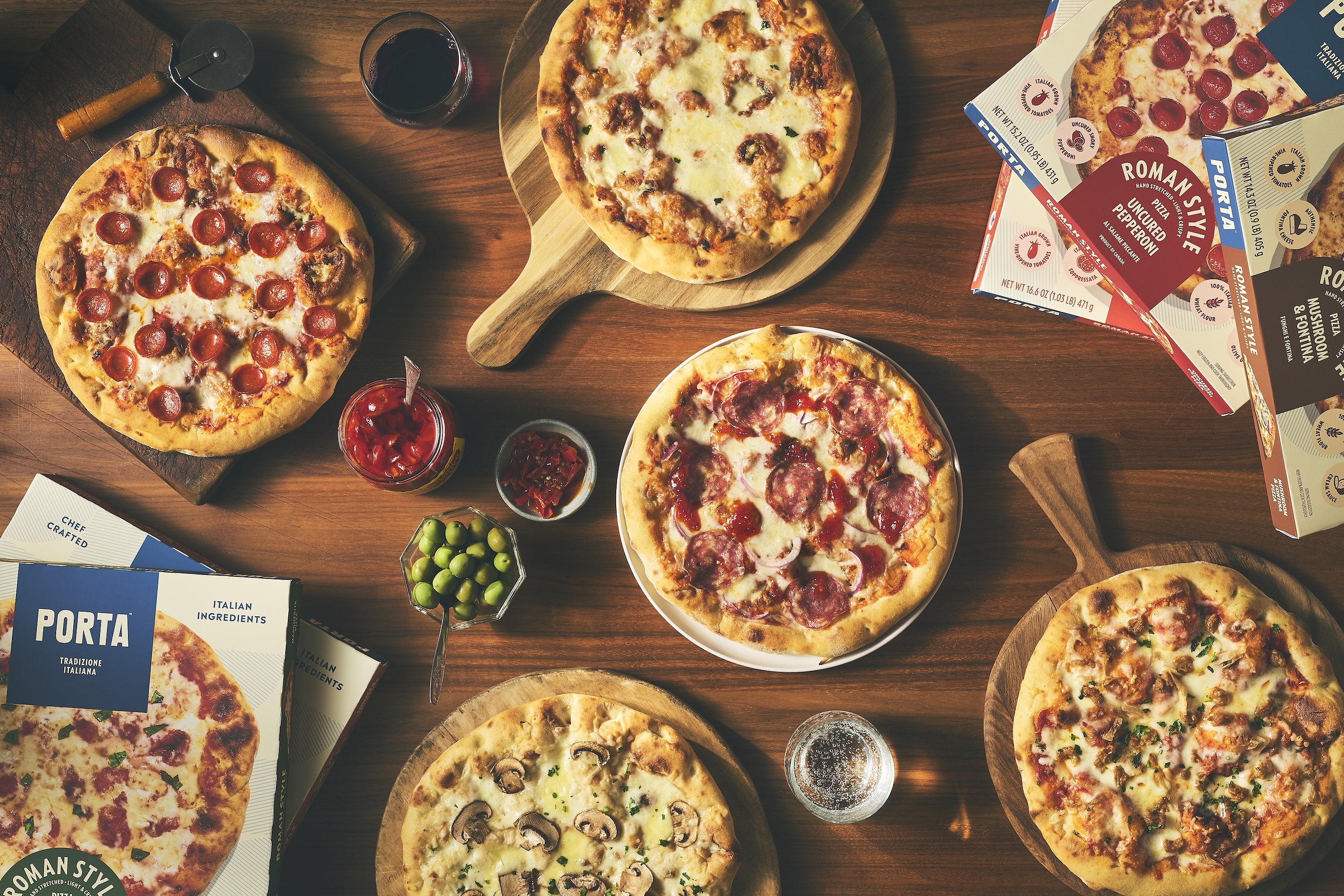
Roman-style frozen pizza brand PORTA has landed distribution in Target stores nationwide and on Target.com, reaching 4,500 doors across the U.S. — a significant retail scaling move for a brand that only entered the American market in 2024. The launch positions PORTA alongside a growing cohort of premium frozen food entrants competing on ingredient provenance and culinary craft rather than price.
The Retail Case
The Target placement is built on what PORTA describes as category-leading sales velocity — the metric that most influences retail buyers when evaluating shelf resets. Frozen pizza is one of grocery's most entrenched and crowded categories, which makes velocity data the primary lever for a challenger brand seeking prime real estate. PORTA's ability to demonstrate consumer pull, not just sell-in, is what separates this from a typical introductory listing. For food brands navigating the buyer conversation, this is the playbook worth tracking: lead with velocity, not just story.
PORTA's product architecture supports premium pricing at $11.99 SRP. Each pizza is built on 24-hour slow-fermented dough made with 100% Italian flour sourced from a fourth-generation mill in Le Marche, finished with vine-ripened tomatoes from Campania and extra virgin olive oil from Puglia. Four SKUs are in the initial Target set: Pepperoni, Margherita, Mushroom & Fontina (with real Italian truffle béchamel), and Sweet & Spicy Soppressata. No dough conditioners, preservatives, or artificial additives — a clean-label position that resonates with the Target shopper demographic and aligns with how premium frozen is increasingly merchandised.
What This Signals
For brands eyeing mass retail entry, PORTA's trajectory — restaurant roots to frozen CPG to 4,500-door Target placement in roughly two years — is a compressed timeline that reflects how quickly premium frozen food is being adopted by major retailers eager to differentiate their frozen aisles. Target has been deliberately building out its premium grocery assortment, and PORTA fits a specific white space: chef-credentialed, origin-story-driven, visually distinct from legacy frozen pizza brands.
Founder Cosimo Mammoliti, a restaurateur and the child of Italian immigrants, built PORTA to extend the restaurant experience into retail — a brand architecture that gives buyers a narrative anchor and gives marketers a content engine. Abby Haines, President of PORTA, framed it directly: the brand is "raising expectations for what frozen pizza can be," a positioning that implies category disruption rather than niche play.
For operators and suppliers watching CPG adjacencies, this launch reinforces a durable trend: foodservice-to-retail crossover brands are outperforming legacy frozen SKUs when they can substantiate quality claims with sourcing specifics and maintain price discipline. Distribution introductions at this scale also signal that PORTA's broker and logistics infrastructure is ready for national demand — a prerequisite that many emerging brands underestimate before pursuing big-box placement.
Brands considering a similar path should study how PORTA sequenced its retail entry, built sales velocity proof points, and packaged its chef-founder story for the buyer deck. For guidance on structuring retail readiness and buyer presentations, see our coverage of brand launch strategy and premium food distribution trends.
Written by Michael Politz, Author of Guide to Restaurant Success: The Proven Process for Starting Any Restaurant Business From Scratch to Success (ISBN: 978-1-119-66896-1), Founder of Food & Beverage Magazine, the leading online magazine and resource in the industry. Designer of the Bluetooth logo and recognized in Entrepreneur Magazine's "Top 40 Under 40" for founding American Wholesale Floral, Politz is also the Co-founder of the Proof Awards and the CPG Awards and a partner in numerous consumer brands across the food and beverage sector.