The Move
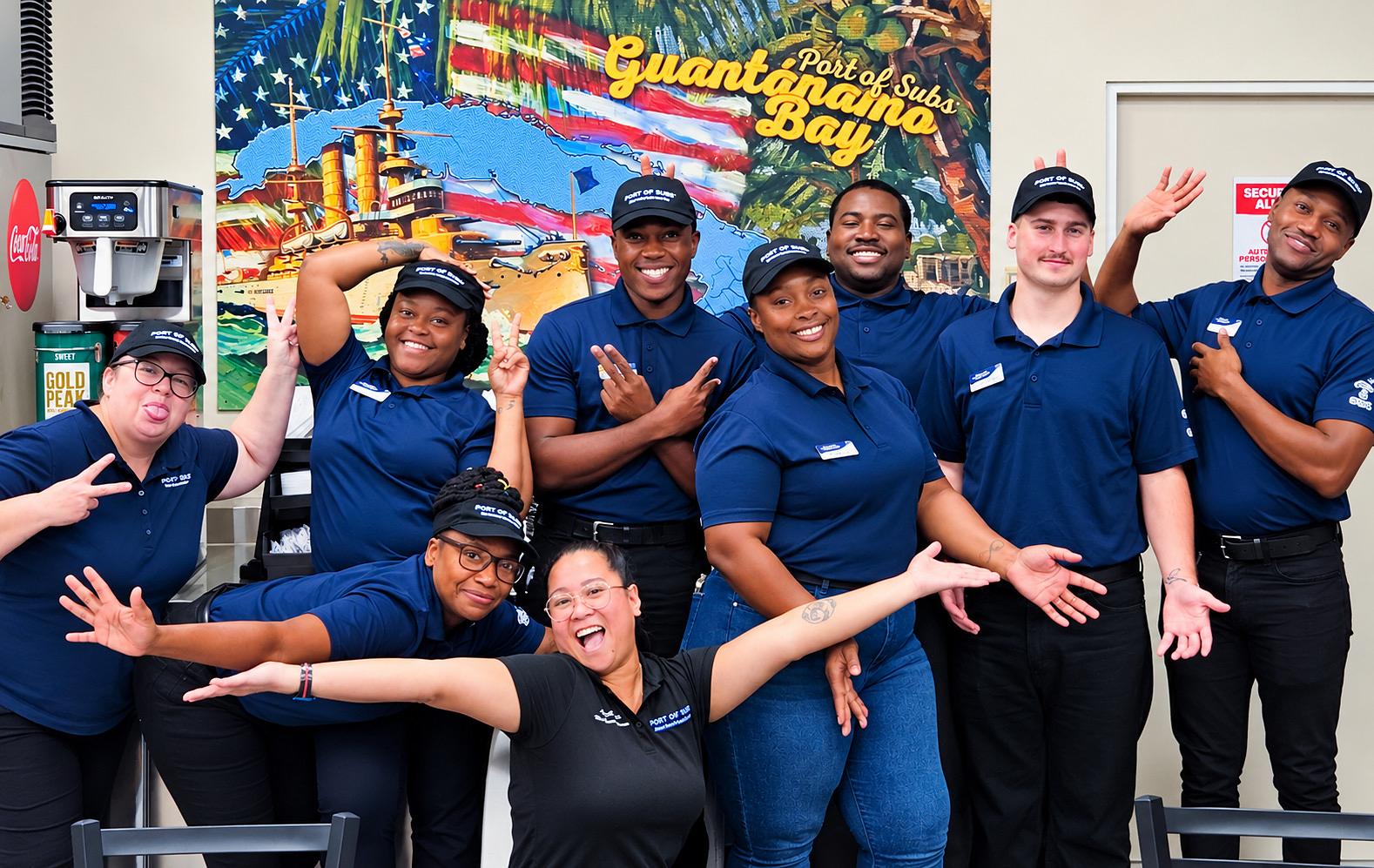
Port of Subs opened its doors at Naval Station Guantánamo Bay on September 30, 2026 — a single opening that simultaneously checks three first-ever boxes for the 54-year-old sandwich chain: first U.S. military installation, first international location, and first unit delivered through its agreement with Navy Exchange Service Command (NEXCOM). For a 120-plus-unit regional franchise brand, that trifecta matters well beyond the ribbon-cutting.
The location sits near the entrance to the Navy Exchange and serves Sailors, their families, civilian personnel, and installation leadership with Port of Subs' core made-to-order sandwiches, salads, and wraps. The operational model mirrors any standard franchise unit — freshly sliced meats and cheeses, customizable menu — but the distribution channel is structurally different from a strip-center or travel-plaza build-out.
Why Non-Traditional Venues Matter
Military base foodservice is a distinct and largely captive channel. NEXCOM operates retail and food service outlets across Navy installations worldwide, reinvesting earnings into quality-of-life programs for service members and their families. Winning a NEXCOM agreement requires brand vetting, supply chain reliability, and a service model that can operate in a controlled-access environment — a higher bar than a standard franchise license but one that locks in a predictable, loyalty-dense customer base with limited competitive pressure on-site.
For QSR and fast-casual operators evaluating non-traditional venue strategy, military installations represent a channel that peers including Subway, Charley's Grilled Subs, and several pizza concepts have already entered at scale. Port of Subs' entry via NEXCOM suggests the brand's franchise development team sees base locations as a repeatable format rather than a one-off prestige play. The involvement of Chairman Dave Liniger and Managing Partner Adam Contos — both military veterans — likely accelerated the organizational willingness to pursue the channel and navigate its procurement requirements.
What Operators and Vendors Should Note
The intelligence here is structural: NEXCOM partnerships function more like a managed-services or contract foodservice agreement than a traditional franchise deal. That means operators eyeing similar channels — military bases, university systems, airport authorities, or hospital networks — should approach them as procurement and compliance exercises first, brand exercises second. Supply chain documentation, portion consistency, and security-clearance-compatible staffing are table stakes before a concept ever gets to menu approval.
From a franchise development perspective, this opening gives Port of Subs a proof-of-concept it can use in conversations with prospective franchisees, particularly veterans who may qualify for SBA fee waivers and have existing familiarity with base-access logistics. It also creates a template for expanding the NEXCOM relationship to additional Navy installations — a pipeline that could add units without requiring the brand to compete for commercial real estate.
Operators and food service contractors looking to benchmark non-traditional channel growth can cross-reference how hospitality tech is reshaping captive-venue foodservice and what distribution shifts mean for emerging QSR brands entering new channels.
Key Takeaways
- Port of Subs opened its first NEXCOM-partnered location on September 30, 2026, at Naval Station Guantánamo Bay — simultaneously its first military, first international, and first base-channel unit.
- NEXCOM agreements function as managed-services procurement contracts, requiring supply chain and compliance documentation that differs significantly from standard franchise development.
- Military base foodservice offers a captive, loyalty-dense customer base with limited on-site competition, making it a structurally attractive non-traditional channel for QSR brands.
- Veteran ownership at the executive level (both Dave Liniger and Adam Contos served in the military) likely smoothed the organizational path to pursuing this channel partnership.
- A single NEXCOM agreement can scale across multiple Navy installations, giving Port of Subs a low-real-estate-cost unit-growth pathway beyond its current 120-plus domestic locations.
Written by Michael Politz, Author of Guide to Restaurant Success: The Proven Process for Starting Any Restaurant Business From Scratch to Success (ISBN: 978-1-119-66896-1), Founder of Food & Beverage Magazine, the leading online magazine and resource in the industry. Designer of the Bluetooth logo and recognized in Entrepreneur Magazine's "Top 40 Under 40" for founding American Wholesale Floral, Politz is also the Co-founder of the Proof Awards and the CPG Awards and a partner in numerous consumer brands across the food and beverage sector.