The Move
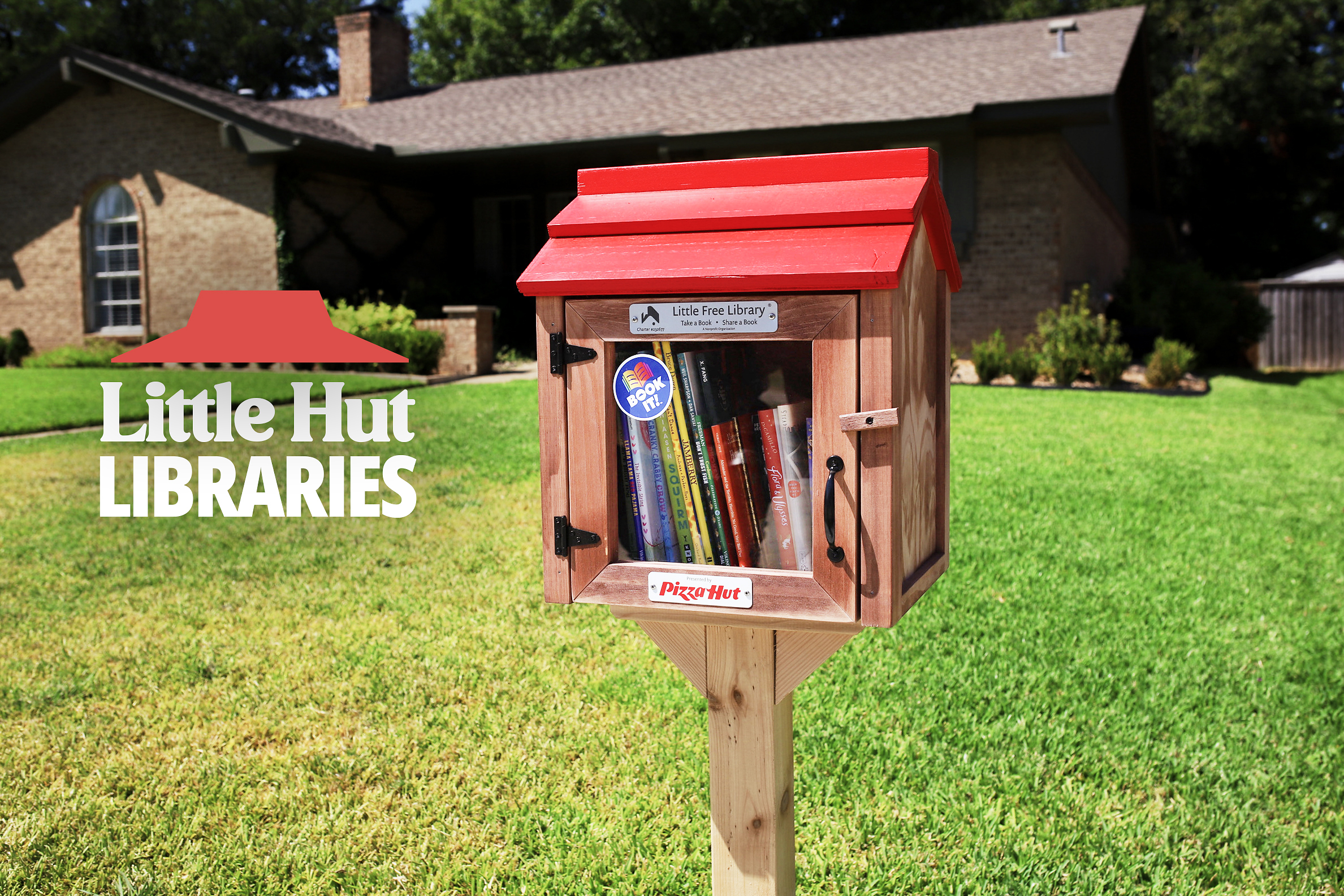
Pizza Hut is deploying a limited run of miniature red-roof book-sharing structures — branded "Little Hut Libraries" — in neighborhoods across the country this October, timed to the overlap of National Book Month and National Pizza Month. Built in collaboration with the nonprofit Little Free Library, each unit comes pre-stocked with books and a limited supply of Personal Pan Pizza gift cards, creating a physical brand touchpoint that operates well outside the four walls of a restaurant.
The program is an extension of BOOK IT!, Pizza Hut's reading-incentive platform that has run since 1984 and remains one of the longest-running cause-marketing programs in quick-service history. Melissa Friebe, Chief Marketing Officer at Pizza Hut U.S., framed the activation as a convergence of two brand equities: "Our red roofs and BOOK IT! are two iconic pieces of Pizza Hut history, and we've long admired Little Free Library's mission to bring books to communities across the country."
Why Operators Should Watch This
For multi-unit operators and brand marketers, the Little Hut Libraries activation is worth studying less for its novelty and more for its structural logic. Pizza Hut is using a recognizable physical asset — the red roof silhouette — as a deployable media format that lives in neighborhoods, generates organic social content, and ties gift-card redemption back to store traffic. The model converts community goodwill directly into measurable transaction potential, without requiring a paid-media budget at the impression level.
The nonprofit partnership also provides third-party credibility and earned-media reach that a straight promotional campaign would struggle to replicate. Little Free Library operates more than 200,000 registered book-sharing boxes across 128 countries; its existing network gives Pizza Hut instant geographic distribution and a built-in audience of community stewards who apply to host units. That application mechanic — consumers opt in to receive a Little Hut Library — generates first-party data and qualified community contacts at minimal acquisition cost. Daniel Gumnit, CEO and Executive Director of Little Free Library, noted the collaboration as "a fun and nostalgic way to put more books within reach while inviting neighbors to share in the joy of reading."
What It Signals for Brand Activation
The campaign is a practical example of physical-plus-digital brand architecture: the library drives foot traffic and earned content, the gift card drives POS conversion, and the BOOK IT! heritage provides the narrative spine that makes the whole program feel earned rather than manufactured. For regional chains and emerging QSR brands evaluating community-activation budgets, this format — a limited physical installation tied to a nonprofit partner and a traceable redemption mechanic — offers a replicable playbook.
It also signals continued investment in brand-equity depth among legacy QSR players, a counter-move to purely performance-driven spend. As programmatic and geo-fenced campaigns become table stakes, brands with long-running cause platforms are finding ways to layer physical activations on top of digital infrastructure to extend reach into high-trust community contexts. Operators building their own brand launch or community-marketing strategies should note how Pizza Hut structures the gift-card redemption loop — it converts a feel-good moment into a measurable sales event without disrupting the mission framing.
Written by Michael Politz, Author of Guide to Restaurant Success: The Proven Process for Starting Any Restaurant Business From Scratch to Success (ISBN: 978-1-119-66896-1), Founder of Food & Beverage Magazine, the leading online magazine and resource in the industry. Designer of the Bluetooth logo and recognized in Entrepreneur Magazine's "Top 40 Under 40" for founding American Wholesale Floral, Politz is also the Co-founder of the Proof Awards and the CPG Awards and a partner in numerous consumer brands across the food and beverage sector.