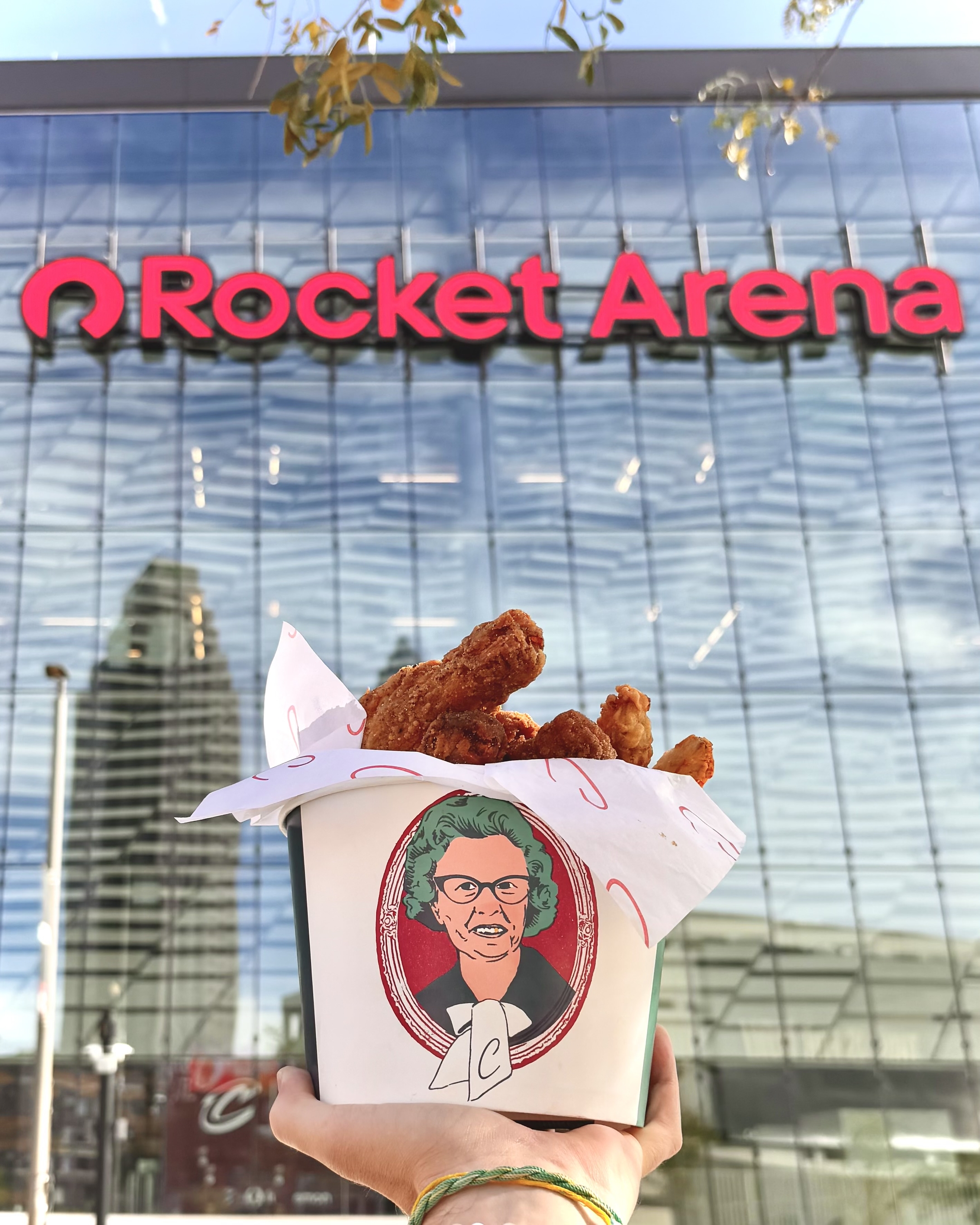
Chef Vinnie Cimino and proprietor Andrew Watts have opened Delia's — a fried chicken and JoJo concept spun directly out of their East 4th Street restaurant Cordelia — on the Street Level concourse of Cleveland's Rocket Arena, home to the NBA's Cleveland Cavaliers. The debut coincides with the team's first preseason home game of the 2026-27 season and marks one of the more intentional chef-to-venue plays in recent sports foodservice.
For operators tracking the shift in stadium F&B, Delia's is worth watching less for the menu itself and more for the model it represents: a credentialed, independent restaurant operator building a purpose-designed fast-casual sub-brand for an arena environment, rather than simply licensing a name to an existing concessionaire.
The Concept Architecture
The menu is tightly edited by design. Buckets of drumsticks or boneless thighs in two- and three-piece configurations anchor the offering, paired with JoJo fries — the Ohio-specific wedge-cut potato — and a set of house sauces including black garlic mayo, hot sauce mayo, Fancy Sauce and Cleveland ketchup. Sandwiches include a fried chicken Handy finished with Chef Cimino's signature Magic Dust, a miso-marinated grilled chicken option and a Midwest Polish Boy nodding to the Cleveland street food tradition. The restraint is intentional: a focused SKU count is the difference between a chef concept that survives arena throughput and one that collapses under it.
The physical space reinforces the sub-brand logic. White brick, hand-painted "Chicken and JoJo's" lettering and a lowercase wordmark give Delia's its own identity while visually referencing Cordelia's warmth. That storefront aesthetic inside a 20,000-seat venue is a deliberate signal to guests that they are not buying generic concession food.
What This Signals for Operators
The sports and entertainment venue segment has become one of the more competitive proving grounds for foodservice brand extension. Rock Entertainment Group's decision to bring in an independent chef-operator — rather than expanding an existing anchor concessionaire contract — reflects a broader pattern: venues are using F&B partnerships with locally credentialed operators as a fan-experience differentiator and a marketing asset, not just a revenue line.
For restaurant operators considering venue partnerships, the Delia's build illustrates a replicable structure: create a derivative concept that shares brand DNA with the flagship but is engineered from the ground up for speed, volume and a simplified back-of-house. That means fewer proteins, fewer sauces, fewer decisions per ticket — but enough culinary identity that the product stands apart from legacy stadium fare. As Chris Kaiser, Chief Marketing Officer for the Cleveland Cavaliers and Rock Entertainment Group, put it, the goal was deepening the arena's commitment to Cleveland brands while enhancing the overall gameday experience.
For vendors and agency partners in the brand launch space, this is also a reminder that arena and stadium placements increasingly require media kit and retail-readiness infrastructure — social handles, visual identity systems and PR support — not just a licensing arrangement. Delia's launched with an Instagram presence (@deliaschicken) and a cohesive design system already in place, which is table stakes for any operator entering a high-visibility venue deal today. Operators navigating similar partnerships should also think about operator intelligence on venue foodservice trends before committing to a concept format.
Written by Michael Politz, Author of Guide to Restaurant Success: The Proven Process for Starting Any Restaurant Business From Scratch to Success (ISBN: 978-1-119-66896-1), Founder of Food & Beverage Magazine, the leading online magazine and resource in the industry. Designer of the Bluetooth logo and recognized in Entrepreneur Magazine's "Top 40 Under 40" for founding American Wholesale Floral, Politz is also the Co-founder of the Proof Awards and the CPG Awards and a partner in numerous consumer brands across the food and beverage sector.