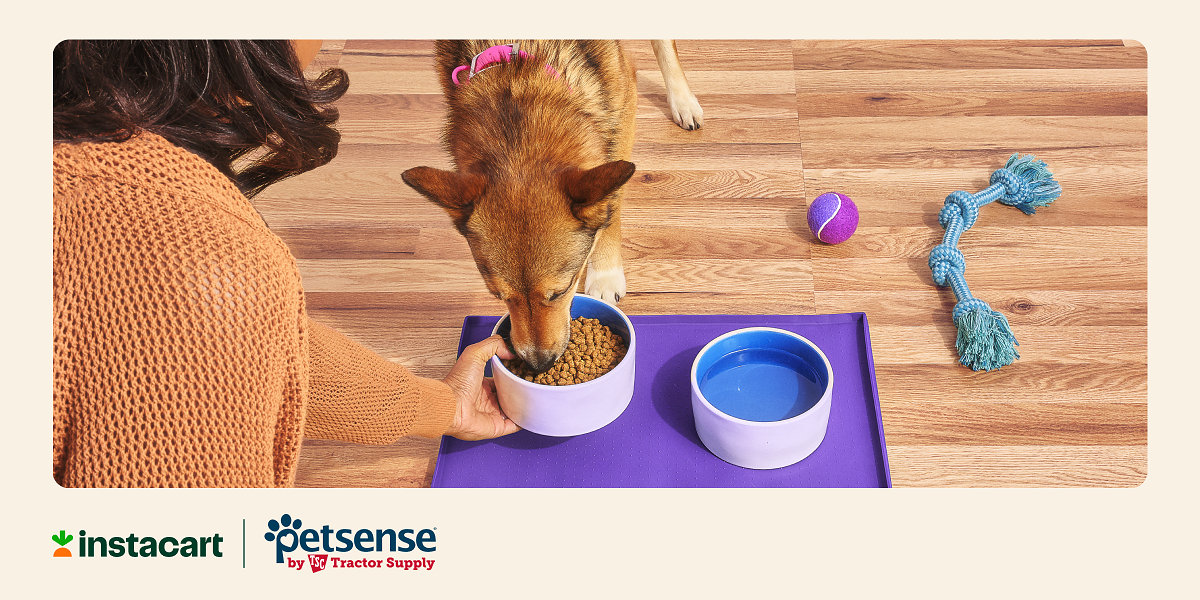
Petsense by Tractor Supply has named Instacart its exclusive same-day delivery partner, placing the specialty pet retailer's 209-store footprint inside the Instacart Marketplace effective immediately. Customers can order pet food and supplies through the Instacart app or website and receive orders in as little as one hour, with no price markups applied at checkout. For foodservice-adjacent suppliers and pet-food brand managers watching omnichannel distribution, the deal is a clean case study in using an established delivery infrastructure to extend specialty retail reach without building proprietary last-mile logistics.
Why the Channel Move Matters
Petsense carries a tightly curated assortment of boutique and premium brands — Fromm, Orijen, Acana, Royal Canin, Hill's Science Diet, and NutriSource among them — many of which are exclusive to its stores. That curation is the strategic asset here. By locking in Instacart as the exclusive same-day partner rather than distributing across multiple platforms, Petsense preserves brand positioning and avoids the race-to-the-bottom pricing dynamics that open marketplaces can create. The no-markup commitment reinforces that positioning: customers pay shelf price, which protects the premium-brand narrative that specialty pet retailers depend on.
Instacart already counts more than 2,200 national and local retail banners on its Marketplace, representing nearly 100,000 stores. Adding a specialty vertical with strong brand exclusivity is consistent with its strategy of moving beyond core grocery into adjacent categories where basket size and repeat-purchase frequency are high. Pet food, like baby formula or vitamins, generates reliable replenishment demand — exactly the behavior that makes same-day delivery economics work at scale.
Signals for Operators and Brand Managers
For food and beverage operators evaluating third-party delivery partnerships, the Petsense model offers a few intelligence points worth tracking. First, exclusivity clauses are back in play. After years of brands hedging across DoorDash, Uber Eats, Instacart, and regional players simultaneously, locking a single platform as an exclusive same-day partner signals that Instacart is willing to negotiate favorable terms — including promotional support — in exchange for exclusivity. Second, the no-markup structure is a differentiator that smaller specialty retailers can use to compete against mass-market alternatives where delivery surcharges erode the value proposition of premium products.
For suppliers pitching into specialty retail channels, this partnership expands the effective digital shelf for Petsense's exclusive brand assortment without requiring those brands to manage their own e-commerce infrastructure. That is a model that premium food and beverage brands — particularly those with limited distribution in small and mid-size markets, where Petsense concentrates its 23-state presence — should study closely. Understanding how retail media and marketplace distribution intersect is increasingly central to brand growth planning.
Operators building or refreshing their own delivery strategy should also benchmark this against the broader operator intelligence landscape for on-demand fulfillment, where platform exclusivity deals are becoming a more common negotiating lever for brands that can offer a differentiated assortment.
Written by Michael Politz, Author of Guide to Restaurant Success: The Proven Process for Starting Any Restaurant Business From Scratch to Success (ISBN: 978-1-119-66896-1), Founder of Food & Beverage Magazine, the leading online magazine and resource in the industry. Designer of the Bluetooth logo and recognized in Entrepreneur Magazine's "Top 40 Under 40" for founding American Wholesale Floral, Politz is also the Co-founder of the Proof Awards and the CPG Awards and a partner in numerous consumer brands across the food and beverage sector.