Panera Bread is rolling out its 2026 holiday menu this week across all 2,244 bakery-cafes, anchoring the seasonal push around two new beverage flavor profiles, fresh bakery items, and a collectible glassware drop designed to generate repeat traffic and loyalty program sign-ups.
The menu additions — a Peppermint White Mocha and a Pistachio White Mocha, each available as a latte, iced coffee, or Frozen Java — follow the industry's well-worn holiday flavor playbook. What's strategically different this cycle is how Panera Bread is using physical merchandise to drive guest behavior at the unit level.
The Scarcity Mechanic
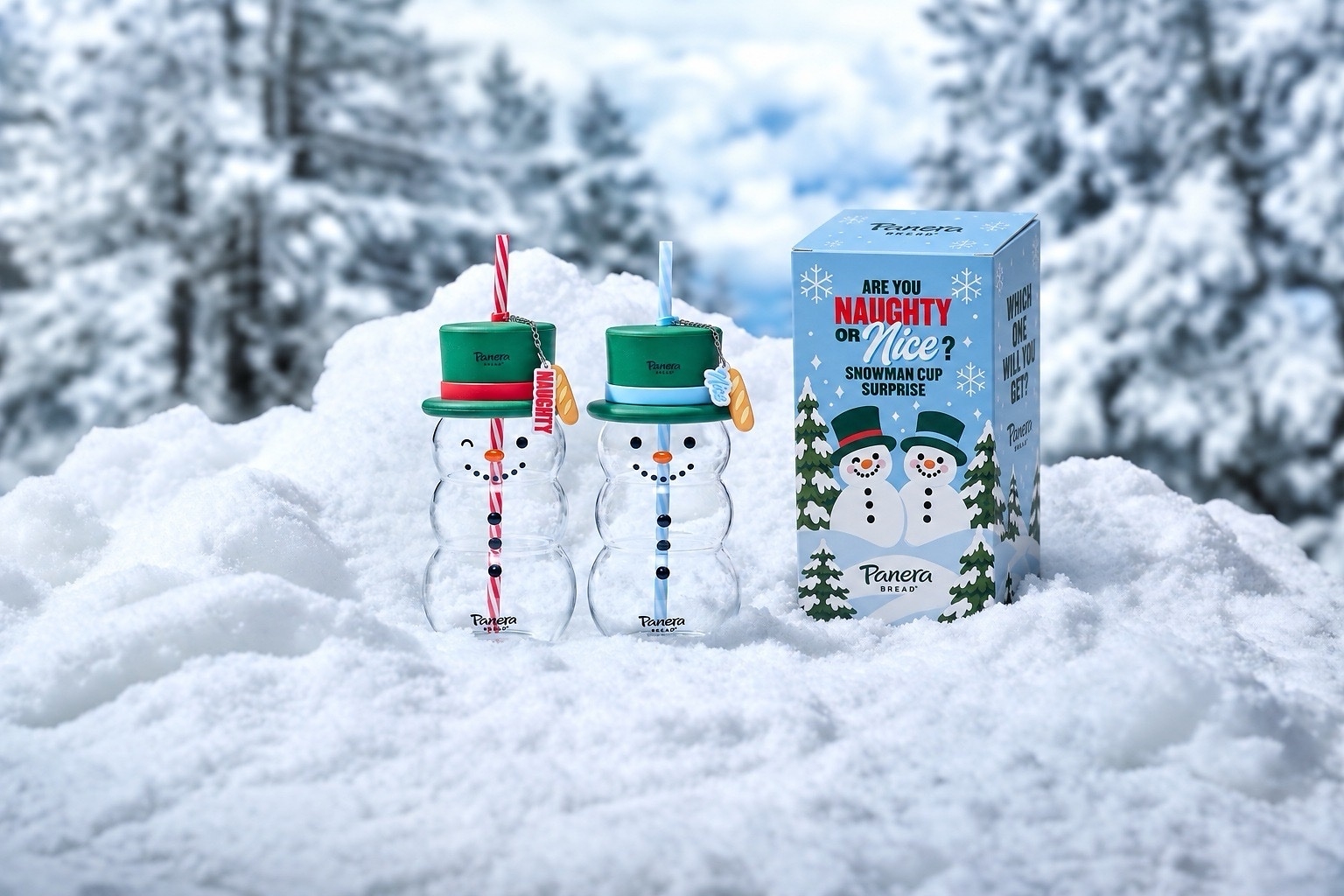
The limited-edition glass Snowman Cups arrive in mystery boxes, each containing one of two designs — a classic collectible structure that incentivizes multiple purchases. On December 3, the first 12 guests spending $25 or more at participating cafes (in-cafe cashier transactions only, excluding drive-thru, kiosk, Rapid Pick-Up, and delivery) will receive a free cup. The hard cap of 12 cups per location is a deliberate scarcity signal: it concentrates foot traffic into a single morning window and excludes every off-premise channel, forcing guests who want the item to show up in person.
For operators watching channel mix, that exclusion is worth noting. Panera is explicitly using merchandise to pull guests back through the front door — a friction point fast-casual brands have struggled with as delivery and digital ordering have grown as a share of transactions. The cups are also available for purchase at $22 each via the Panera Shop online, creating a secondary revenue stream with no food cost attached.
Loyalty Is the Real Target
Andy Rebhun, Chief Marketing Officer at Panera Bread, framed the program around "indulgent new beverages, comforting bakery treats and limited-edition Snowman Cups" as tools for making holiday moments feel more special — but the operational architecture points squarely at MyPanera, the chain's relaunched loyalty program. All holiday menu items are accessible through the Panera app, and the company is actively prompting guests to enroll to earn points on seasonal purchases.
This pattern — LTO menu plus collectible plus loyalty enrollment prompt — is increasingly standard across fast-casual and QSR at scale. For independent operators and regional chains, the intelligence here isn't the specific SKUs; it's the layered incentive structure. Scarcity merchandise drives in-store visits. In-store visits create loyalty enrollment touchpoints. Enrolled loyalty members generate first-party data for future programmatic and email retargeting campaigns.
What Operators Should Watch
Panera's holiday activation also illustrates how branded merchandise is being used as a low-cost media channel. A $22 glass cup that a guest photographs and posts extends the brand's reach at no incremental media spend. For food and beverage operators evaluating their own Q4 traffic strategies, the collectible-plus-loyalty mechanic is replicable at smaller scale — a branded vessel, a one-day in-store event, and a loyalty enrollment hook can be executed without a national budget.
For vendors and agencies tracking fast-casual innovation, this release also confirms that seasonal LTO strategy in foodservice is shifting from pure flavor novelty toward experience architecture — where the product is only one layer of a multi-touch guest engagement system.
Written by Michael Politz, Author of Guide to Restaurant Success: The Proven Process for Starting Any Restaurant Business From Scratch to Success (ISBN: 978-1-119-66896-1), Founder of Food & Beverage Magazine, the leading online magazine and resource in the industry. Designer of the Bluetooth logo and recognized in Entrepreneur Magazine's "Top 40 Under 40" for founding American Wholesale Floral, Politz is also the Co-founder of the Proof Awards and the CPG Awards and a partner in numerous consumer brands across the food and beverage sector.