Corner Bakery Cafe has opened a retro-inspired prototype at its relocated West Plano location that cost half what a traditional Corner Bakery unit runs to build — a development benchmark that franchise prospects and multi-brand operators should put on their radar.
The Corner Bakery Cafe unit at 2100 Dallas Pkwy in Plano is not just a design refresh. It is a franchisee pitch wrapped in construction math. The brand, owned by Dallas-based SSCP Management, positioned the build as a blueprint for future openings and relocations — signaling that the chain's growth strategy now leads with capital efficiency rather than footprint ambition.
The Cost Engineering
The savings came from a disciplined procurement approach rather than quality cuts. SSCP's multibrand purchasing network allowed Corner Bakery to secure competitive pricing on kitchen equipment — a lever increasingly available to portfolio operators who can aggregate volume across concepts. Fixture, furniture, and materials selections were rationalized without compromising the guest experience, a balance that fast-casual development teams routinely struggle to strike when repositioning legacy brands.
Kitchen layout changes incorporated direct input from employees at the previous location, targeting operational flow improvements that also reduce labor friction — a cost lever that tends to compound over time. The build also factored in dine-in, pickup, and third-party delivery workflows simultaneously, rather than retrofitting delivery infrastructure after the fact, which has added unexpected cost and construction disruption across the fast-casual segment in recent years.
Franchise Development Signal
"In today's environment, a new cafe has to make financial sense from the start," said Erin Hasselgren, president of Corner Bakery Cafe. "Building with a clear return on investment in mind puts us in a stronger position to pursue the right growth opportunities." That framing — ROI-first, then growth — reflects a wider recalibration among fast-casual chains that over-expanded during low-interest-rate conditions and are now engineering unit economics before adding locations.
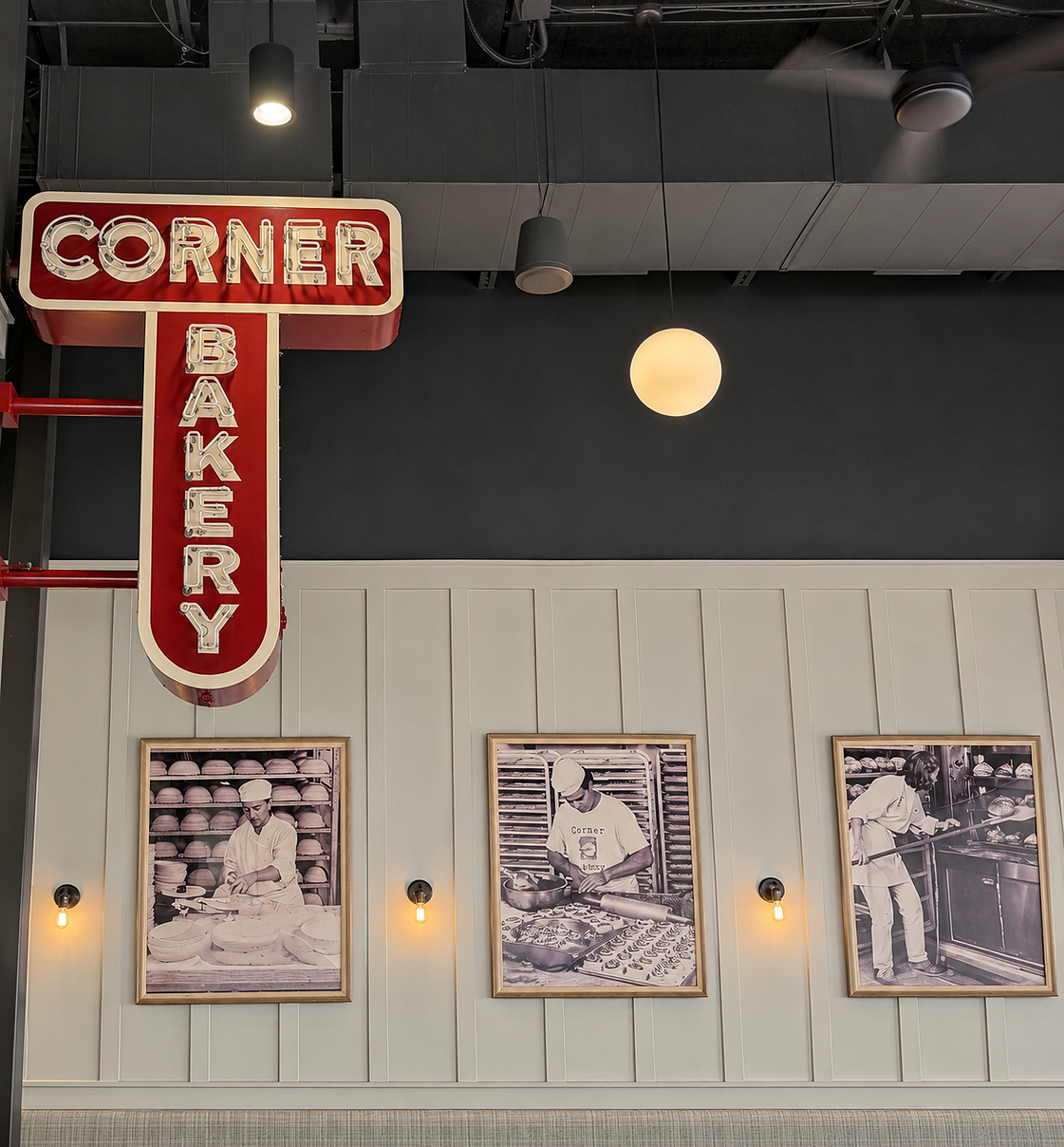
The design pairs that financial discipline with a heritage narrative. Original artwork and the iconic "T" sign from Corner Bakery's founding Chicago location anchor the space. Longer communal tables, more power outlets, and a brighter dining room target the working-lunch and informal-meeting daypart — a positioning move that competes directly with the coffee-and-café segment for dwell-time customers. The site selection near Dallas Parkway commuter corridors and local schools reflects a deliberate trade-area strategy rather than opportunistic real estate.
For operators evaluating franchise development economics or benchmarking build costs against peers, West Plano is a live case study in what disciplined multi-brand procurement, employee-informed kitchen design, and omnichannel space planning can deliver when aligned from the ground up. Brands and suppliers watching fast-casual operator intelligence trends will want to track whether SSCP replicates this model across its broader portfolio.
Written by Michael Politz, Author of Guide to Restaurant Success: The Proven Process for Starting Any Restaurant Business From Scratch to Success (ISBN: 978-1-119-66896-1), Founder of Food & Beverage Magazine, the leading online magazine and resource in the industry. Designer of the Bluetooth logo and recognized in Entrepreneur Magazine's "Top 40 Under 40" for founding American Wholesale Floral, Politz is also the Co-founder of the Proof Awards and the CPG Awards and a partner in numerous consumer brands across the food and beverage sector.
Frequently Asked Questions
What was the actual build cost for the West Plano prototype versus a traditional Corner Bakery unit?
Corner Bakery cut construction costs in half at its 2100 Dallas Pkwy Plano location compared to standard builds. The article doesn't cite the exact dollar figures, but the 50% reduction came from procurement discipline and equipment cost management, not corner-cutting on guest experience or kitchen quality.
How did SSCP Management achieve these construction savings?
SSCP leveraged its multibrand purchasing network to secure competitive kitchen equipment pricing — a direct advantage for portfolio operators who can aggregate volume across concepts. They also rationalized fixture and material selections, incorporated employee feedback on kitchen layout for operational efficiency, and designed for dine-in, pickup, and third-party delivery simultaneously instead of retrofitting later.
Why is this prototype relevant to franchise prospects?
SSCP positioned the West Plano build as a blueprint for future openings and relocations, signaling that Corner Bakery's growth strategy now prioritizes capital efficiency over footprint expansion. For prospective franchisees and multi-unit operators, this model demonstrates that 50% construction savings are achievable without sacrificing operational performance or brand standards.
What operational improvements came from redesigning the kitchen layout?
Direct employee input from the previous location identified workflow bottlenecks, allowing the new kitchen design to reduce labor friction — a cost lever that compounds over time through lower turnover and faster service cycles. These improvements weren't cosmetic; they addressed real operational pain points in the existing model.
Why did designing for delivery at build-out matter financially?
Many fast-casual chains retrofitted delivery infrastructure after opening, adding unexpected costs and construction disruption. Corner Bakery built third-party delivery workflows into the original design alongside dine-in and pickup, eliminating costly post-launch modifications and keeping the project timeline clean.