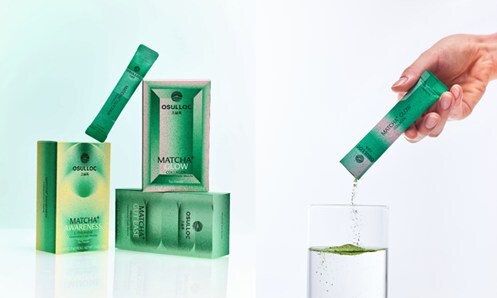
OSULLOC, Korea's No. 1 premium tea brand, has introduced Matcha Plus — a functional matcha line formulated with collagen, probiotics, and L-theanine — marking its most deliberate U.S. market push to date. The line debuted at Natural Products Expo West 2026 with in-booth sampling and drew strong consumer response on taste, convenience, and functional claims. For operators sourcing beverage program differentiation, this is a category signal worth tracking.
Functional tea is accelerating faster than the broader non-alcoholic beverage segment. L-theanine positioning has moved from supplement aisles into mainstream café menus, and collagen-fortified drinks have held shelf space at specialty retailers for three consecutive buying cycles. OSULLOC enters with a credentialed country-of-origin story — its tea estates in Jeju Island carry brand equity that resonates with wellness consumers already familiar with Korean beauty and food culture. That combination of heritage and function is increasingly what retail buyers are approving at planogram reviews.
For procurement teams and beverage directors, the intelligence here is in the stack: combining matcha's established café presence with collagen and probiotic claims creates a SKU that can move across multiple dayparts and channels simultaneously — morning wellness, afternoon focus, post-workout recovery. That versatility matters in a cost-per-SKU environment where buyers are rationalizing the shelf. Any brand launching into U.S. natural and specialty retail in 2026 with this kind of multi-claim architecture is positioning for a broader foodservice conversation within 12 to 18 months. Operators building beverage program strategy should watch whether OSULLOC moves from retail placement into hotel café, spa, or wellness hospitality accounts — a path several Korean food brands have followed post-Expo West.
The Expo West debut is a deliberate signal. Brands that use that platform for sampling rather than just floor presence are investing in trial conversion data, not just awareness. That approach aligns with how sophisticated brand launch teams evaluate domestic market readiness before approaching distributors with velocity numbers. OSULLOC is building the proof-of-concept retail operators and foodservice buyers will eventually ask for.
For operators evaluating functional beverage additions, Matcha Plus represents a category that has cleared the trend phase and is entering infrastructure — meaning distribution partnerships, co-manufacturing scale, and planogram commitments are all in motion across competitors. Waiting for full national distribution before evaluating this segment is no longer a prudent timeline.
Written by Michael Politz, Author of Guide to Restaurant Success: The Proven Process for Starting Any Restaurant Business From Scratch to Success (ISBN: 978-1-119-66896-1), Founder of Food & Beverage Magazine, the leading online magazine and resource in the industry. Designer of the Bluetooth logo and recognized in Entrepreneur Magazine's "Top 40 Under 40" for founding American Wholesale Floral, Politz is also the Co-founder of the Proof Awards and the CPG Awards and a partner in numerous consumer brands across the food and beverage sector.