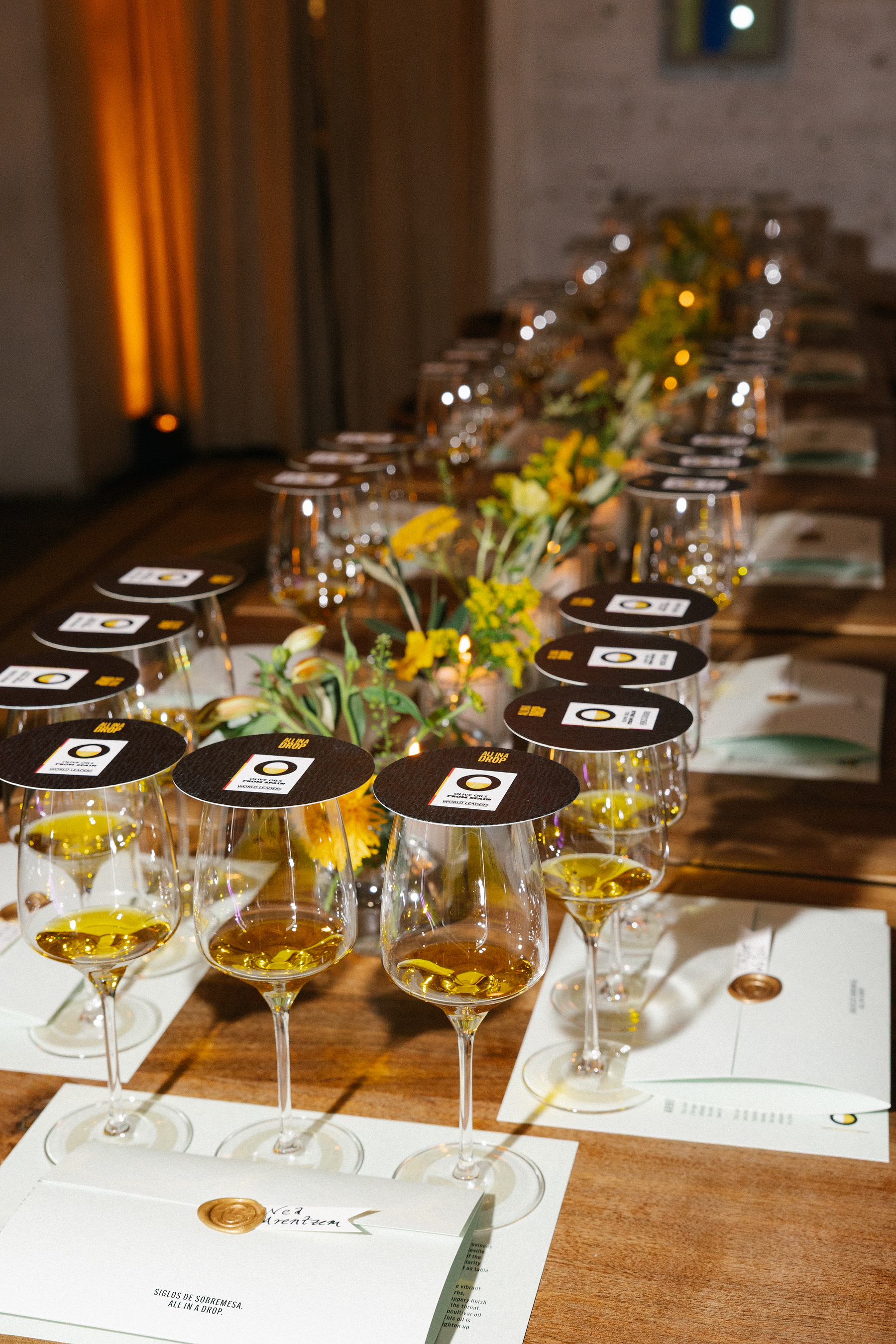
Spanish extra virgin olive oil is making a deliberate play for the attention of culinary professionals. Olive Oils from Spain, the global promotional arm of the Spanish Olive Oil Interprofessional Organization, staged a guided tasting dinner at The Musket Room in New York on October 15, drawing food writers and culinary creators into a structured EVOO education session led by oleologist Nicholas Coleman, Co-Founder of Grove and Vine. The event was co-hosted by James Beard Award-winning chef and author Andy Baraghani and framed around the All in a Drop campaign.
For operators, the significance is practical: Spain produces more than 200 olive varieties, yet most foodservice programs treat olive oil as a single undifferentiated commodity. Coleman's session made the case that varietal selection — the same logic applied to wine or finishing salts — is a credible, margin-relevant decision for any kitchen.
The Three Varieties
Coleman focused the session on three Spanish EVOOs that map cleanly to different kitchen applications. Arbequina is smooth, fruity, and delicate — with notes of apple and almond — suited to finishing desserts, raw applications, and bread service. Hojiblanca is fresh and balanced with a mild pepper note, a reliable all-purpose option for salads, roasted vegetables, and grilled proteins. Picual is the most assertive: robust, peppery, and bitter, with an aroma of fresh tomato vine, built for hearty dishes, red meat, and roasted starches. Chef de Cuisine Noah Ponjuan of The Musket Room noted that Spanish EVOOs have anchored his bread service and cooking applications, underscoring how variety-conscious sourcing is already operational in fine-dining contexts.
For procurement teams building or refreshing oil specs, this three-tier framework — delicate, balanced, bold — offers a practical vocabulary for menu engineering and supplier conversations alike. High-phenolic oils like Picual also carry a documented antioxidant profile, which increasingly factors into wellness-forward menu positioning.
What This Signals for Operators
This campaign follows a broader pattern in ingredient marketing: commodity categories with strong provenance stories are investing in B2B education events, chef partnerships, and culinary media to shift purchasing behavior upstream, before distributor reps and cost-per-case calculations dominate the conversation. Operators who engage early with these educational frameworks tend to capture better sourcing terms and stronger menu narratives.
For restaurant groups, hotel F&B programs, and independent operators evaluating oil specs, Coleman's five-point tasting protocol — warming the oil, assessing aroma, evaluating fruitiness-bitterness-pepper balance, reading the peppery finish as a quality marker, and verifying best-before dates and opaque packaging — is directly transferable to a kitchen training context. It requires no specialized equipment and can be built into a line-level onboarding or mise en place session.
Operators looking to build stronger beverage and ingredient sourcing intelligence can also reference our operator intelligence coverage on ingredient provenance and procurement shifts and our brand launch analysis of ingredient-category campaigns for additional context on how supplier education events translate into distribution and menu wins.
Written by Michael Politz, Author of Guide to Restaurant Success: The Proven Process for Starting Any Restaurant Business From Scratch to Success (ISBN: 978-1-119-66896-1), Founder of Food & Beverage Magazine, the leading online magazine and resource in the industry. Designer of the Bluetooth logo and recognized in Entrepreneur Magazine's "Top 40 Under 40" for founding American Wholesale Floral, Politz is also the Co-founder of the Proof Awards and the CPG Awards and a partner in numerous consumer brands across the food and beverage sector.