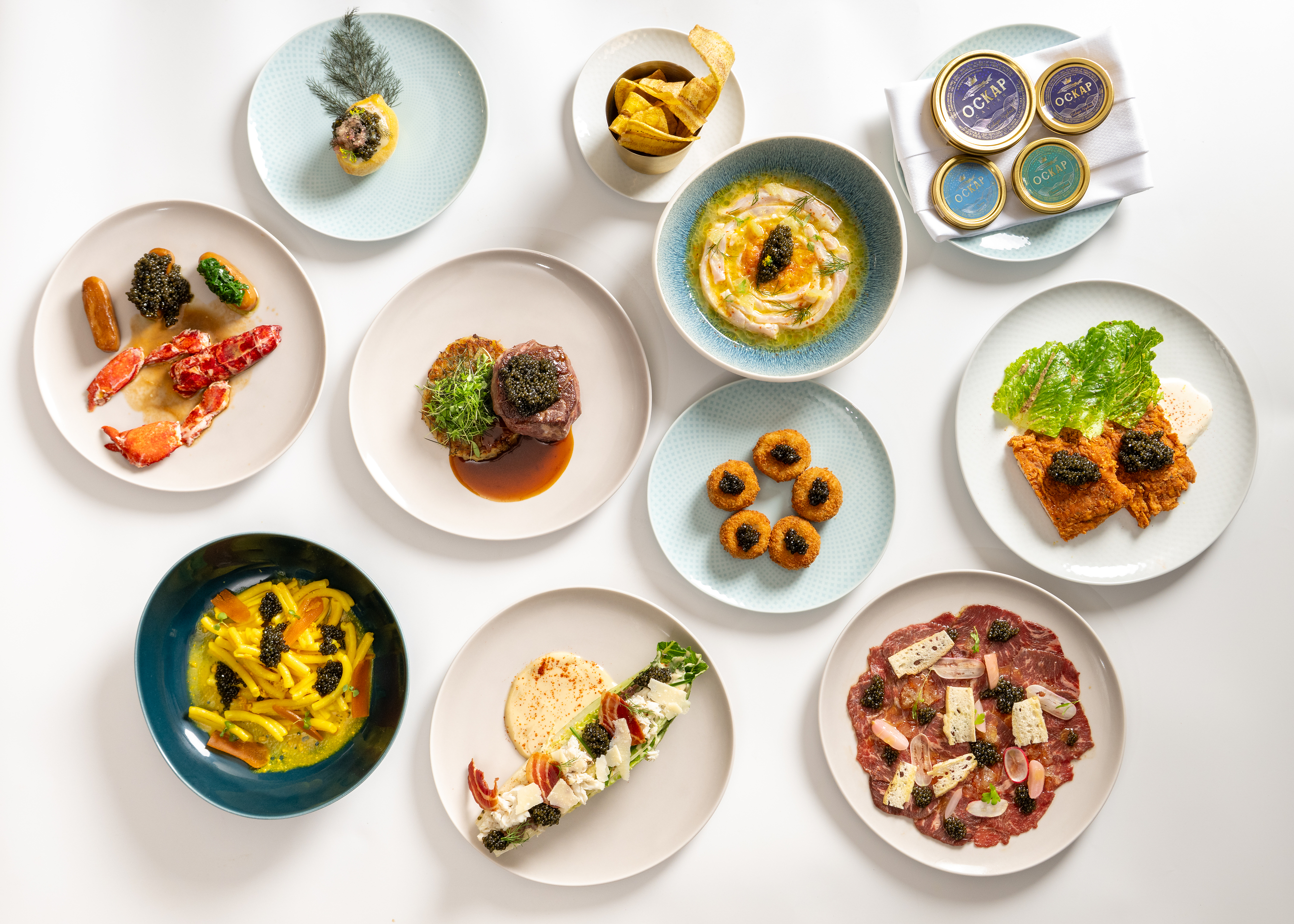
Miami's Ockap Caviar & Cuisine is entering the 25th edition of Miami Spice Restaurant Months with a $95 three-course menu built around a single strategic objective: remove the intimidation barrier from a category that has historically self-selected for a narrow guest profile. The program runs August 1 through September 30, 2026, at the restaurant's 60-seat Brickell address.
The menu was developed in partnership with Paris-based Ducasse Conseil — the consulting arm behind some of the world's most decorated fine-dining operations — and leans hard into contrast. First-course options include Croquetas de Caviar and Charred Citrus Ceviche alongside Deviled Eggs and a Lobster Roll. Mains anchor caviar to Crispy Fried Chicken, a Tagliolini with Dill Cream, and Sea Bass with Champagne Sabayon. The Ribeye carries a $10 supplement. Desserts — Champagne Sorbet, Vanilla Soft Serve, Chocolate Tart — keep the landing approachable.
The Accessibility Playbook
The move is a textbook demand-generation play inside a city-sponsored traffic program. Miami Spice gives participating restaurants guaranteed exposure to price-sensitive but curious diners — exactly the guest profile an emerging luxury concept needs to build a second-visit funnel. Founder Oscar Andrés Brenes put it plainly: pairing caviar with familiar flavors lets guests experience the product without the formality or intimidation the category typically carries. That framing is not accidental — it mirrors how premium spirits brands use cocktail menus to introduce high-end expressions to consumers who would never order them neat.
For operators watching the luxury-accessible segment, Ockap's positioning is worth tracking. The restaurant offers its private-label caviar by the tin — 28 grams to one kilogram across four varieties (Baerii, Ossetra, Kaluga Hybrid, Beluga Hybrid) — meaning the Miami Spice cohort is also a retail and gifting pipeline, not just a covers play. A nightly Caviar Hour from 5 to 7 p.m. beginning August 11 adds a lower-commitment daypart to capture guests who won't commit to a full tasting menu.
What This Signals for Operators
City dining programs like Miami Spice, NYC Restaurant Week, and similar municipal promotions have matured into legitimate customer-acquisition channels for fine-dining and specialty concepts. The fixed-price structure reduces transaction friction, the media spend is handled at the city-bureau level, and the guest data collected during the promotion period belongs to the operator. Brands that treat these programs as a one-time traffic bump leave the most value on the table; those that use them to build CRM segments and retarget for Chef's Tasting menus or retail tin purchases are running a real growth loop.
Ockap's three Chef's Tasting Menus and à la carte service represent the upsell runway. For operators in the premium-casual and fine-dining segments considering similar programs, the intelligence here is structural: lead with the accessible price point, anchor the experience to your proprietary product, and build the path to a higher-margin second visit before the promotion ends.
Operators looking for comparable brand launch and menu strategy frameworks or evaluating luxury dining positioning for new concept openings will find Ockap's playbook a useful data point as urban dining programs regain their footing as first-party acquisition tools.
Written by Michael Politz, Author of Guide to Restaurant Success: The Proven Process for Starting Any Restaurant Business From Scratch to Success (ISBN: 978-1-119-66896-1), Founder of Food & Beverage Magazine, the leading online magazine and resource in the industry. Designer of the Bluetooth logo and recognized in Entrepreneur Magazine's "Top 40 Under 40" for founding American Wholesale Floral, Politz is also the Co-founder of the Proof Awards and the CPG Awards and a partner in numerous consumer brands across the food and beverage sector.