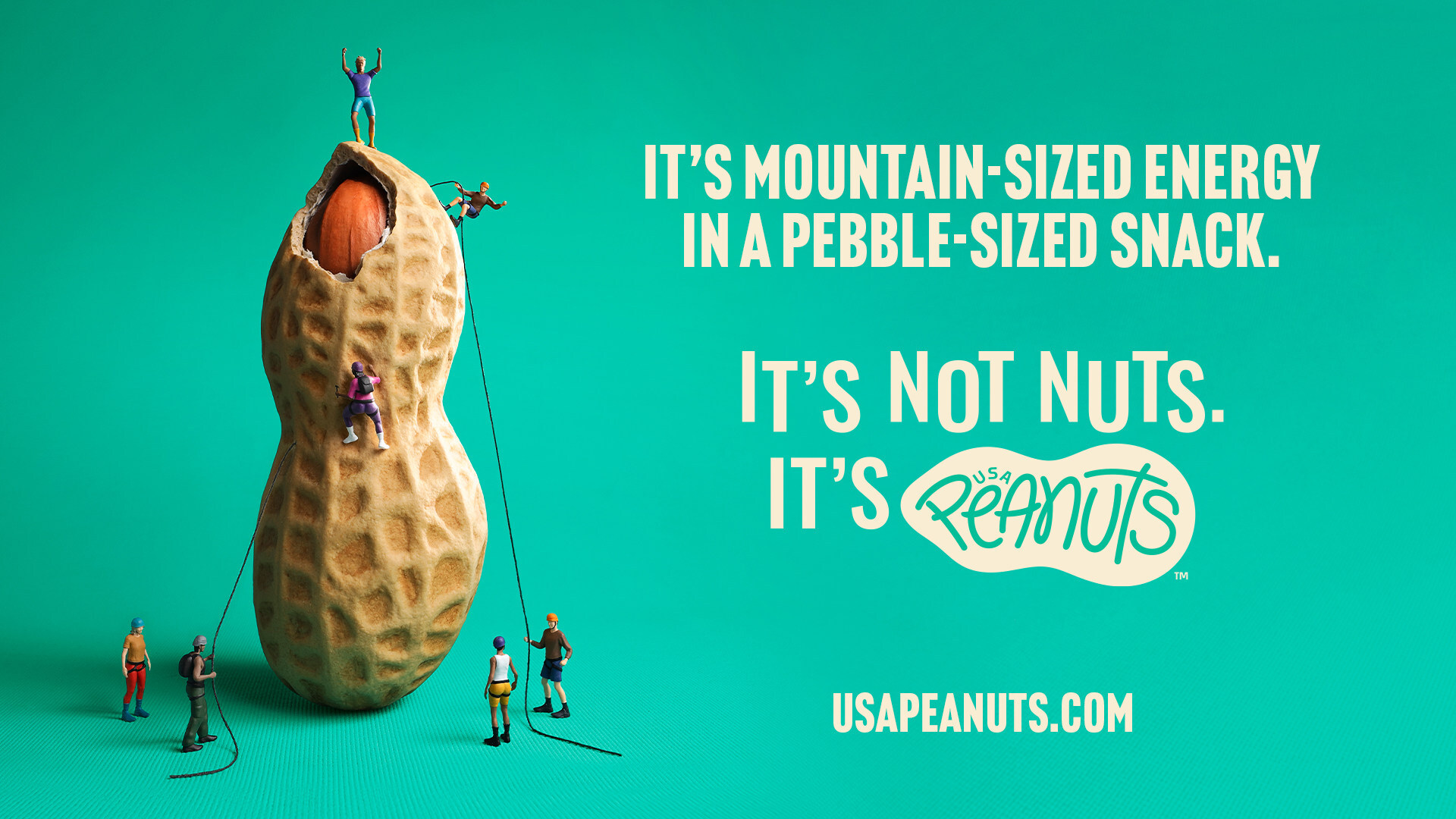
The National Peanut Board has launched a unified brand platform — 'It's Not Nuts. It's Peanuts.' — marking the first time U.S. peanut farmers, manufacturers, and consumer brands have aligned behind a single identity. The campaign, which includes stop-motion creative directed by award-winning filmmaker Anthony Farquhar-Smith, is built around peanuts' nutritional density, affordability, and sustainability credentials. For operators sourcing affordable protein and for buyers managing ingredient cost pressure, the timing is deliberate and worth tracking.
The platform positions peanuts as a distinct category rather than a subcategory of tree nuts — a meaningful distinction for menu labeling, allergen communication, and procurement classification. Peanuts carry more protein per serving than almonds or cashews and carry the smallest carbon footprint of any product commonly shelved in the nut aisle. Those attributes have been underutilized in foodservice and retail for years, largely because no industry-wide voice existed to amplify them. That changes now.
For operators, the downstream effect of this kind of commodity board investment tends to show up in three places: co-marketing availability, ingredient cost stability signaling, and consumer familiarity that reduces menu explanation burden. When a commodity board runs a unified campaign, it typically precedes an uptick in branded ingredient partnerships and foodservice sampling programs. Operators sourcing peanut butter, peanut oil, or whole-roast peanuts for snack programs should expect more structured vendor outreach tied to this platform over the next 12 to 18 months. Procurement teams should also monitor whether the sustainability angle — smallest carbon footprint among comparable proteins — enters RFP scoring criteria as ESG pressure on supply chains grows. Buyers who have already built plant-based protein sourcing frameworks will recognize this as a category that now has organized marketing infrastructure behind it, which historically improves supplier documentation and traceability.
From a brand launch perspective, this is a useful case study in how commodity organizations execute category creation rather than simple promotion. Rather than defending peanuts' existing market share, the NPB is reframing the entire category — legume, not nut — to open new positioning opportunities for brands operating in protein, sustainability, and accessibility. Operators building private-label snack programs or exploring menu ingredient differentiation strategies have a window to align early with a narrative that now has national creative and media weight behind it.
Written by Michael Politz, Author of Guide to Restaurant Success: The Proven Process for Starting Any Restaurant Business From Scratch to Success (ISBN: 978-1-119-66896-1), Founder of Food & Beverage Magazine, the leading online magazine and resource in the industry. Designer of the Bluetooth logo and recognized in Entrepreneur Magazine's "Top 40 Under 40" for founding American Wholesale Floral, Politz is also the Co-founder of the Proof Awards and the CPG Awards and a partner in numerous consumer brands across the food and beverage sector.