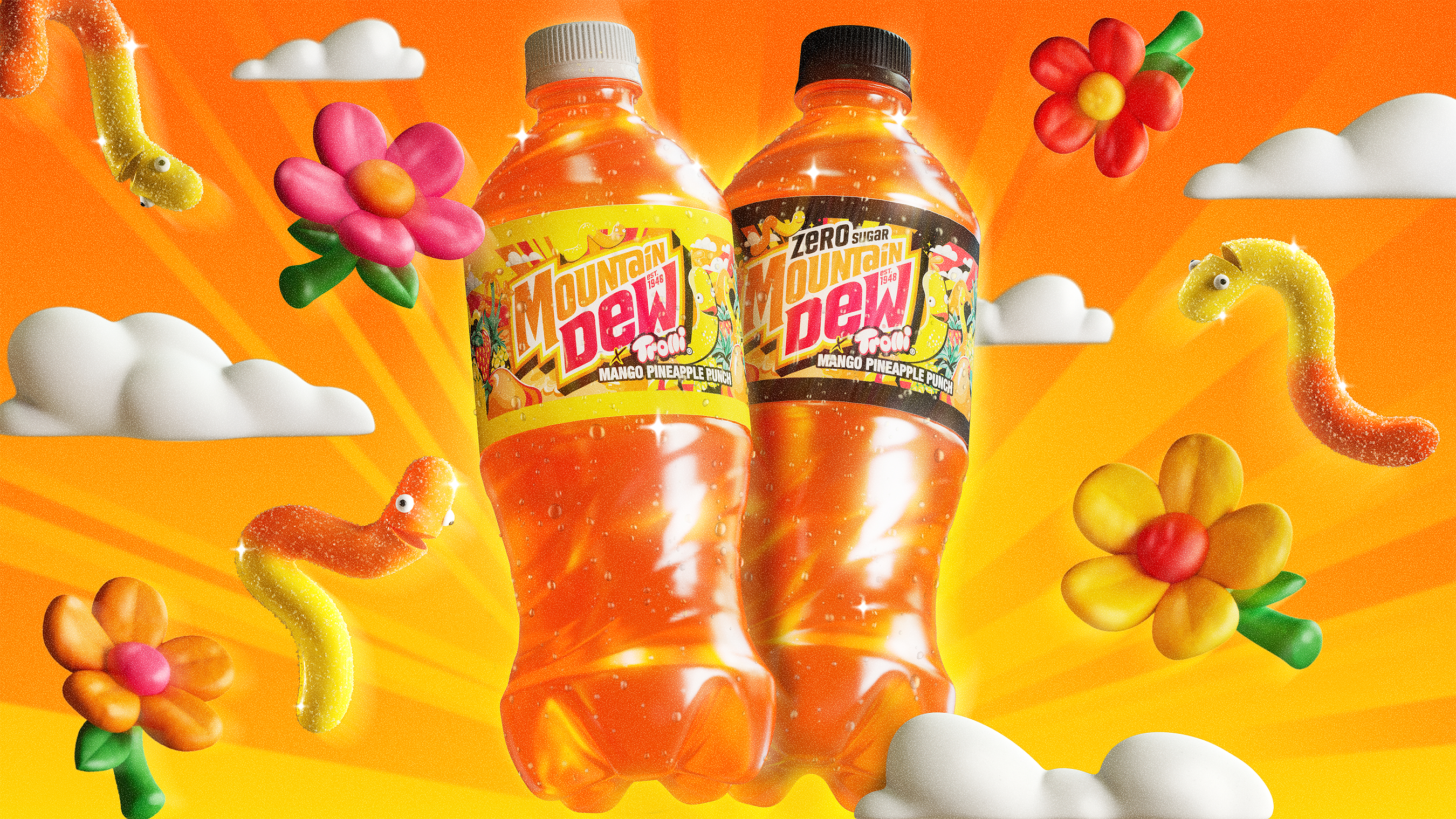
PepsiCo's Mountain Dew has returned for a second consecutive summer with a Trolli co-branded limited-edition soda, this time built around mango, pineapple, and a hint of strawberry — designed to be consumed alongside Trolli Spicy Crawlers gummi worms. The launch, Mountain Dew x Trolli Mango Pineapple Punch, is available in 12 oz. cans and 20 oz. regular and zero-sugar bottles at U.S. retailers, with 20 oz. regular bottles placed at participating Pizza Hut locations nationwide through October.
For operators and retail buyers, the structural story is more interesting than the SKU itself. PepsiCo is treating this collaboration as an annual franchise — not a one-off stunt. Last year's Mountain Dew x Trolli Cherry Lemon reportedly became one of the fastest-selling products in the Mountain Dew lineup, and the brand has responded by extending the window, adding a zero-sugar variant, and securing a foodservice placement through Pizza Hut. That progression from retail-only to multi-channel in year two is a signal worth watching for any buyer managing LTO assortment.
The Retail & Foodservice Play
The Pizza Hut placement is a deliberate move: it puts a limited-run SKU in front of a captive, delivery-and-dine audience precisely when snack-and-beverage pairing behavior is highest. A limited-edition Walmart.com-exclusive kit — bundling the regular and zero-sugar sodas with a 12 oz. bag of Trolli Spicy Crawlers — adds a direct-to-consumer gifting layer that generates incremental basket size without requiring additional floor space from brick-and-mortar partners. Retail buyers should note that the kit ships exclusively through Walmart.com while supplies last, meaning the channel exclusivity is being used to drive platform traffic rather than broad distribution.
What This Signals for Operators
Sweet-and-spicy has moved past trend status into a durable flavor platform. Michael Smith, VP of Marketing at Mountain Dew, PepsiCo Beverages U.S., described the collaboration as tapping "a growing consumer trend while delivering the bold, one-of-a-kind experience fans expect from both brands" — language that tracks with menu and beverage data showing spicy-fruit combinations outperforming traditional citrus profiles in limited-run testing across QSR and fast-casual channels. For food-and-beverage operators building summer and fall LTO calendars, the cross-category pairing model — soda + confection, designed to be consumed together — offers a merchandising template worth adapting: bundle a beverage with a snack complement, limit the window, and anchor one SKU to a delivery-forward foodservice partner to maximize trial.
The zero-sugar variant inclusion is also meaningful for operators. Adding a better-for-you option to the LTO from launch — rather than as a follow-on — reflects category-wide pressure to serve health-conscious consumers without fragmenting the promotional narrative. Buyers sourcing beverages for hotel minibars, stadium concessions, or convenience-adjacent retail should factor that dual-SKU approach into their own LTO planning.
For a deeper look at how beverage brands are structuring retail and foodservice channel strategy around limited editions, see our coverage of emerging beverage trends and brand launch mechanics for foodservice.
Written by Michael Politz, Author of Guide to Restaurant Success: The Proven Process for Starting Any Restaurant Business From Scratch to Success (ISBN: 978-1-119-66896-1), Founder of Food & Beverage Magazine, the leading online magazine and resource in the industry. Designer of the Bluetooth logo and recognized in Entrepreneur Magazine's "Top 40 Under 40" for founding American Wholesale Floral, Politz is also the Co-founder of the Proof Awards and the CPG Awards and a partner in numerous consumer brands across the food and beverage sector.