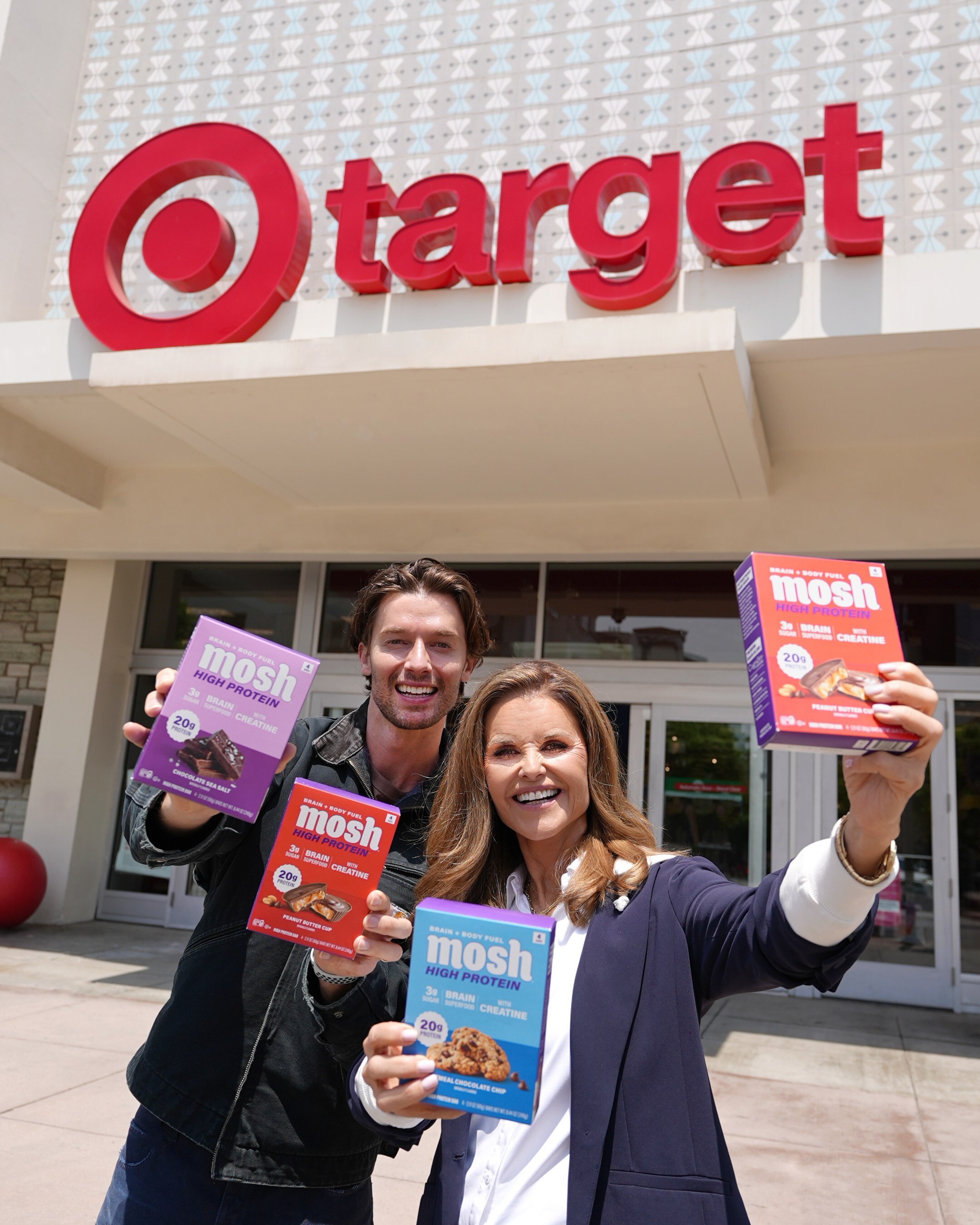
MOSH, the brain health nutrition brand co-founded by Maria Shriver and Patrick Schwarzenegger, has placed its new High Protein bar into more than 2,000 Target stores nationwide — the brand's largest retail moment to date. The Target-exclusive four-pack delivers 20 grams of protein alongside creatine and the brand's proprietary brain-support blend, available in Peanut Butter Cup, Chocolate Sea Salt, and Oatmeal Chocolate Chip. For operators sourcing grab-and-go, amenity, or retail-facing snack programs, this placement is worth tracking closely.
The move is not incidental. Target's 2,000-door threshold represents meaningful proof-of-concept velocity for any emerging functional food brand. For context, most better-for-you bars fight years for that kind of shelf footprint, often entering through natural channel doors at Whole Foods or Sprouts before earning mass placement. MOSH is essentially reversing that funnel — leading with mass — which reflects both the brand's celebrity equity and a calculated bet that brain health has crossed from niche wellness into mainstream consumer demand. Operators in hotel retail, airport food-and-beverage, and health-forward café concepts should read that signal clearly.
The timing aligns with a measurable shift in functional snack procurement across hospitality. Brain health, women's health, and high-protein positioning are converging into a single purchasing conversation at the buyer level. Hotel brands building out in-room minibar or market grab-and-go programs are increasingly fielding requests for snacks that go beyond calorie counts — guests want functional claims they can read and trust. A brand with this level of retail validation and recognizable co-founders carries lower merchandising friction than a comparable SKU with no consumer awareness. That matters when your retail buyer or F&B director is making a 90-day trial decision with limited shelf space.
For procurement and brand-launch teams watching this category, MOSH's Target deal also signals how celebrity-anchored brands are compressing the traditional brand-launch timeline from DTC-first to mass-retail-first. The infrastructure required to support a 2,000-store rollout — logistics, compliance, field merchandising, digital shelf presence — is substantial. Operators evaluating emerging snack vendors for their own programs should be asking prospective suppliers about their retail compliance track record before committing to volume. A brand that can execute at Target scale can likely execute at yours.
For operators actively building or refreshing a snack or amenity program, MOSH High Protein's Target launch is a useful benchmark. Consumer awareness is already being built at scale through the retailer's own media network and the brand's existing audience. That reduces the education lift for any hospitality operator who stocks it. Keep an eye on how the brand extends beyond Target exclusivity — that window typically opens within 12 to 18 months and is when secondary channel buyers, including foodservice distributors, gain access to emerging functional brands entering hospitality.
Written by Michael Politz, Author of Guide to Restaurant Success: The Proven Process for Starting Any Restaurant Business From Scratch to Success (ISBN: 978-1-119-66896-1), Founder of Food & Beverage Magazine, the leading online magazine and resource in the industry. Designer of the Bluetooth logo and recognized in Entrepreneur Magazine's "Top 40 Under 40" for founding American Wholesale Floral, Politz is also the Co-founder of the Proof Awards and the CPG Awards and a partner in numerous consumer brands across the food and beverage sector.