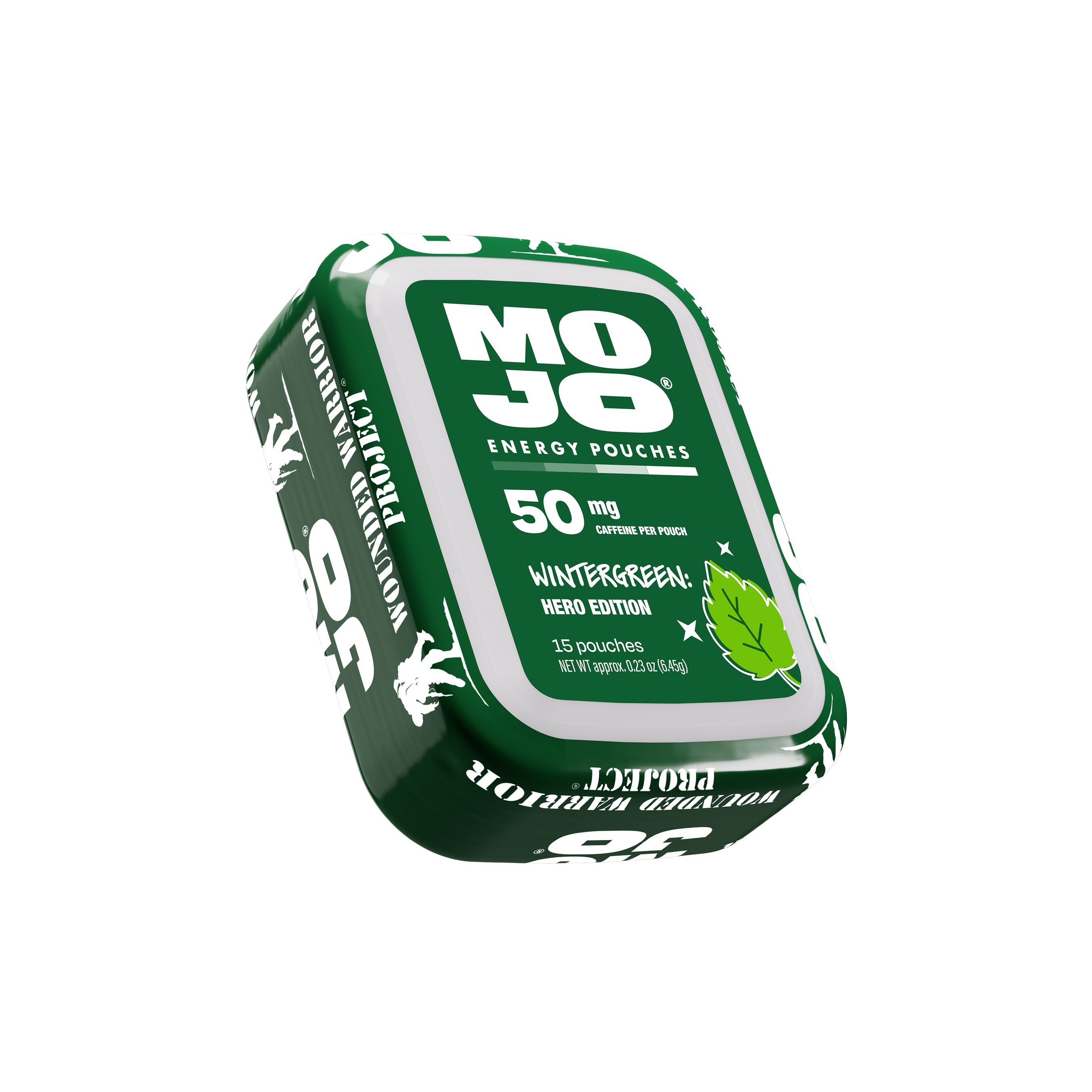
Mojo® Energy Pouches](https://www.grabmojo.com) is rolling out Wintergreen: Hero Edition, a 50mg limited-time caffeine pouch, timed to Veterans Day and anchored by a continued partnership with Wounded Warrior Project. The SKU is available on Amazon and GrabMojo.com while supplies last, with WWP branding visible on-pack — giving the brand a cause-marketing hook at the point of purchase that extends well beyond a one-day moment.
The Product Architecture
The Wintergreen: Hero Edition pouch delivers 50mg of caffeine derived from green tea, zero sugar, zero calories, and a functional stack that includes B-vitamins (B3, B6, B12), L-theanine, ginseng, and yerba mate. Each slider pack holds 15 pouches. That positions it squarely in the growing functional-pouch segment — a category pulling caffeine consumers away from canned RTDs and toward discreet, portion-controlled formats that fit gym bags, jobsites, and desk drawers equally well. For operators and retail buyers evaluating the category, the 50mg dose (roughly half a cup of coffee) is a deliberate entry point for consumers cautious about overconsumption, while Mojo's 100mg line serves the heavier user. That two-tier architecture is worth noting as convenience and specialty retail buyers build out their functional energy sets.
Cause Marketing as a Retail Signal
Mojo's approach here is structurally different from a simple donation-with-purchase mechanic. The brand states it donates to WWP regardless of sales volume, which removes the transactional friction that often undercuts cause campaigns and gives retail partners a cleaner story at shelf. Tiana Black, marketing director at Mojo Energy Pouches, framed the partnership as values-driven rather than promotional: the Veterans Day launch was chosen to build on an ongoing commitment, not to manufacture a moment. Brea Kratzert Todd, senior vice president of resource development at Wounded Warrior Project, noted that partners like Mojo help fund programs addressing veteran well-being across mind, body, and fitness dimensions — categories that align naturally with the functional energy consumer.
For operators and buyers in convenience, specialty food, and hospitality retail, the more instructive takeaway is channel strategy. Mojo is leading this drop through DTC and Amazon before any broad retail push — a sequencing pattern that lets the brand test velocity, gather consumer data, and build a proof-of-performance story before approaching larger retail accounts. That's a playbook increasingly common among emerging beverage and functional food brands entering retail. Brands that can demonstrate DTC sell-through on a limited SKU arrive at buyer meetings with leverage.
What Operators Should Watch
The caffeine pouch segment is still early in its retail penetration curve. Mojo's parent company, Volt+Co™, positions itself as a multi-format caffeine portfolio business — a structure that gives it room to place different SKUs across different channels without cannibalizing margin. For hospitality operators evaluating functional energy for grab-and-go sets, hotel convenience retail, or stadium concessions, the pouch format addresses a genuine friction point: no refrigeration, no cup, no spill risk. The Veterans Day co-brand also demonstrates how suppliers are using limited-edition drops to generate earned media and social proof without committing to permanent shelf space. Operators and retail buyers tracking functional beverage trends for 2026 should expect more of this mechanic — cause-aligned, DTC-first, then retail — as the category matures.
Written by Michael Politz, Author of Guide to Restaurant Success: The Proven Process for Starting Any Restaurant Business From Scratch to Success (ISBN: 978-1-119-66896-1), Founder of Food & Beverage Magazine, the leading online magazine and resource in the industry. Designer of the Bluetooth logo and recognized in Entrepreneur Magazine's "Top 40 Under 40" for founding American Wholesale Floral, Politz is also the Co-founder of the Proof Awards and the CPG Awards and a partner in numerous consumer brands across the food and beverage sector.