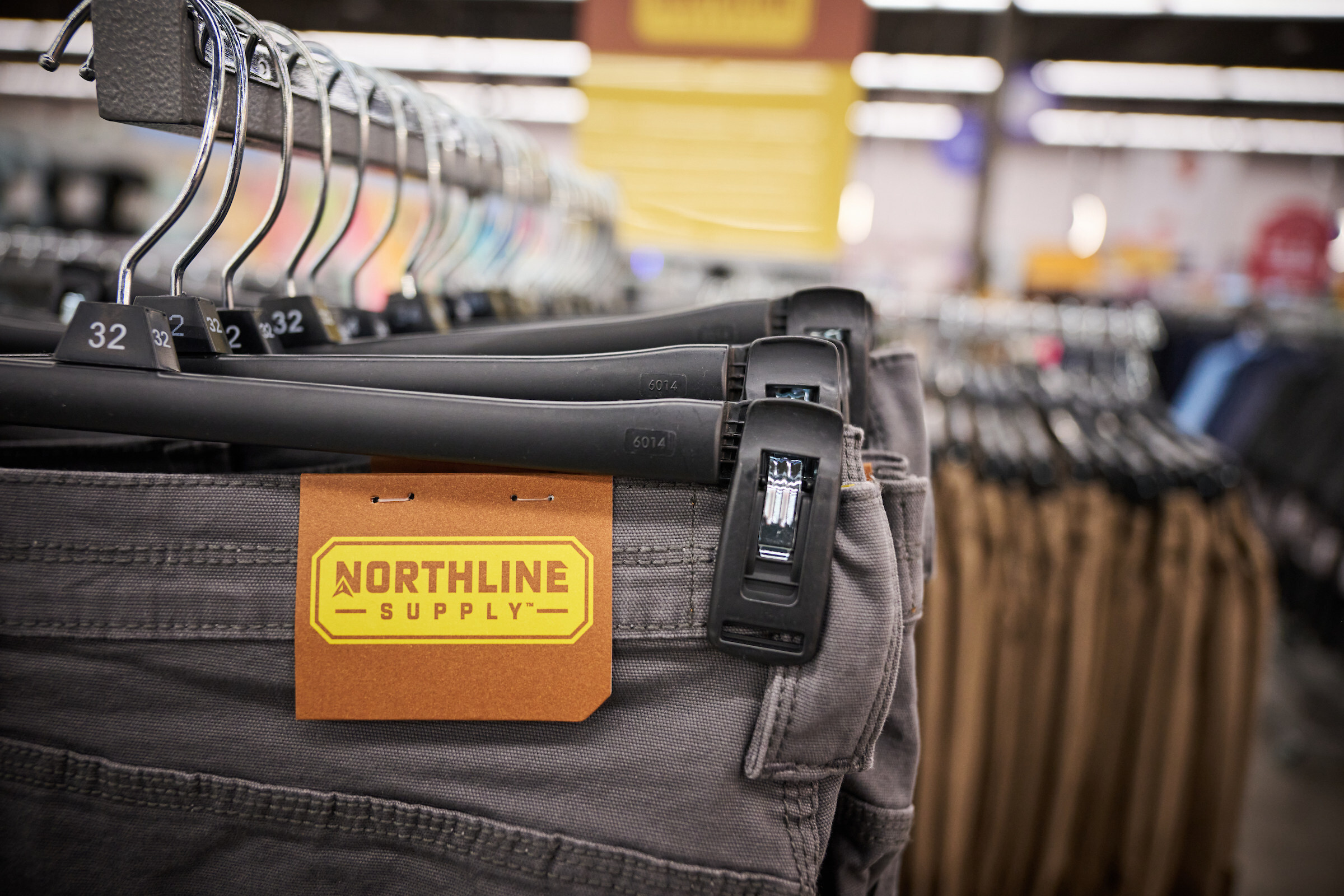
Meijer has launched Northline Supply, a proprietary workwear and footwear brand, across its supercenter footprint in the Midwest as of May 18, 2026. The line targets tradespeople and hands-on consumers looking for durable, value-priced apparel — a category that major national brands have left underserved at the regional level. For food and beverage operators and suppliers with product in Meijer's ecosystem, the move is worth watching: it signals how aggressively this retailer is investing in private-label adjacencies that drive basket size and foot traffic without relying on national brand co-marketing budgets.
Meijer operates more than 500 supercenters across Michigan, Ohio, Indiana, Illinois, Kentucky, and Wisconsin — making it one of the most consequential regional grocery-and-general-merchandise hybrids in the country. When a retailer of this scale allocates floor space and brand investment to a new proprietary label, it recalibrates the internal calculus around shelf allocation, promotional budgets, and vendor support expectations across every category, including food, beverage, and foodservice-adjacent suppliers who share that floor. Operators sourcing through Meijer or pitching the buyer team should understand that private-label expansion typically compresses the promotional support available to emerging national brands in adjacent aisles.
The Northline Supply launch fits a broader retail pattern: regional supercenters are accelerating owned-brand portfolios to protect margin in an era of persistent cost pressure. Walmart's private-label momentum and Kroger's Our Brands program have both demonstrated that proprietary labels can exceed 30% of category revenue in key segments. Meijer is applying the same logic to workwear — a category with strong velocity among its core Midwestern shopper — and the infrastructure built for this launch (in-store signage, digital shelf, loyalty integration) will likely be repurposed for future private-label categories, potentially including food and beverage staples. Suppliers pitching Meijer buyers in 2026 should expect more rigorous value-positioning scrutiny as the retailer sharpens its owned-brand identity across departments.
For food and beverage brands pursuing retail distribution in the Midwest, this is a useful intelligence signal: Meijer is investing in its own brand architecture, which means vendor conversations will increasingly require a differentiated value narrative — not just price parity. Brands that have not yet built a formal retail-readiness package, including a buyer deck, margin modeling, and distribution pitch, are at a structural disadvantage as the retailer's internal brand portfolio grows. If your product is in or targeting Meijer, now is the time to stress-test your buyer conversation against a retailer that is actively learning how to build and market its own labels.
Written by Michael Politz, Author of Guide to Restaurant Success: The Proven Process for Starting Any Restaurant Business From Scratch to Success (ISBN: 978-1-119-66896-1), Founder of Food & Beverage Magazine, the leading online magazine and resource in the industry. Designer of the Bluetooth logo and recognized in Entrepreneur Magazine's "Top 40 Under 40" for founding American Wholesale Floral, Politz is also the Co-founder of the Proof Awards and the CPG Awards and a partner in numerous consumer brands across the food and beverage sector.