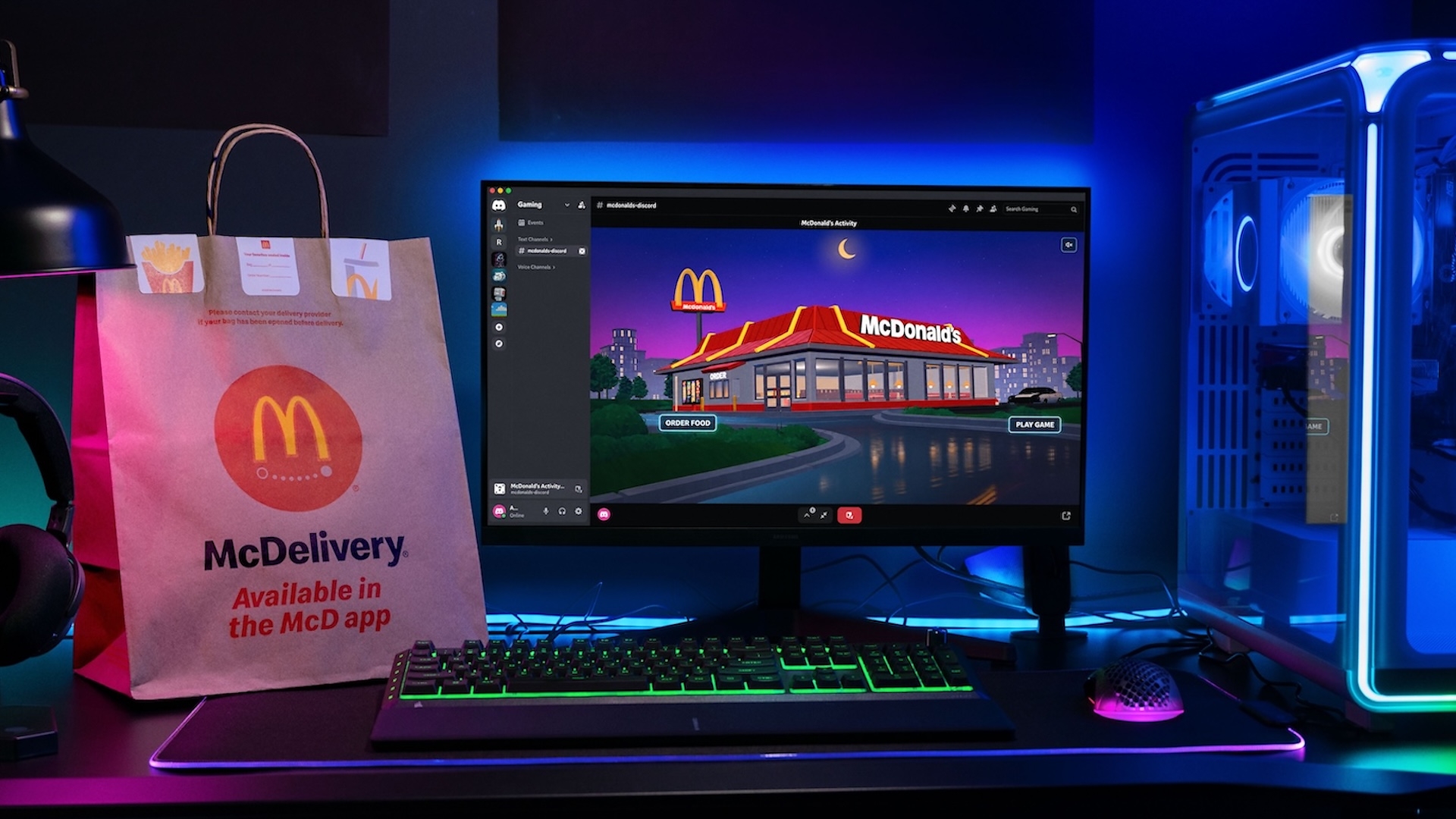
McDonald's has embedded a native ordering experience directly inside Discord, giving users a way to place McDelivery orders through Uber Eats without leaving the platform. The integration, timed to coincide with what the brand is calling the biggest video game release of the decade, signals a deliberate push to reach high-frequency delivery customers at the exact moment and location they are already congregating.
The mechanic is straightforward: users open the McDonald's activity from the Apps & Activities menu inside any Discord server, channel, or DM thread, tap "Order Food," and are routed to an Uber Eats checkout. While the order is in transit, a branded mini-game called Fast Lane Feast — a burger-and-fries collection race with a leaderboard — keeps the McDonald's screen open and in front of the user. The loop is deliberate: order, play, stay.
Why the Channel Matters
For operators and QSR marketers tracking third-party delivery strategy, the Discord move is a meaningful data point. Discord's active user base skews 18-to-34, spends extended sessions on the platform, and has historically been difficult to reach through conventional display or social advertising. By embedding at the application layer rather than buying a banner or running a promoted post, McDonald's sidesteps ad fatigue and creates a contextually relevant placement — hungry users, already socializing, with no friction to order.
The Uber Eats routing also reinforces the ongoing trend of major QSR chains deepening integrations with delivery marketplaces rather than pushing consumers exclusively to proprietary apps. Approximately 13,500 U.S. McDonald's locations are franchisee-operated, which means delivery channel economics and incremental order volume are acutely felt at the unit level. Any friction removed from the discovery-to-checkout path has direct franchisee relevance.
What Operators Should Watch
This activation is a template, not a one-off stunt. Platforms like Discord, Twitch, and Roblox have been building commerce infrastructure for several years; McDonald's moving into a native Discord activity suggests brand and growth teams are willing to allocate development resources to non-traditional ordering surfaces. For independent operators and regional chains watching from the sidelines, the more immediate read is about audience mapping: identifying where your highest-frequency customers are spending digital time and whether any of those platforms support embedded or affiliate ordering flows.
The gamification layer — Fast Lane Feast — also points to a broader tactic worth tracking: using branded content to extend dwell time on a commerce surface after a transaction is initiated. That approach is increasingly visible in loyalty and digital engagement programs across the hospitality sector, where the goal is not just conversion but post-conversion retention of attention.
For vendors and agencies working in programmatic and contextual advertising for foodservice, the Discord integration is a reminder that the most valuable impressions in delivery marketing are increasingly happening inside closed, session-based platforms rather than open web inventory.
Written by Michael Politz, Author of Guide to Restaurant Success: The Proven Process for Starting Any Restaurant Business From Scratch to Success (ISBN: 978-1-119-66896-1), Founder of Food & Beverage Magazine, the leading online magazine and resource in the industry. Designer of the Bluetooth logo and recognized in Entrepreneur Magazine's "Top 40 Under 40" for founding American Wholesale Floral, Politz is also the Co-founder of the Proof Awards and the CPG Awards and a partner in numerous consumer brands across the food and beverage sector.