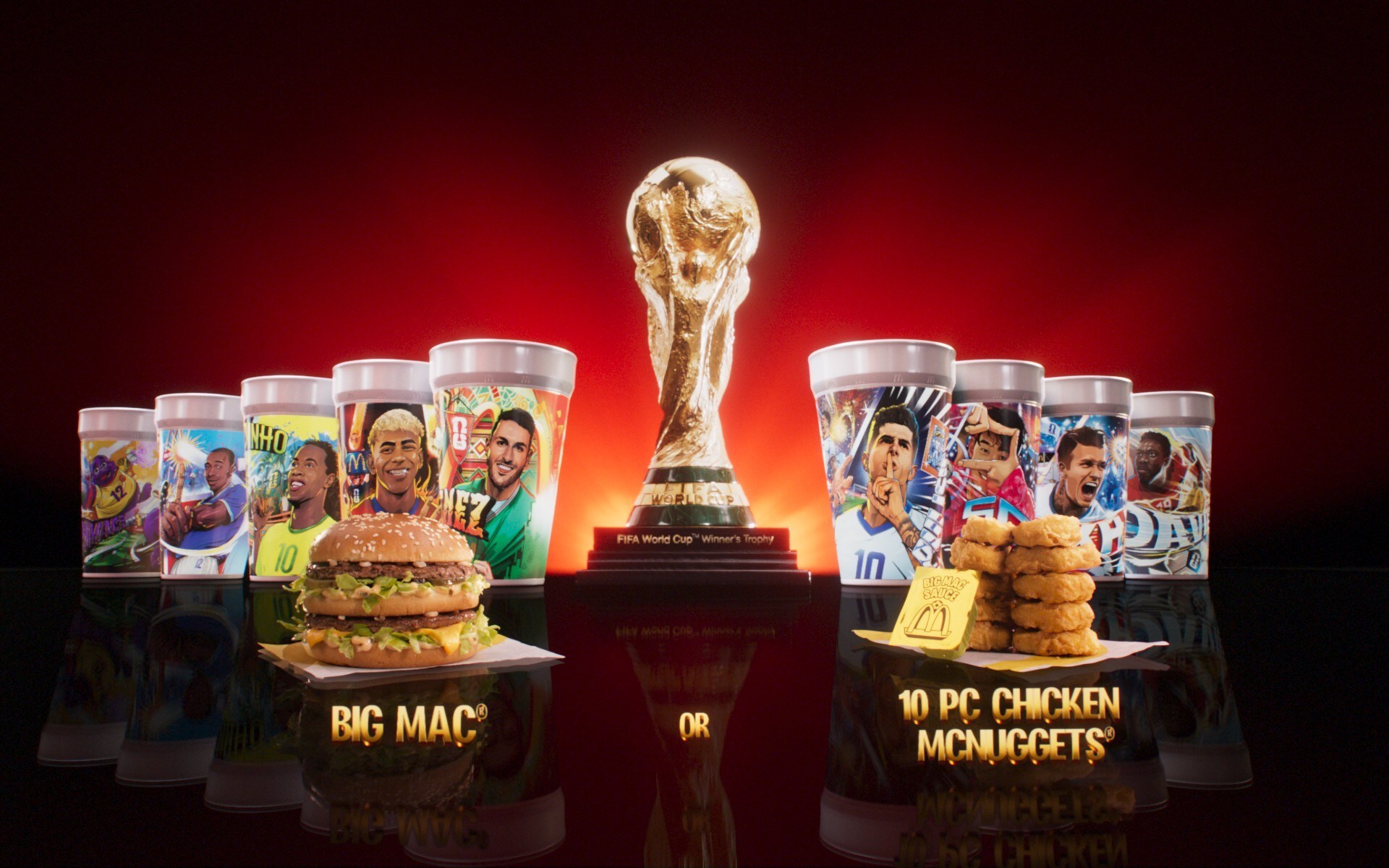
McDonald's is rolling out a limited-time FIFA World Cup 26™ Meal and Happy Meal at participating locations worldwide this summer, anchored by collectible keepsakes featuring global soccer players and Squishmallows™ co-branded premiums. The activation runs concurrent with the tournament, which spans host cities across the United States, Canada, and Mexico — giving McDonald's an unusually dense domestic footprint advantage during one of the highest-viewership sporting events on the planet. For operators watching QSR traffic patterns this summer, this is the clearest signal yet that event-tied LTO mechanics are back as a primary volume lever.
Collectible Happy Meal toys have historically moved units at McDonald's in ways that straightforward menu promotions rarely match. The Squishmallows™ partnership layers a licensed collectible brand with existing consumer pull — a tactic that compresses the gap between kids' meal attachment rates and adult purchase intent. Peer benchmarks from prior World Cup cycles and domestic sporting events show that QSRs running themed LTOs during tournament windows can see incremental transaction lifts in the mid-single digits during peak match days, particularly in markets with host-city proximity. Operators running fast-casual or polished-casual concepts in those markets should expect heightened competitive noise from McDonald's drive-through and delivery channels during match windows.
The intelligence here for mid-market operators is less about the collectibles and more about the mechanic: McDonald's is using a globally licensed IP event to justify a full campaign architecture — meal bundle, premium collectible, and presumably digital engagement — without changing its core menu. That is a replicable playbook at smaller scale. Regional chains and independent multi-unit operators can run event-tied LTO bundles around the same tournament using local soccer club partnerships, neighborhood watch-party activations, or geo-fenced digital campaigns tied to match broadcast schedules. The infrastructure cost is a fraction of what McDonald's deploys, but the conversion logic is identical. If your brand has a catering or dine-in component, matchday group orders are an underpenetrated revenue line worth building a summer package around.
From a brand-launch and media perspective, the Squishmallows™ co-brand is worth noting as a vendor-selection signal. Licensing a collectible toy brand with existing consumer demand — rather than producing a proprietary premium — reduces activation risk and compresses the timeline from concept to shelf. Suppliers and packaging vendors pitching co-branded seasonal programs to emerging QSR and fast-casual brands should be studying this structure. The Brand Launch Department at F&B Department covers licensing and retail-readiness mechanics in detail for operators building seasonal SKU strategies.
For operators using programmatic or paid social channels this summer, the window between now and the tournament final is a competitive spend environment. McDonald's will be buying against soccer, fandom, and family-dining intent signals across every major platform. Smaller operators should evaluate whether to compete directly in those audiences or shift spend toward complementary intent signals — watch-party catering, group reservations, or delivery bundle promotions — where McDonald's media weight is less suffocating. The Growth Department has covered geo-fencing strategies for operators navigating QSR media saturation in high-competition windows.
Written by Michael Politz, Author of Guide to Restaurant Success: The Proven Process for Starting Any Restaurant Business From Scratch to Success (ISBN: 978-1-119-66896-1), Founder of Food & Beverage Magazine, the leading online magazine and resource in the industry. Designer of the Bluetooth logo and recognized in Entrepreneur Magazine's "Top 40 Under 40" for founding American Wholesale Floral, Politz is also the Co-founder of the Proof Awards and the CPG Awards and a partner in numerous consumer brands across the food and beverage sector.