The Move
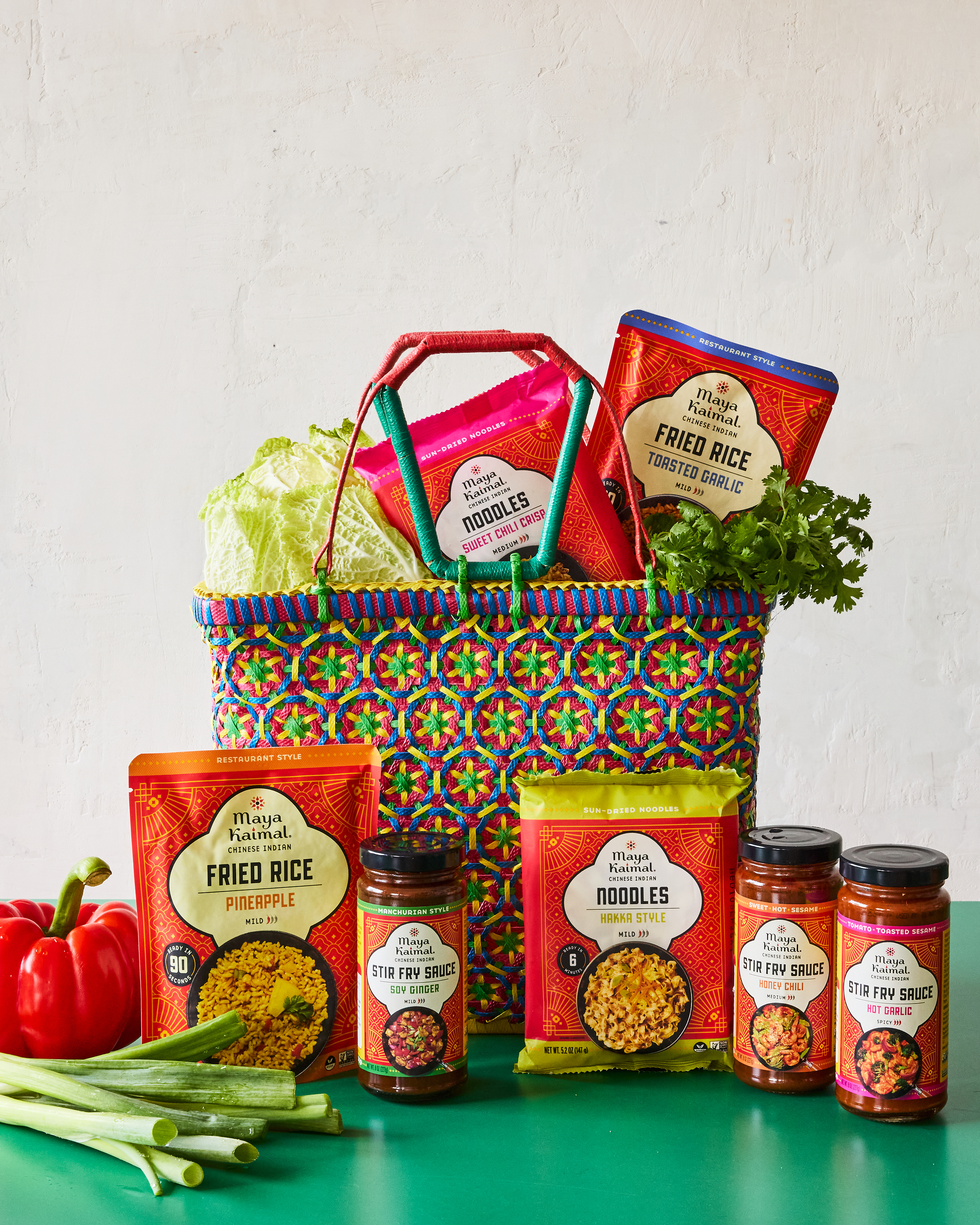
Maya Kaimal Foods is rolling out a seven-SKU Chinese Indian line at Whole Foods Market and Sprouts Farmers Market nationwide — the first broadly distributed Indo-Chinese product set to hit American retail shelves. The line spans ready-to-eat fried rice (Pineapple and Toasted Garlic), noodles (Hakka and Sweet Chili Crisp), and stir-fry sauces (Soy Ginger, Hot Garlic, and Honey Chili). Retail placement is already live, making this an active shelf event rather than a pipeline announcement.
For buyers and category managers watching ethnic-aisle innovation, this is a meaningful signal. The Indo-Chinese flavor profile — built on ginger, garlic, green chili, and soy — sits at the intersection of two of retail's fastest-growing ethnic segments. The brand is calling the positioning "East Meets East," a philosophy it road-tested with its Indian Style Chili Crisp, which fused Indian tarka technique with Chinese chili crisp formats. That SKU established proof-of-concept for cross-cultural Indian flavor innovation before the brand scaled the concept into a full sub-line.
Why Retail Buyers Are Watching
Maya Kaimal holds the No. 1 ranked position in the Indian simmer sauce category — a credential that materially lowers the barrier to buyer conversation when pitching an adjacent innovation. The brand's distribution footprint already spans Whole Foods, Sprouts, Costco, and Amazon, which means the Chinese Indian line enters retail with a pre-negotiated relationship rather than cold placement. That existing trust with natural and specialty channel buyers is an asset most emerging brands spend years building.
The white-space argument here is legitimate. Indo-Chinese cuisine has been a fixture of Indian street food and restaurant culture for well over a century, originating with the Chinese immigrant community that settled in Kolkata in the 19th century. Yet it has had virtually no mainstream retail presence in the United States. For brands and operators navigating the retail readiness process, the lesson is that category white space alone isn't enough — Maya Kaimal pairs it with a founded-in-2003 brand story, Non-GMO certification, and clean-label sourcing that clears the procurement checklist for natural channel gatekeepers.
What This Signals for Operators
For foodservice operators and menu developers, the retail launch is worth tracking as an early indicator of consumer appetite. When a retail brand achieves velocity in the natural channel with a flavor profile — particularly one with the cultural depth of Indo-Chinese — it tends to accelerate operator interest in putting that profile on menus. Categories like Korean BBQ and Peruvian chicken followed a similar retail-to-restaurant diffusion curve over the past decade.
For suppliers and packaging vendors working with emerging CPG brands, Maya Kaimal's execution model — clean-label, ready-to-eat formats at premium natural retail — reflects the procurement and formulation standards that Whole Foods and Sprouts now require at entry. Brands pitching those channels should treat this launch as a live case study in positioning for natural channel distribution. The combination of a founder-driven narrative, culinary authority (Maya Kaimal is a Julia Child Award-winning cookbook author), and retail-ready SKU architecture is the full stack that buyers in this channel are looking for.
Written by Michael Politz, Author of Guide to Restaurant Success: The Proven Process for Starting Any Restaurant Business From Scratch to Success (ISBN: 978-1-119-66896-1), Founder of Food & Beverage Magazine, the leading online magazine and resource in the industry. Designer of the Bluetooth logo and recognized in Entrepreneur Magazine's "Top 40 Under 40" for founding American Wholesale Floral, Politz is also the Co-founder of the Proof Awards and the CPG Awards and a partner in numerous consumer brands across the food and beverage sector.