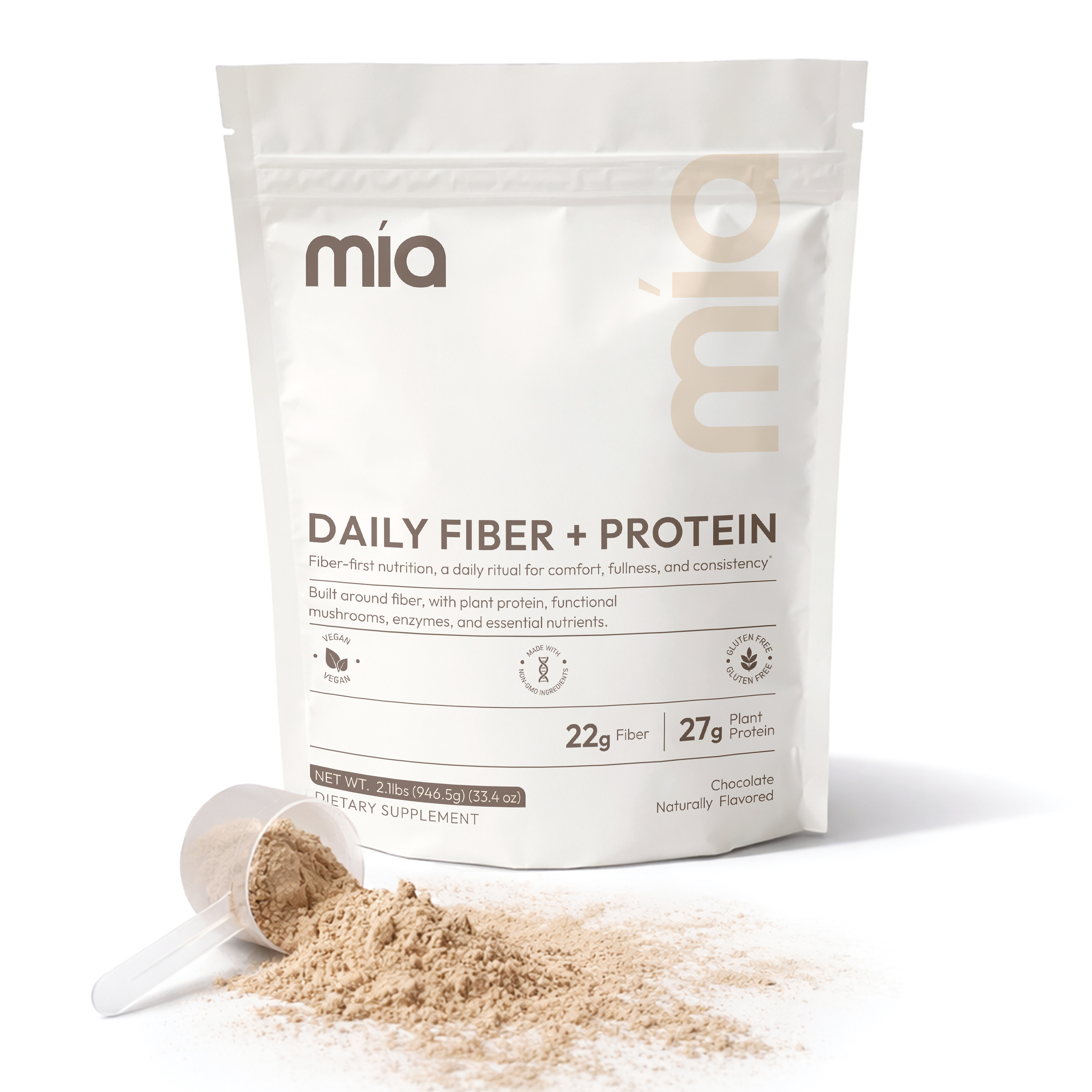
Austin-based Mía has entered the functional nutrition market with a fiber-forward protein shake formulated specifically around the dietary profile of GLP-1 medication users — a consumer segment that is eating less overall and, as a result, closing an already-difficult fiber gap even further. The product delivers 22g of fiber and 27g of protein per serving, positioning itself against conventional high-protein shakes that have historically deprioritized fiber content. For operators in convenience, hospitality, and health-adjacent retail, this launch signals a category shift worth tracking.
The science underpinning the positioning is not casual. Average American fiber intake sits at 14–16g daily against recommended targets of 25–30g for women and 38g for men, according to data from NHANES 2013–2018 and the American Journal of Lifestyle Medicine. Research published in Molecular Nutrition & Food Research in 2024 found that high-protein diets without adequate fiber push gut microbiota toward protein fermentation, producing harmful metabolic byproducts. For GLP-1 users consuming fewer total calories, that imbalance compounds quickly. Mía is framing fiber not as a wellness add-on but as a functional prerequisite for protein to perform its intended role — a framing that aligns with where the clinical and consumer conversation is already heading.
The broader market context matters for buyers and category managers evaluating functional beverage sets. The #fibermaxxing trend has moved from niche nutrition forums into mainstream social media, carrying consumer awareness with it. GLP-1 prescription volume in the United States has grown sharply, and the downstream behavioral changes — smaller portions, reduced snacking, compressed eating windows — are already showing up in foodservice transaction data and grocery basket analyses. Brands that can credibly occupy the GLP-1-adjacent nutrition space are attracting retailer interest faster than standard protein SKUs. Operators sourcing for hotel grab-and-go, fitness-adjacent F&B programs, or health-forward convenience sets should be watching this positioning closely.
For procurement and brand launch teams, Mía's entry illustrates a repeatable playbook: identify a consumption behavior shift (GLP-1 adoption), map the resulting nutritional deficiency (fiber gap), and build a product with clinical citations ready for buyer decks. The Austin origin also matters — Texas has emerged as a launch market for functional CPG brands that later scale into national natural and conventional retail channels. If Mía executes on distribution introductions and retail readiness in parallel with this launch, the brand is positioned for a buyer conversation that goes beyond specialty health into mainstream hospitality and convenience. Operators evaluating functional beverage programs for their F&B mix should request a full nutrient panel and third-party certifications before committing to shelf or menu placement.
The GLP-1 consumer is not a niche — analysts estimate tens of millions of Americans are currently on or considering these medications. Any operator running a wellness-oriented F&B program, from hotel breakfast sets to gym café menus, is already serving this guest without a tailored product answer. Mía's launch is an early move in what will likely become a crowded functional segment. Getting ahead of the category intelligence curve now means better vendor selection and stronger margin positioning before the shelf gets competitive.
Written by Michael Politz, Author of Guide to Restaurant Success: The Proven Process for Starting Any Restaurant Business From Scratch to Success (ISBN: 978-1-119-66896-1), Founder of Food & Beverage Magazine, the leading online magazine and resource in the industry. Designer of the Bluetooth logo and recognized in Entrepreneur Magazine's "Top 40 Under 40" for founding American Wholesale Floral, Politz is also the Co-founder of the Proof Awards and the CPG Awards and a partner in numerous consumer brands across the food and beverage sector.