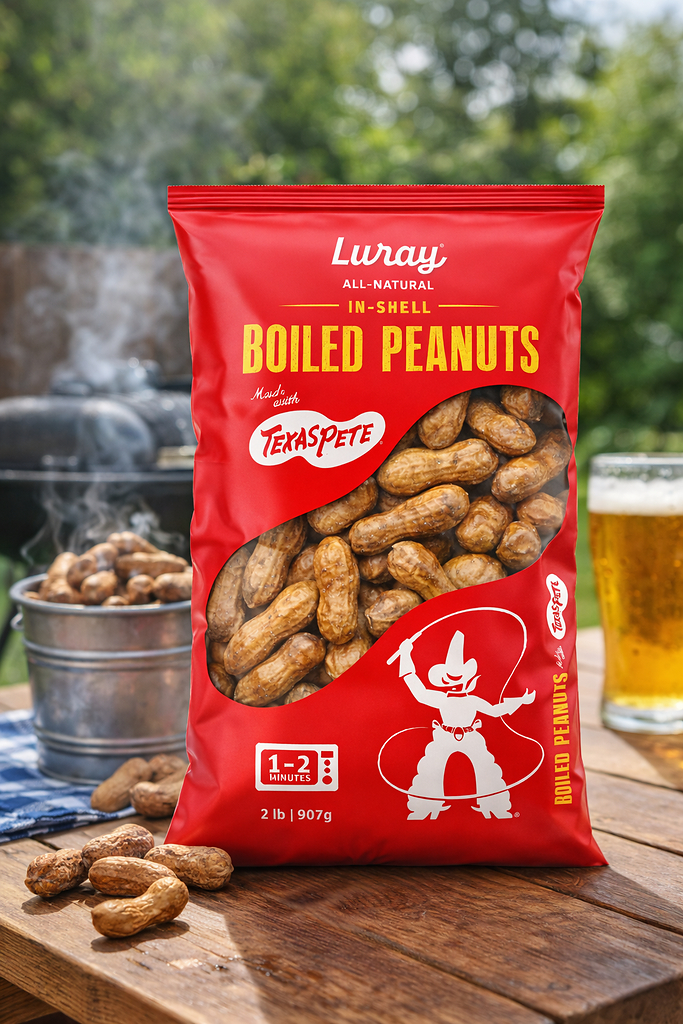
Luray Peanut Company has entered a co-branded product partnership with Texas Pete, releasing a cayenne-forward boiled peanut in three commercial formats: a 12 oz grab-and-go unit, a 2 lb family bag, and a 5 lb foodservice bag. The foodservice SKU in particular signals the brand's intent to move beyond retail and into restaurant, stadium, and convenience operator accounts.
Boiled peanuts have long occupied a hyper-regional niche — dominant in the Southeast, largely invisible elsewhere — but the category has been gaining shelf and menu velocity as operators look for differentiated, low-prep snack and bar program options. Pairing the format with Texas Pete, a brand with strong regional equity and wide foodservice distribution, is a direct play to accelerate trial with buyers who already carry the hot sauce line.
The Operator Opportunity
For foodservice operators, the 5 lb bag format is the number to watch. Ready-to-eat, pre-seasoned boiled peanuts in bulk reduce kitchen labor to near zero — no prep, no cooking, no sauce application. That positions the SKU cleanly for bar snack programs, Southern-concept side menus, ballpark or arena concessions, and convenience-store hot-case sets. Operators sourcing co-branded snacks for grab-and-go programs will find the Texas Pete name does meaningful work on the label, particularly in markets where the hot sauce already has brand recognition.
From a brand launch and retail readiness standpoint, the three-format strategy is disciplined: the 12 oz unit targets impulse and convenience, the 2 lb bag targets grocery and club, and the 5 lb bag targets foodservice and bulk resale. That tiered sizing is the right architecture for a brand trying to open multiple channels simultaneously without fragmenting its production run.
What Buyers Are Watching
Co-branded snack launches in the better-for-you and regional-flavor space have accelerated over the past two years, driven by retailers and distributors looking for products that carry built-in storytelling and reduce the need for in-store sampling budgets. A licensed hot sauce co-brand on a regionally authentic product checks both boxes. Buyers at regional grocery chains, specialty food distributors, and convenience and foodservice procurement desks will recognize the Texas Pete equity as a de-risking signal.
For operators evaluating the SKU, the relevant questions are margin per serving in a bar or snack program, minimum order quantities on the foodservice bag, and whether the product carries any clean-label or allergen certifications relevant to their guest base. Luray has not published those details publicly at launch, so procurement teams should request spec sheets before committing to a test program.
Written by Michael Politz, Author of Guide to Restaurant Success: The Proven Process for Starting Any Restaurant Business From Scratch to Success (ISBN: 978-1-119-66896-1), Founder of Food & Beverage Magazine, the leading online magazine and resource in the industry. Designer of the Bluetooth logo and recognized in Entrepreneur Magazine's "Top 40 Under 40" for founding American Wholesale Floral, Politz is also the Co-founder of the Proof Awards and the CPG Awards and a partner in numerous consumer brands across the food and beverage sector.