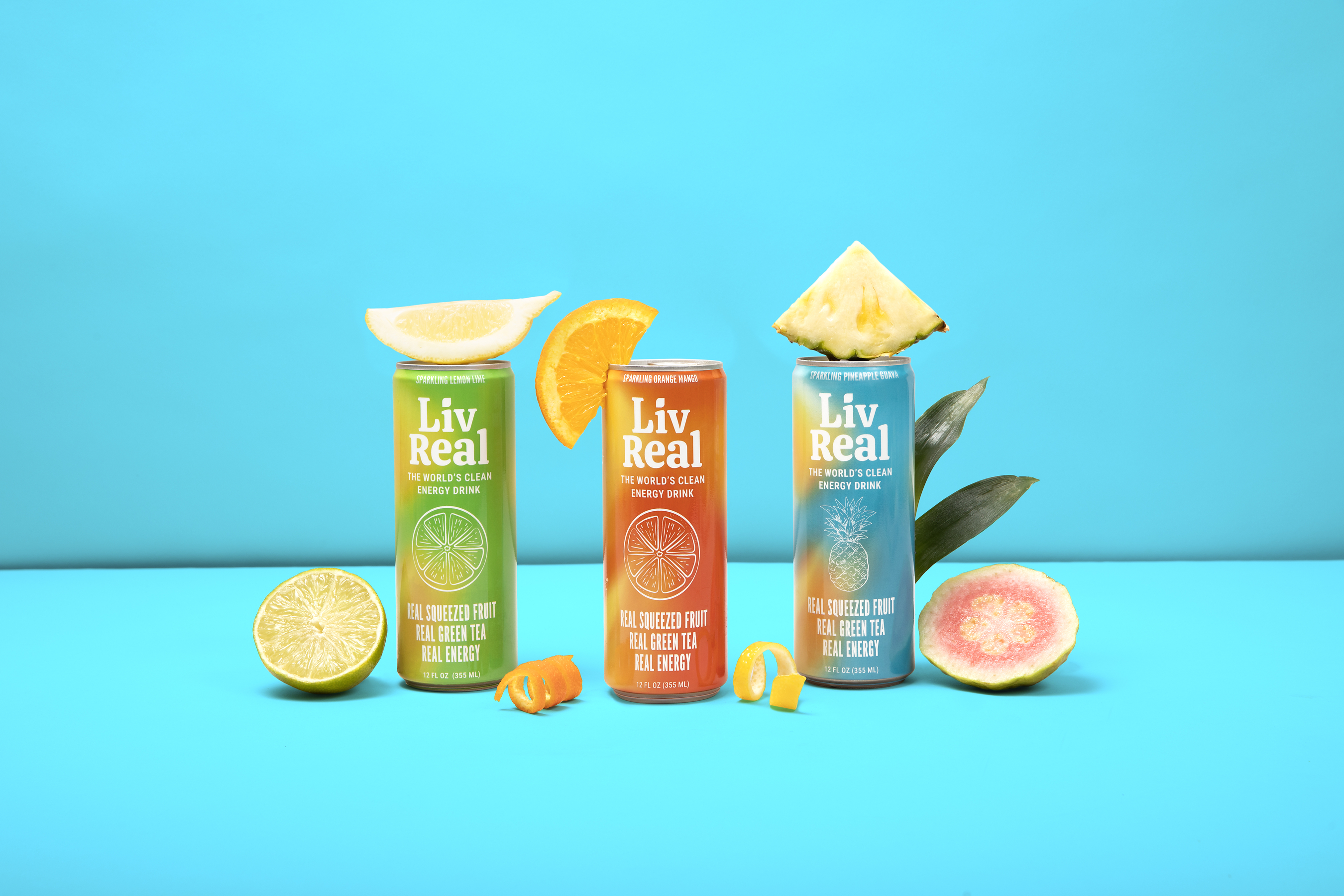
LivReal, a Boston-based energy drink brand co-founded by three Boston College classmates, secured a slot in the Sprouts Farmers Market Innovation Set, putting the product in front of natural-channel shoppers nationwide as of July 1, 2026. The placement is notable not just for the distribution milestone but for what LivReal is pitching: an energy drink flavored entirely with real squeezed fruit, carrying no artificial flavors, artificial sweeteners, added sugars, preservatives, or natural flavors — a positioning that is rare even in the crowded better-for-you beverage aisle.
The brand launched with three SKUs — Orange Mango, Pineapple Guava, and Lemon Lime — and is backing the retail entry with a founder-led roadshow, hundreds of in-store tastings, and community activations designed to convert trial into velocity. For buyers and brand-launch advisors tracking the Innovation Set, that activation approach matters: Sprouts uses the program to evaluate emerging brands on real consumer feedback before committing to permanent placement, making in-store performance in this window effectively an extended audition.
What Operators Should Watch
The energy drink category is not short on challengers, but the ingredient-transparency argument is gaining traction with both retailers and foodservice buyers. Natural-channel grocers like Sprouts have increasingly curated their Innovation Sets around brands that can articulate a clean-label story with specificity — not just "no artificial ingredients" as a marketing header, but formulations that hold up to label scrutiny. LivReal's "real squeezed fruit only" positioning attempts to draw a hard line even against the industry-standard "natural flavors" designation, which remains a point of consumer skepticism.
For operators sourcing beverages for hotel minibars, resort grab-and-go, or café programs, this is the kind of brand to track early. Retail velocity data from the Sprouts Innovation Set window — typically 90 to 120 days — will indicate whether the clean-energy message is converting beyond the core natural-channel consumer. Brands that survive the Innovation Set often move into conventional grocery and foodservice distribution within 12 to 18 months.
Retail Readiness Signal
The founder-led roadshow model is a deliberate trade-off: it builds authentic brand story at the shelf level but requires significant founder bandwidth to execute across a national footprint. Brands entering their first major retail program with this approach often need to simultaneously build out a field sales infrastructure or engage a broker network before the activation window closes. Operators and buyers evaluating LivReal for hospitality channels should watch how the brand manages scale — distribution consistency and supply reliability will matter as much as the concept itself.
For growth and brand-launch teams advising emerging beverage clients, LivReal's Sprouts entry is a current-cycle case study in retail-readiness execution. The combination of a differentiated formulation claim, a competitive innovation-program placement, and a consumer-activation playbook tied directly to purchase metrics is the structure buyers increasingly expect before expanding beyond a brand's launch channel. Teams working on beverage brand positioning for natural retail should note how LivReal's no-natural-flavors stance creates a distinct layer of separation in a field where most competitors stop at "no artificial" claims.
Written by Michael Politz, Author of Guide to Restaurant Success: The Proven Process for Starting Any Restaurant Business From Scratch to Success (ISBN: 978-1-119-66896-1), Founder of Food & Beverage Magazine, the leading online magazine and resource in the industry. Designer of the Bluetooth logo and recognized in Entrepreneur Magazine's "Top 40 Under 40" for founding American Wholesale Floral, Politz is also the Co-founder of the Proof Awards and the CPG Awards and a partner in numerous consumer brands across the food and beverage sector.