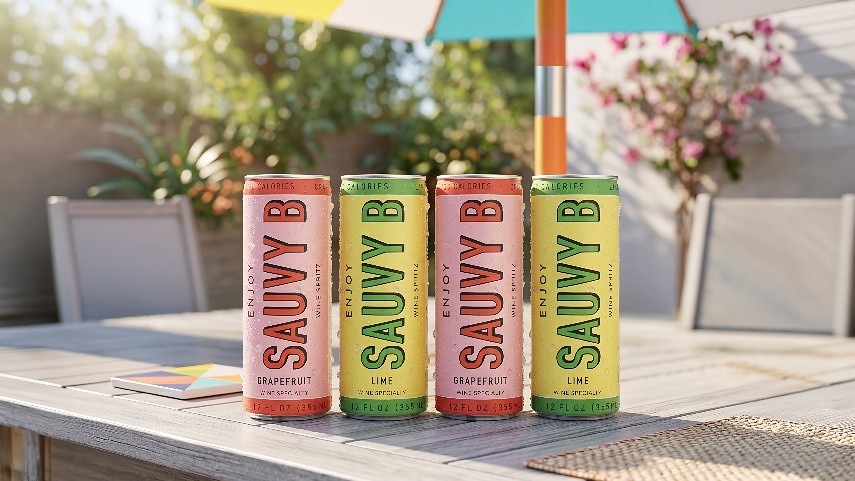
Joel Gott Wines is moving into the functional ready-to-drink segment with Sauvy B, a California Sauvignon Blanc spritz that combines sparkling water, electrolytes, and citrus flavors in a 12 oz. can. The launch signals the Napa-rooted wine brand's intent to compete directly with hard seltzers and canned cocktails on occasion and shelf placement, not just on wine credentials.
Sauvy B arrives in Lime and Grapefruit SKUs at approximately 100 calories and 4.5% ABV per can. The product is gluten-free and positions itself as a lighter alternative to conventional wine pours and many existing RTD alcoholic beverages. The electrolyte inclusion is a deliberate functional hook — one that aligns Sauvy B with the growing hydration-plus-alcohol trend that has attracted significant retail buyer attention over the past 18 months.
Why Buyers Should Care
The RTD wine-spritz category has moved from novelty to a legitimate shelf and draught-program consideration for on-premise operators. Hard seltzer volumes have plateaued, and buyers at both retail and hospitality accounts are actively hunting for differentiated options that carry a credible brand story. A wine brand with Joel Gott's distribution history and consumer recognition carries a narrative advantage over white-label entrants — and the electrolyte angle gives category managers a functional peg beyond ABV and calorie count.
For food-and-beverage directors and bar program managers, a 4.5% ABV, 100-calorie, wine-based can fits squarely into pool-bar, brunch, and outdoor-event daypart programming where guests want refreshment without commitment to a full glass of still wine. The dual-SKU launch keeps the range manageable for initial velocity tracking, a format that experienced retail buyers tend to favor at category review.
What This Signals
The Sauvy B launch reflects a broader pattern among established wine producers: rather than defending traditional formats, they are engineering entry points into the canned-beverage occasion. Operators sourcing RTD wine programs should expect more wine-heritage brands to follow with functional add-ons — electrolytes, adaptogens, and botanicals — as a means of justifying premium price points against commodity hard seltzers.
For procurement teams and beverage directors building summer and fall RTD sets, the functional spritz tier is becoming a distinct sub-category worth a dedicated planogram slot. Brands that can combine a recognizable wine provenance, a sub-110-calorie profile, and a functional ingredient story are likely to earn trial placements ahead of purely price-competitive entrants. Operators exploring how to build out their beverage program and brand launch strategy should evaluate whether wine-based RTDs now warrant their own menu section rather than defaulting to the hard-seltzer bucket.
Distribution details and on-premise programming specifics had not been publicly confirmed at launch. Buyers and program managers interested in how to evaluate and pitch functional RTD additions can reference the operator intelligence on RTD and beverage trends for category benchmarking context.
Written by Michael Politz, Author of Guide to Restaurant Success: The Proven Process for Starting Any Restaurant Business From Scratch to Success (ISBN: 978-1-119-66896-1), Founder of Food & Beverage Magazine, the leading online magazine and resource in the industry. Designer of the Bluetooth logo and recognized in Entrepreneur Magazine's "Top 40 Under 40" for founding American Wholesale Floral, Politz is also the Co-founder of the Proof Awards and the CPG Awards and a partner in numerous consumer brands across the food and beverage sector.