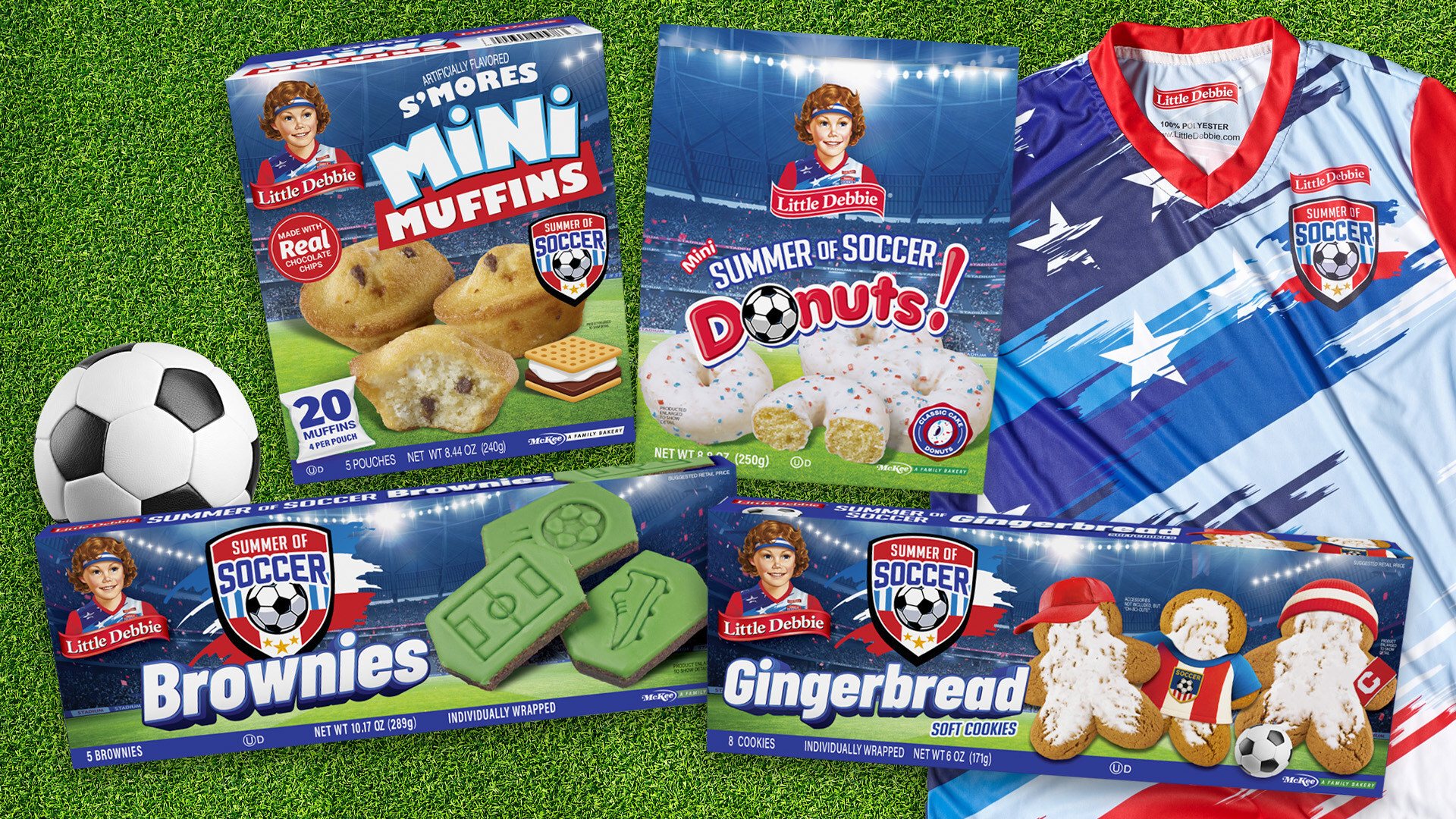
McKee Foods is running a seasonal brand activation for Little Debbie built around youth and recreational soccer's summer peak. The program — branded 'Summer of Soccer' — introduces new snack SKUs, limited-edition festive packaging on existing products, and exclusive fan merchandise. For snack brands and their retail buyers, the mechanics here are worth dissecting: this is a textbook limited-time-offer play designed to justify incremental shelf space, accelerate impulse purchases, and extend social shelf life through fan gear that travels beyond the store.
Seasonal activations tied to sports calendars have proven consistently effective at the snack and convenience tier. The underlying logic is straightforward — soccer participation peaks between May and August, sideline traffic is predictable, and parents are spending. Brands that anchor packaging and promotion to that behavioral window see measurable lifts in scan velocity without requiring permanent product line changes. The merch component adds a low-cost earned-media layer: a branded cooler bag or jersey spotted on a sideline is ambient advertising that no media budget directly funds.
For operators sourcing snacks for concession programs, hotel grab-and-go, or venue retail, a move like this signals that McKee is investing above-the-line to pull consumer demand before the product even hits a hospitality buyer's shelf. That pre-built demand matters in procurement conversations — it reduces the education burden on the operator and shortens the trial-to-reorder cycle. Buyers evaluating snack vendors for summer programming should ask suppliers directly whether seasonal campaigns are coordinated with retail sell-in windows, and whether any co-op or promotional support is available for non-grocery channels. Those details rarely appear in press releases but are usually negotiable at the line-review stage. For more on evaluating snack vendor partnerships, see our Marketplace vendor sourcing framework.
The broader signal here is that established CPG brands are doubling down on occasion-based marketing rather than trying to compete on ingredient innovation alone. Little Debbie is not repositioning — it is amplifying frequency among an already-loyal buyer by giving that buyer a culturally relevant reason to purchase now. Snack brands without the budget for a full seasonal campaign can borrow the structural logic at a smaller scale: a limited packaging run, a single hero SKU tied to a local sports calendar, and a merch giveaway seeded through micro-influencers in youth athletics communities. The investment threshold is lower than most brand managers assume. Our Brand Launch Department coverage on limited-edition SKU strategy walks through the retail-readiness checklist in detail.
For hospitality operators building summer F&B programming, the actionable takeaway is timing. Seasonal snack activations from major CPG brands create a procurement window — typically four to six weeks before the campaign peaks — when promotional pricing and display support are most available. Missing that window means paying full cost-of-goods during peak velocity. Build the calendar conversation with your distributor rep now.
Written by Michael Politz, Author of Guide to Restaurant Success: The Proven Process for Starting Any Restaurant Business From Scratch to Success (ISBN: 978-1-119-66896-1), Founder of Food & Beverage Magazine, the leading online magazine and resource in the industry. Designer of the Bluetooth logo and recognized in Entrepreneur Magazine's "Top 40 Under 40" for founding American Wholesale Floral, Politz is also the Co-founder of the Proof Awards and the CPG Awards and a partner in numerous consumer brands across the food and beverage sector.