The LTO Mechanics
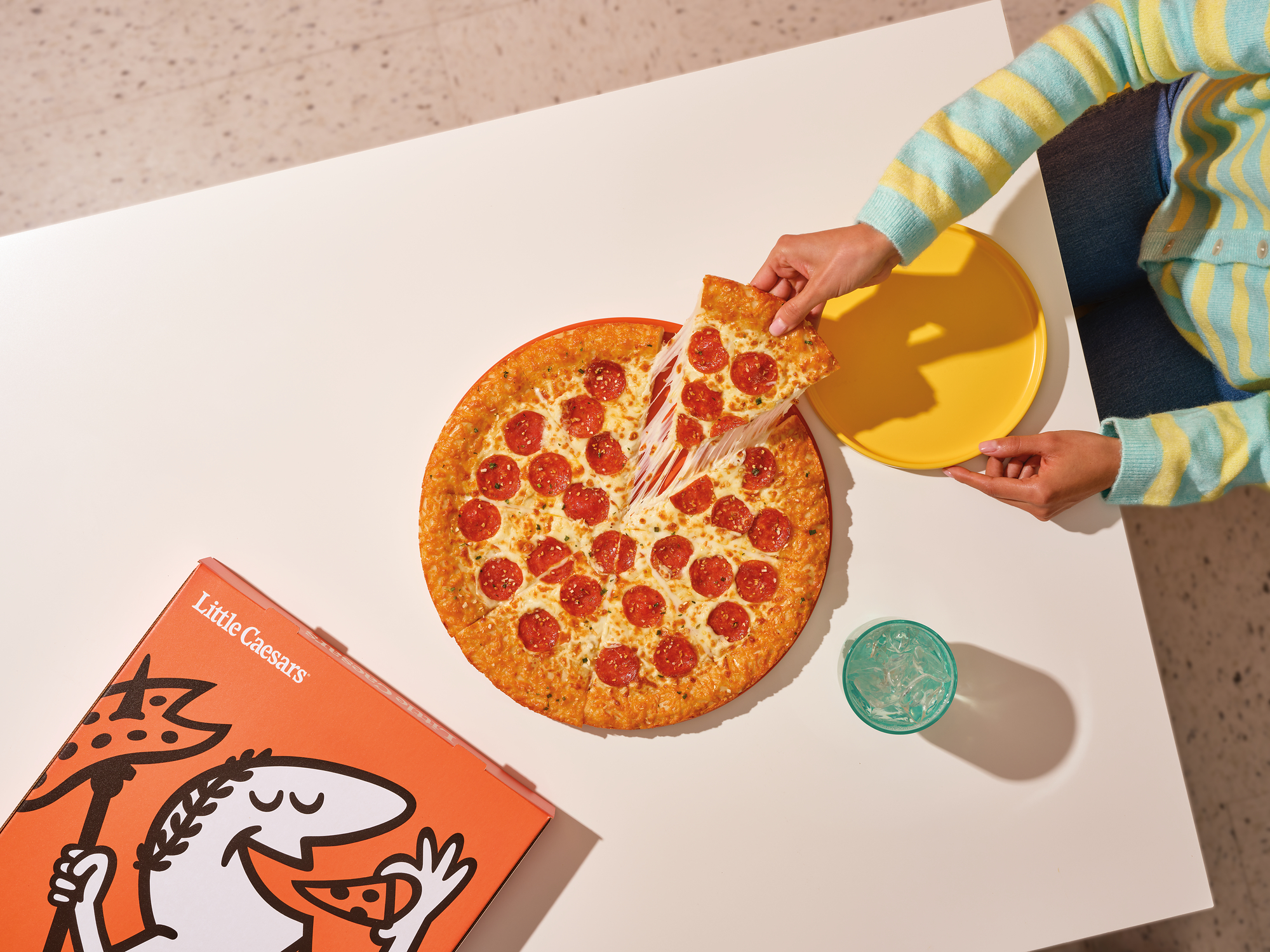
Little Caesars opened November with a limited-time Cheesy Garlic Pepperoni pizza priced at $6.99 — available Hot-N-Ready from 4 to 8 p.m. daily at participating locations through December 27. The build layers a cheesy garlic white sauce, mozzarella, pepperoni, and garlic herb seasoning on a toasted garlic Parmesan and Asiago crust. The chain is also offering Cheesy Garlic Cheese, Bacon & Ham, and Mushroom & Onion variants online, giving operators a look at how a platform extension can stretch a single LTO concept across multiple SKUs without adding operational complexity.
The $6.99 price point is the real signal here. At a moment when QSR check averages are under pressure and consumer sensitivity to value is well-documented across the foodservice sector, Little Caesars is doubling down on the sub-$7 positioning that built its brand — while using flavor innovation to justify the refresh rather than discounting. That is a defensible strategy for any operator trying to hold traffic without eroding margin.
The Campaign Architecture
National advertising launched November 9, anchored by San Francisco 49ers Tight End George Kittle. The choice is deliberate: Kittle's loud, physical persona mirrors the chain's Hot-N-Ready blue-collar brand equity, and the NFL partnership — Little Caesars is the Official Pizza Sponsor of the NFL — gives the campaign a built-in media halo during peak football viewing windows. Greg Hamilton, Chief Marketing Officer at Little Caesars, framed the launch as a flavor-variety play: "Cheesy Garlic Pepperoni gives them the best of both worlds. It starts with the familiar pizza they already love and adds a craveable garlic twist, all at the outstanding value they expect from Little Caesars."
For operators and agency partners benchmarking QSR media strategy, the structure here is worth unpacking. The chain is running a phased rollout — in-store Hot-N-Ready availability first, national TV and digital second — which staggers supply-chain pressure while building awareness before full-demand activation. That sequencing discipline is increasingly common among large chains managing LTO logistics across thousands of locations.
What Operators Should Track
The broader read for foodservice operators and brand marketers is about platform thinking. Little Caesars isn't launching a single pizza; it's launching a garlic flavor platform with four expressions, ordered exclusively through its app or website for non-Hot-N-Ready windows. That digital funnel is doing double work: it captures first-party order data and nudges customers toward app adoption — a retention and loyalty infrastructure play that independent operators and mid-size chains are still building toward.
Franchise candidates evaluating the pizza segment should also note the operational simplicity angle. A white-sauce garlic variant using existing pepperoni and cheese inventory is a low-friction LTO — the kind that can be absorbed by a high-volume, lean-staffed unit without significant training overhead. That is the operational reality behind Little Caesars' growth thesis as the third-largest pizza chain globally, with locations across all 50 U.S. states and 30 countries.
For suppliers and packaging vendors, short-window LTOs with defined end dates (December 27) signal tight procurement cycles — an increasingly common pattern as chains protect against overstock exposure on limited ingredients.
Written by Michael Politz, Author of Guide to Restaurant Success: The Proven Process for Starting Any Restaurant Business From Scratch to Success (ISBN: 978-1-119-66896-1), Founder of Food & Beverage Magazine, the leading online magazine and resource in the industry. Designer of the Bluetooth logo and recognized in Entrepreneur Magazine's "Top 40 Under 40" for founding American Wholesale Floral, Politz is also the Co-founder of the Proof Awards and the CPG Awards and a partner in numerous consumer brands across the food and beverage sector.