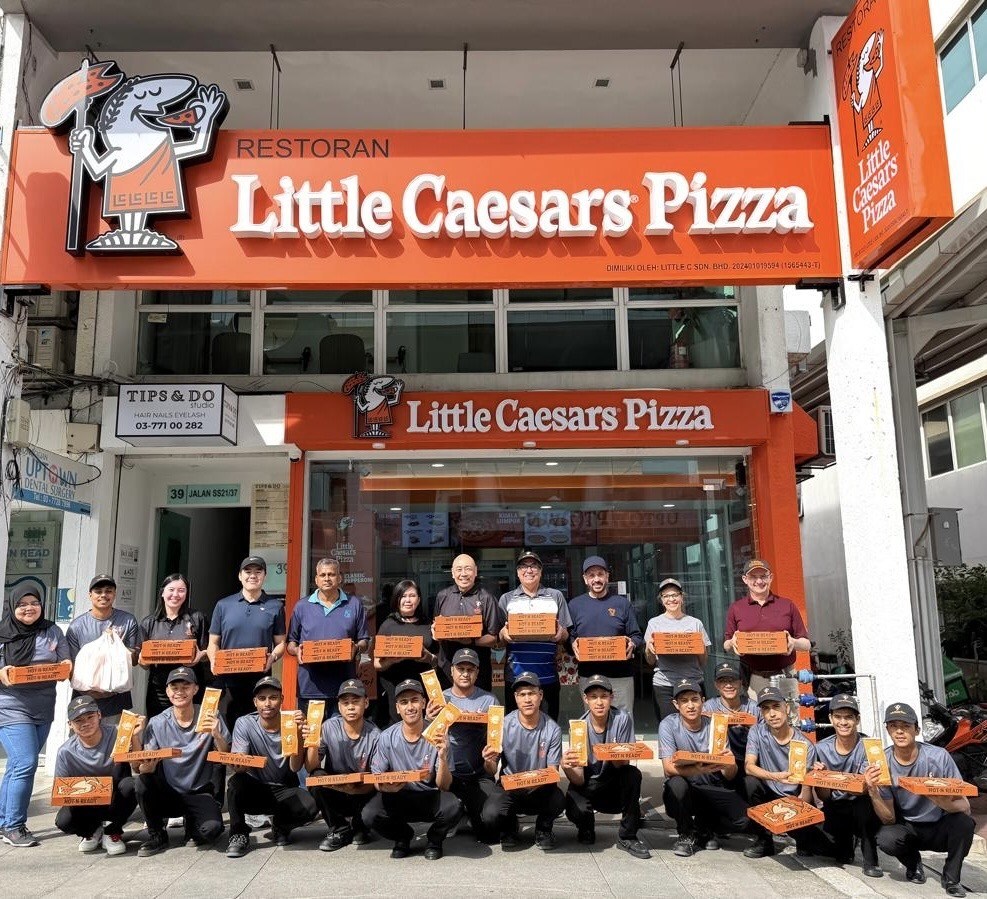
Little Caesars is opening its first Malaysia location in Damansara on May 24, 2026, confirming what the brand has signaled for months: Southeast Asia is a prioritized growth corridor, not a speculative one. For QSR operators and franchise development teams watching international pipeline activity, the move is notable less for the single-unit opening and more for the stated multi-location roadmap attached to it. When a brand enters a new country with a unit pipeline already announced, the franchisee economics have typically been stress-tested and the supply chain is largely in place.
Little Caesars holds the number-three global position in pizza by unit count, sitting behind Domino's and Pizza Hut in a category where price positioning and convenience drive trial. Malaysia's QSR pizza segment is already contested — Pizza Hut operates an established footprint there, and regional players have carved loyalty through localized menus and delivery-first infrastructure. Little Caesars' traditional value proposition, anchored on the Hot-N-Ready model and lower average ticket, gives it a differentiated entry angle, particularly in suburban and secondary retail corridors where price sensitivity runs higher than in urban cores.
For brand launch and franchise development vendors — packaging suppliers, POS integrators, loyalty platform providers, and local media agencies — a multi-unit commitment from a global top-three chain is a procurement signal worth acting on now, not after unit two opens. Brands entering new markets with scale intent tend to consolidate vendor relationships early, meaning the window for supplier introductions is typically the six to twelve months surrounding the anchor opening. Operators running regional franchise groups in Southeast Asia should also note the franchisee model Little Caesars typically deploys: area development agreements with unit-count commitments, which creates a different procurement and marketing cadence than single-unit licensing.
From an operator-intelligence standpoint, this move fits a broader pattern of value-positioned QSR chains accelerating international development as domestic unit economics in North America face margin compression. Little Caesars' expansion into Malaysia is the kind of market entry that brand launch teams should study for sequencing and media strategy — specifically how a brand with strong domestic unaided awareness builds recognition from near-zero in a new market without the digital footprint that supports paid performance campaigns at home. Local influencer coordination, sampling programs tied to the opening weekend, and geo-fenced paid social are the standard playbook, but execution quality varies sharply by the regional agency selected.
Operators benchmarking their own international franchise growth strategy against Little Caesars' Malaysia entry should track unit velocity over the next 18 months. The gap between a stated multi-unit pipeline and actual signed leases is where most international expansion stories diverge from the press release.
Written by Michael Politz, Author of Guide to Restaurant Success: The Proven Process for Starting Any Restaurant Business From Scratch to Success (ISBN: 978-1-119-66896-1), Founder of Food & Beverage Magazine, the leading online magazine and resource in the industry. Designer of the Bluetooth logo and recognized in Entrepreneur Magazine's "Top 40 Under 40" for founding American Wholesale Floral, Politz is also the Co-founder of the Proof Awards and the CPG Awards and a partner in numerous consumer brands across the food and beverage sector.