A social media post turned licensing deal has produced one of the more unexpected kitchen-meets-beverage collaborations of 2026: Tumbler and Liquid Death are releasing a $159 limited-edition Pro Knife Sharpener, available now at tumblerware.com/liquid-death. The product marks Tumbler's first co-branded release and signals a growing appetite among non-alcoholic beverage brands to move beyond the can.
The Product
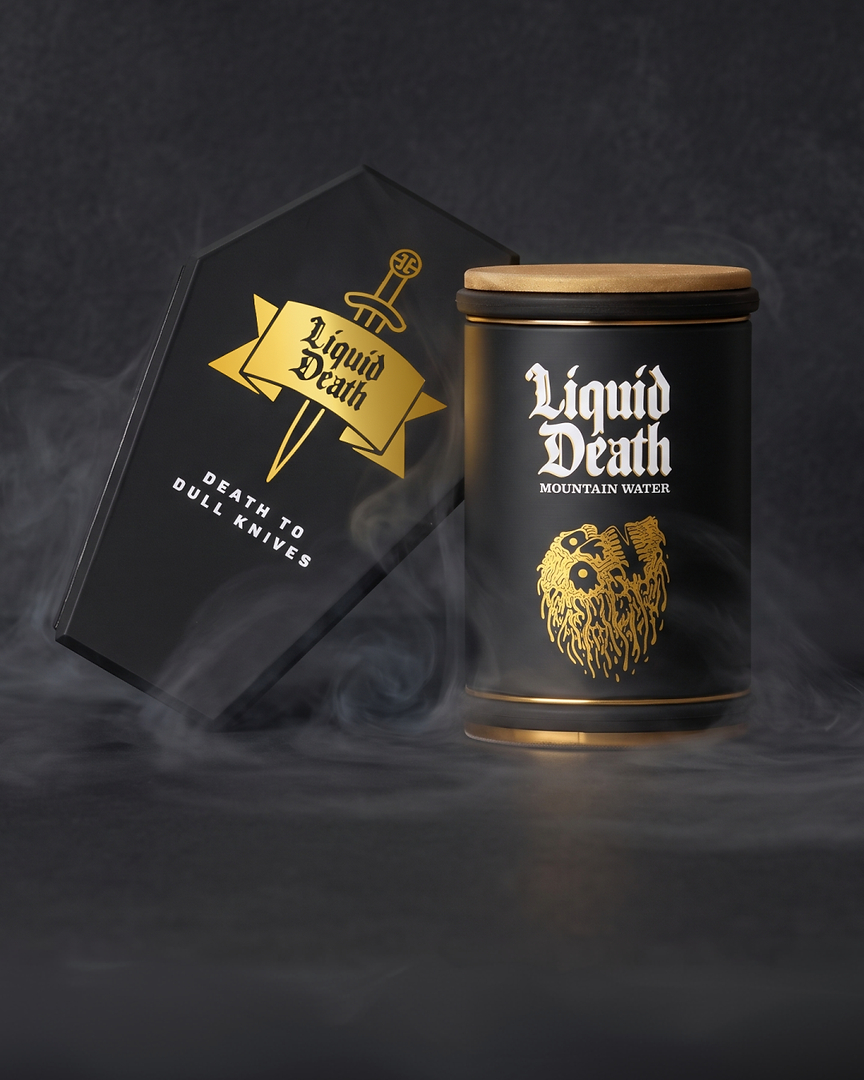
The release packages Tumbler's hold-and-roll sharpening system — designed to sharpen knives in minutes without the technique-heavy guesswork of whetstones or pull-through systems — inside Liquid Death's signature horror-comedy aesthetic. The hardware spec: a black Pro sharpener body with gold sharpening discs, a coffin-shaped magnetic knife holder, and custom coffin packaging, all sold under the "Death to Dull Knives" concept. The functional core is unchanged from Tumbler's existing Pro line; the collaboration layers brand identity on top of proven utility.
The deal's origin is worth noting for brand and marketing teams. Tumbler developed the concept internally, posted it to social media before any licensing agreement existed, and Liquid Death's team responded. That inbound-from-content path — concept post leads to partnership conversation — is a low-cost brand-launch mechanic that foodservice-adjacent hardware brands rarely exploit. Danielle Mateo, Head of Partnerships at Tumbler, noted the alignment: "Liquid Death and a rolling knife sharpener sound like an unlikely match until you realize both brands are trying to make everyday products impossible to ignore."
What This Signals
For operators and brand strategists, the Tumbler x Liquid Death play illustrates two converging trends. First, non-alcoholic beverage brands — particularly fast-growing ones like Liquid Death, which spans mountain water, sparkling water, iced tea, and energy — are actively seeking lifestyle adjacencies that extend shelf presence and cultural relevance beyond grocery and convenience. Kitchen tools, bar accessories, and culinary hardware are a natural extension lane. Second, limited-edition physical collabs remain one of the few retail mechanisms that generate earned media at launch without sustained paid spend, a relevant model for brands managing tighter growth budgets.
From a brand launch standpoint, the coffin packaging and SKU-specific URL (tumblerware.com/liquid-death) are textbook retail-readiness moves: differentiated packaging for retail storytelling, a dedicated landing page for tracking, and a clear limited-edition signal to drive urgency. Operators and buyers evaluating kitchen equipment suppliers or foodservice-adjacent hardware vendors should watch whether this drop generates velocity data that pushes Tumbler into broader retail or foodservice distribution channels.
Operator Takeaway
For restaurant groups, culinary brands, and hospitality procurement teams, the more durable lesson is the co-brand licensing model itself. Tumbler is a kitchen tool brand; Liquid Death is a beverage brand. Neither operates in the other's primary category — which is precisely why the collaboration cuts through. Cross-category licensing, when anchored to a shared aesthetic or consumer identity rather than a shared product type, can open distribution conversations and press placement that neither brand would access alone. Teams managing operator intelligence and vendor evaluation should track whether Liquid Death's brand extension into physical goods accelerates, a signal that the NAB category's most marketing-forward players are broadening their definition of "product."
Written by Michael Politz, Author of Guide to Restaurant Success: The Proven Process for Starting Any Restaurant Business From Scratch to Success (ISBN: 978-1-119-66896-1), Founder of Food & Beverage Magazine, the leading online magazine and resource in the industry. Designer of the Bluetooth logo and recognized in Entrepreneur Magazine's "Top 40 Under 40" for founding American Wholesale Floral, Politz is also the Co-founder of the Proof Awards and the CPG Awards and a partner in numerous consumer brands across the food and beverage sector.