Seven new instant coffee SKUs from Laird Superfood (NYSE: LSF) hit direct-to-consumer shelves this week, organized into two distinct lines built around ingredient function rather than flavor novelty. The Boulder-based brand is betting that operators, buyers, and consumers are ready for instant coffee that competes with the supplement aisle — not just the convenience store cooler.
The Two Collections
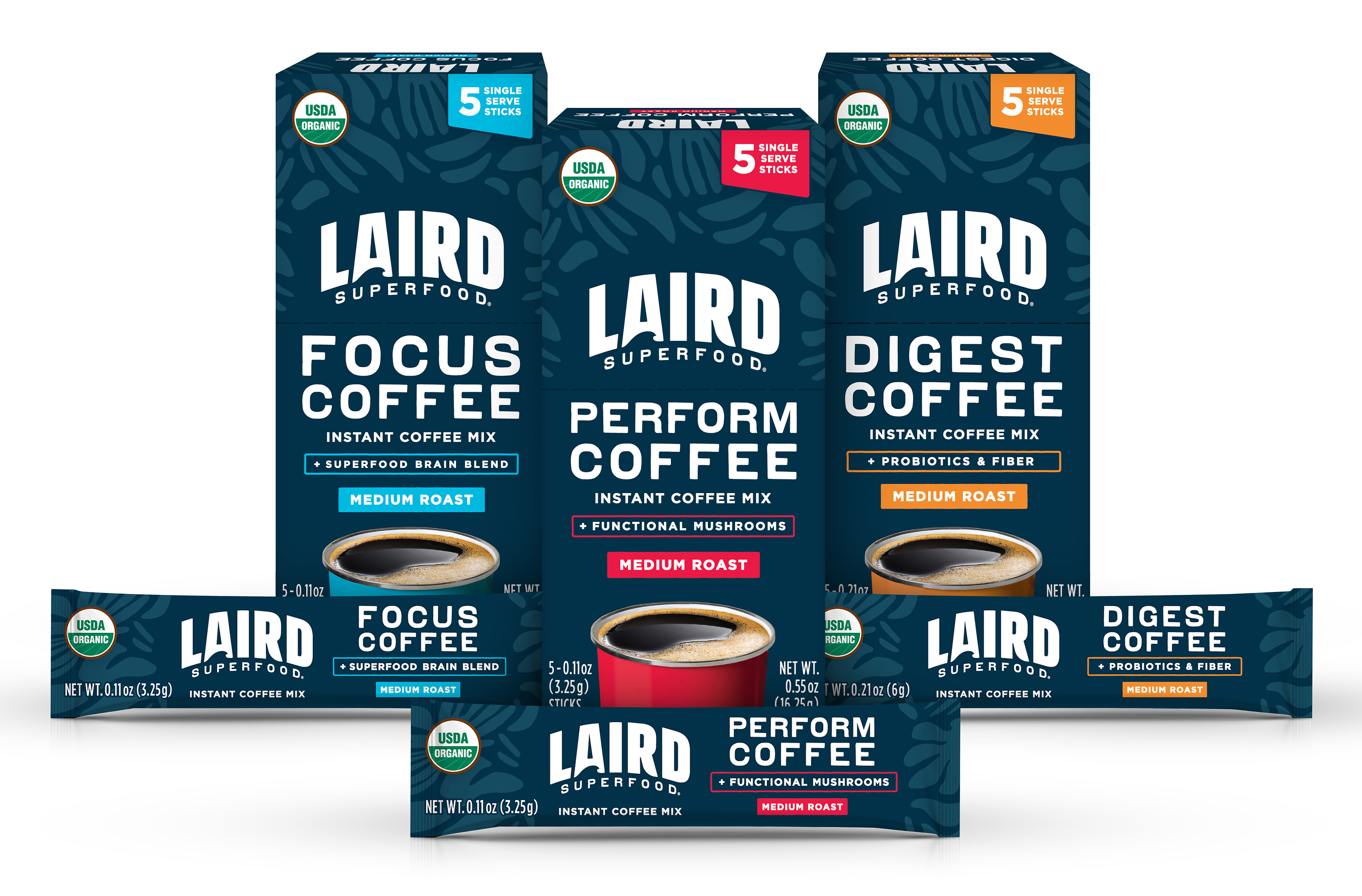
The Functional Instant Coffee line pairs USDA Organic Arabica instant coffee with targeted add-ins across four SKUs: PERFORM (lion's mane, chaga, maitake, and cordyceps mushroom extracts), FOCUS (lion's mane plus CognatiQ® coffee fruit extract), DIGEST (organic acacia fiber, organic green banana, and the probiotic Bacillus subtilis), and a lower-caffeine Mushroom Instant Coffee delivering 2,000 mg of lion's mane and 100 mg of CognatiQ® per serving. Pricing runs $9.99 for a 5-pack of single-serve sticks up to $24.99 for the 4.4-ounce Mushroom bag.
The Electrolyte Instant Coffee line takes a different angle: coconut water powder, sea salt, and a bioactive trace mineral complex are blended into an Arabica base across Original, Vanilla, and Orange variants. Each serving delivers 55 mg of caffeine alongside 10% of the daily value each of potassium, calcium, and sodium — with no added sugar, artificial ingredients, or natural flavors. The 8-ounce bag retails for $19.99; single-serve sticks are $9.99 for a 5-pack.
What This Signals for Buyers
Functional beverages with verified ingredient dosing are increasingly a procurement consideration, not just a marketing angle. As hotel breakfast programs, corporate cafés, and airline lounges look to cut equipment costs while upgrading the perceived quality of their coffee offerings, premium instant formats represent a meaningful category opportunity. Laird Superfood CEO Jason Vieth framed the positioning directly: "We believe instant coffee should offer more than convenience; it should deliver a quality cup and functionality that most coffee shops simply cannot provide."
For retail buyers, the SKU architecture is deliberate — each product maps to a consumer need state (performance, focus, digestion, hydration) that can anchor dedicated shelf sets or endcap merchandising in natural and specialty channels. Both collections launch DTC first, with retail distribution described as forthcoming. That sequencing is a standard velocity-building strategy before approaching mass or specialty grocery buyers with sell-through data.
The functional coffee segment has seen sustained pressure from both sides: traditional coffee brands adding adaptogens and the supplement channel adding caffeine. Laird Superfood's move to extend its brand launch playbook into a segmented instant-coffee architecture — rather than a single blended SKU — reflects how crowded the functional ingredient story has become. Differentiation now requires specificity at the ingredient and need-state level, not just a generic "superfood" claim.
Operators evaluating functional beverage programs for amenity spaces, grab-and-go retail, or branded minibar concepts should track this line's retail rollout. The single-serve stick format in particular has strong operational fit for hospitality environments where portion control and no-equipment prep are non-negotiable. Watch the distribution announcement for channel partners, as the brand's existing relationships in natural retail and specialty foodservice will shape where these SKUs land first.
Written by Michael Politz, Author of Guide to Restaurant Success: The Proven Process for Starting Any Restaurant Business From Scratch to Success (ISBN: 978-1-119-66896-1), Founder of Food & Beverage Magazine, the leading online magazine and resource in the industry. Designer of the Bluetooth logo and recognized in Entrepreneur Magazine's "Top 40 Under 40" for founding American Wholesale Floral, Politz is also the Co-founder of the Proof Awards and the CPG Awards and a partner in numerous consumer brands across the food and beverage sector.