
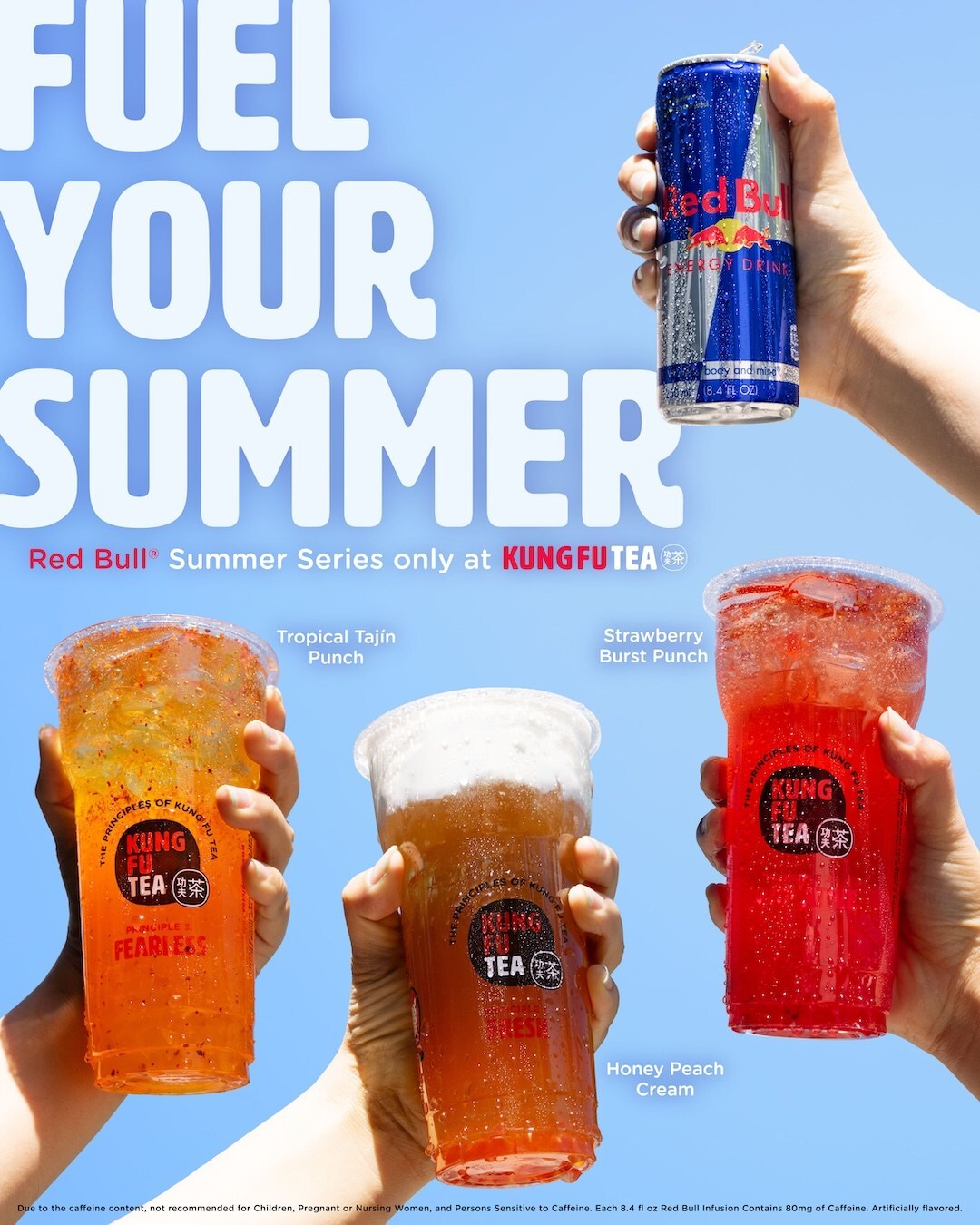
Kung Fu Tea and Red Bull are running a co-branded limited-time program from June 1 through July 24, 2026 — a 54-day window engineered to ride the largest soccer event of the summer. The campaign introduces three new drinks drawing on flavor profiles from Mexico, Canada, and the United States, paired with themed packaging and collectible iron-on team patches. For operators watching how franchise systems monetize foot traffic around major sports cycles, the structure here is worth studying.
Kung Fu Tea holds the top position in U.S. bubble tea by unit count, and Red Bull commands the global energy drink category. Neither brand needs the other for reach — which means this partnership is less about awareness and more about occasion engineering. The drinks are built to convert existing boba customers into repeat visitors across a condensed promotional window, while the soccer tie-in gives both brands a cultural entry point that extends well beyond their core demographics. That overlap — boba loyalists plus soccer-engaged consumers — is a deliberate audience stack.
For multi-unit operators and franchise buyers, the mechanics here mirror what the Brand Launch Department has tracked in seasonal LTO strategy: short windows, themed physical merchandise, and an anchor event that drives urgency without requiring heavy media spend. The iron-on patches in particular are a low-cost retention mechanic — collectibles that pull customers back across the promotional period rather than on a single visit. Red Bull's distribution and marketing infrastructure also gives Kung Fu Tea earned media lift at essentially no incremental cost to franchisees.
From a procurement and supplier-relations angle, co-brand deals of this type increasingly show up in operator intelligence on beverage category consolidation: large NAB players are actively seeking QSR and fast-casual anchor partners to activate around tentpole moments. Suppliers watching this should note that the ask from brands like Kung Fu Tea is now full-campaign integration — packaging, product development, and event alignment — not just a logo placement. Vendors and distributors who can offer that bundled activation model are better positioned for these conversations.
The broader signal for independent and multi-unit operators: if you are not mapping your promotional calendar to major sporting or cultural moments 90 to 120 days out, you are ceding planned traffic to chains that are. A co-brand partner with an existing audience — even a local one — can compress your production and media costs while extending your reach. The Kung Fu Tea and Red Bull model is a franchise-scale version of a playbook available at almost any operator tier.
Written by Michael Politz, Author of Guide to Restaurant Success: The Proven Process for Starting Any Restaurant Business From Scratch to Success (ISBN: 978-1-119-66896-1), Founder of Food & Beverage Magazine, the leading online magazine and resource in the industry. Designer of the Bluetooth logo and recognized in Entrepreneur Magazine's "Top 40 Under 40" for founding American Wholesale Floral, Politz is also the Co-founder of the Proof Awards and the CPG Awards and a partner in numerous consumer brands across the food and beverage sector.

