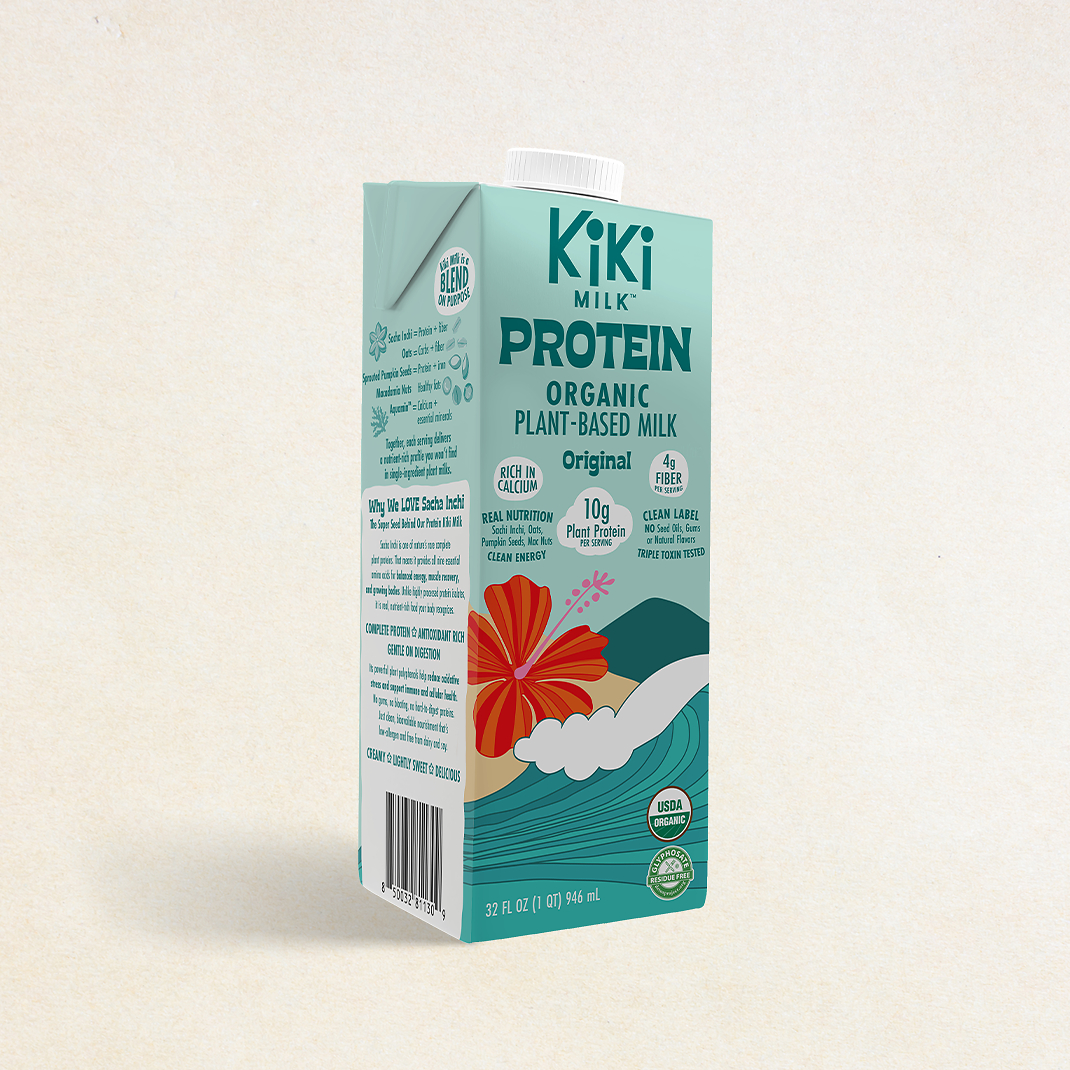
PlantBaby's Kiki Milk is moving beyond its plant-based beverage roots with the launch of Kiki Milk Protein, a USDA Certified Organic product line built around sacha inchi — an Amazonian seed that delivers complete protein, fiber, and omega-3 fatty acids without the heavy processing typically associated with pea or soy isolates. The product launches online nationwide in 32-oz six-packs at an MSRP of $49.99.
The Market Logic
The timing reflects real category pressure. The high-protein food and beverage segment is now valued at $52 billion and is projected to reach $117 billion by 2034, with protein drinks alone accounting for $30 billion of that figure, according to industry data cited by the brand from Towards FnB. Seventy-one percent of American shoppers report actively trying to increase protein intake, skewing toward Millennials, Gen Z, and women — and 55% of parents say they want more plant-based protein options for their children but don't know where to start. That last data point is notable for a brand that built its original audience around family nutrition.
What separates this launch from a typical protein-line extension is the sourcing rationale. Sacha inchi is minimally processed and naturally contains all nine essential amino acids, 4 grams of fiber per serving, and omega-3 fatty acids — nutrients that are typically stripped out during the isolate process used for conventional soy and pea protein products. Co-Founder Alex Abelin of PlantBaby framed it directly: "When you create a protein isolate, the ingredient typically goes through significant processing to separate the protein from the rest of the seed. In that process, you can lose naturally occurring components like fiber, healthy fats, and other nutrients that are part of the whole food."
What Operators Should Watch
For foodservice buyers and retail category managers, this launch is a signal worth tracking. Clean-label protein has been a crowded claim for several years, but the ingredient story here is more defensible than most — sacha inchi carries genuine traceability and minimal-processing credentials that align with where both retail buyers and foodservice procurement teams are applying scrutiny. The oat base in the Original variety also addresses texture, a persistent friction point in plant-protein adoption.
Distribution is starting online-only via kikimilk.com and Amazon, which is a deliberate DTC-first posture. Brands in the brand launch phase frequently use this approach to validate velocity data before pursuing grocery chain resets — a sequence that buyers at regional and national chains have come to expect from challenger CPG brands. Kiki Milk already holds shelf presence across major national chains through its core beverage line, which reduces the cold-start risk considerably when the brand eventually takes Protein into brick-and-mortar.
For operators sourcing plant-based protein for smoothie programs, café menus, or foodservice-packaged RTD options, the no-gum, no-seed-oil formulation is also worth noting. As menu transparency standards continue to tighten in both foodservice and retail, ingredient lists that hold up to scrutiny are increasingly a procurement prerequisite rather than a differentiator. Kiki Milk Protein's positioning — whole-food nutrition, glyphosate-residue-free, Certified Organic — checks the boxes that institutional and independent buyers alike are now putting in RFPs.
Written by Michael Politz, Author of Guide to Restaurant Success: The Proven Process for Starting Any Restaurant Business From Scratch to Success (ISBN: 978-1-119-66896-1), Founder of Food & Beverage Magazine, the leading online magazine and resource in the industry. Designer of the Bluetooth logo and recognized in Entrepreneur Magazine's "Top 40 Under 40" for founding American Wholesale Floral, Politz is also the Co-founder of the Proof Awards and the CPG Awards and a partner in numerous consumer brands across the food and beverage sector.