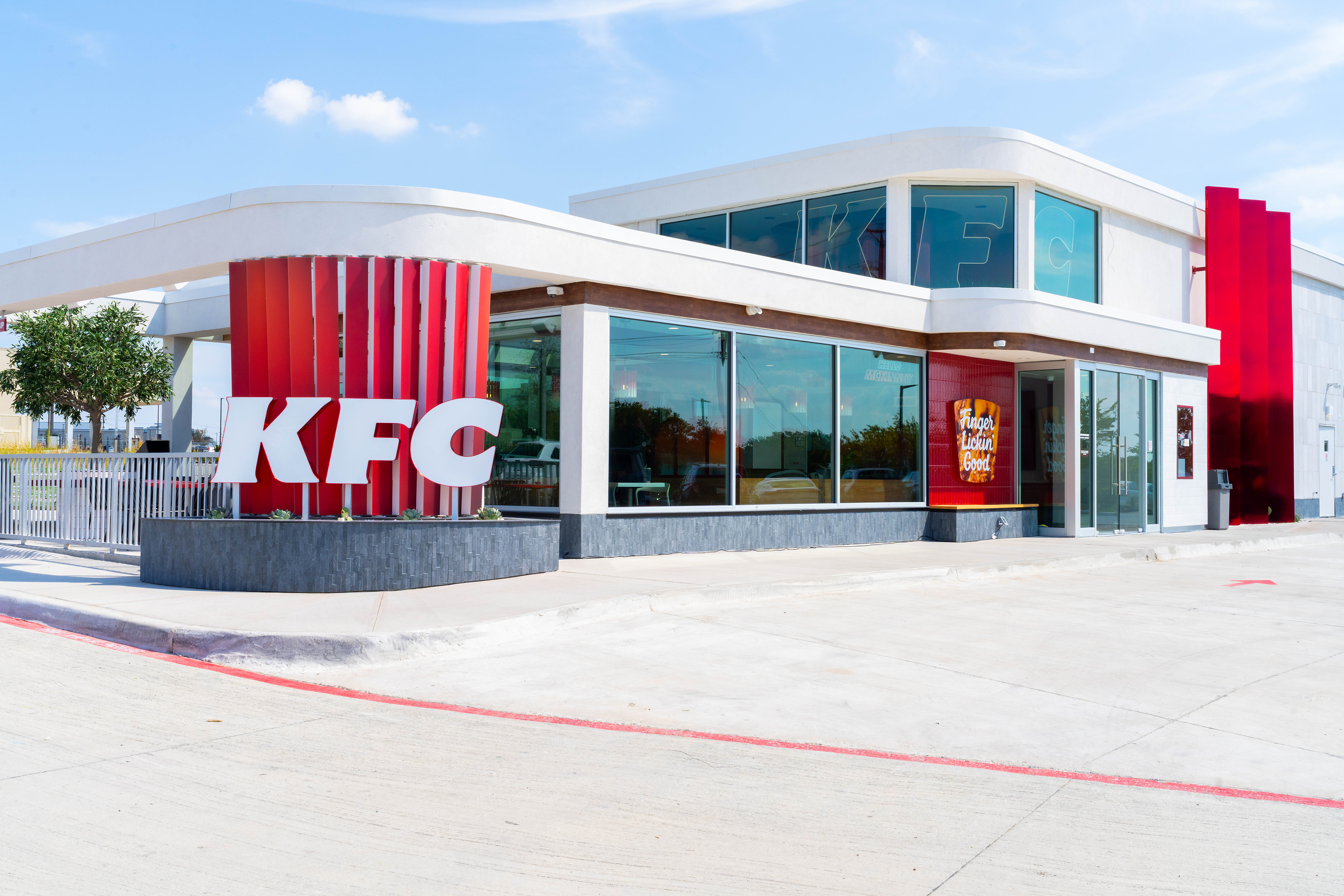
KFC is opening a single-unit concept restaurant called Open House on September 26 in McKinney, Texas — and the 3,400-square-foot location is explicitly designed as an operator learning lab, not a flagship showpiece. KFC U.S. President Catherine Tan-Gillespie described it plainly: the brand wants to identify what works for guests, teams, and unit economics, then scale the strongest ideas across 3,500-plus domestic restaurants. For operators tracking how major QSR chains test and diffuse innovation, this is the format to watch.
What the Concept Tests
Open House is running several concurrent experiments inside one building. The most significant from a revenue-mix standpoint is daypart expansion: the unit opens at 6:00 a.m. with a dedicated breakfast menu — Breakfast Sandwiches, Hashbrown Sticks, Mini Cronuts, iced lattes — and stays open until midnight, adding a late-night window KFC has not historically prioritized at scale. Both dayparts represent incremental cover opportunities that franchisees will be watching closely before any system-wide capital commitment.
The beverage program is the other major variable. Open House is debuting lemonades, boba refreshers, and proprietary Krunch shakes as part of KFC's global beverage strategy — a category that Yum! Brands has been building across its international portfolio. Beverage attachment rates directly affect ticket averages and margin per transaction, so franchisee performance data from this unit will carry real weight in any future brand standards conversation.
Service model changes are equally consequential. The location adds table service, self-order kiosks, digital menu boards, dual drive-thru lanes, and a dedicated mobile pick-up lane — a hybrid model that mirrors what Chick-fil-A and McDonald's have deployed at their own next-generation units. For operators benchmarking labor models, the question is whether table service can be layered onto a QSR footprint without eroding throughput or compressing margins.
What Operators Should Track
KFC's framing around "four customer touchpoints" — Product, Promotion, Place, and Price — signals that Open House is also a pricing and promotional test environment, not just a design prototype. The expanded sauce customization (Dipped and Drizzled platforms), mix-and-match formats, and elevated sides are all designed to lift average check while maintaining approachable value positioning. How that balance performs in a suburban Dallas-Fort Worth market will give the brand real transaction data before any broader rollout.
For vendors and suppliers in the foodservice technology and packaging space, a concept of this kind typically precedes a multi-year procurement cycle. Digital menu board vendors, kiosk hardware providers, beverage equipment suppliers, and packaging partners with experience in multi-daypart QSR formats should treat Open House as an early-stage signal. System-wide adoption across 3,500 units — even partial adoption — represents a significant contract opportunity.
For multi-unit operators and franchisees tracking QSR brand strategy and menu trends, the McKinney unit is worth visiting or monitoring in the trade press through Q4 2026 and into 2027. KFC has been transparent that scaling "the strongest ideas" is the explicit end goal — which means the data collection phase is already underway.
Written by Michael Politz, Author of Guide to Restaurant Success: The Proven Process for Starting Any Restaurant Business From Scratch to Success (ISBN: 978-1-119-66896-1), Founder of Food & Beverage Magazine, the leading online magazine and resource in the industry. Designer of the Bluetooth logo and recognized in Entrepreneur Magazine's "Top 40 Under 40" for founding American Wholesale Floral, Politz is also the Co-founder of the Proof Awards and the CPG Awards and a partner in numerous consumer brands across the food and beverage sector.