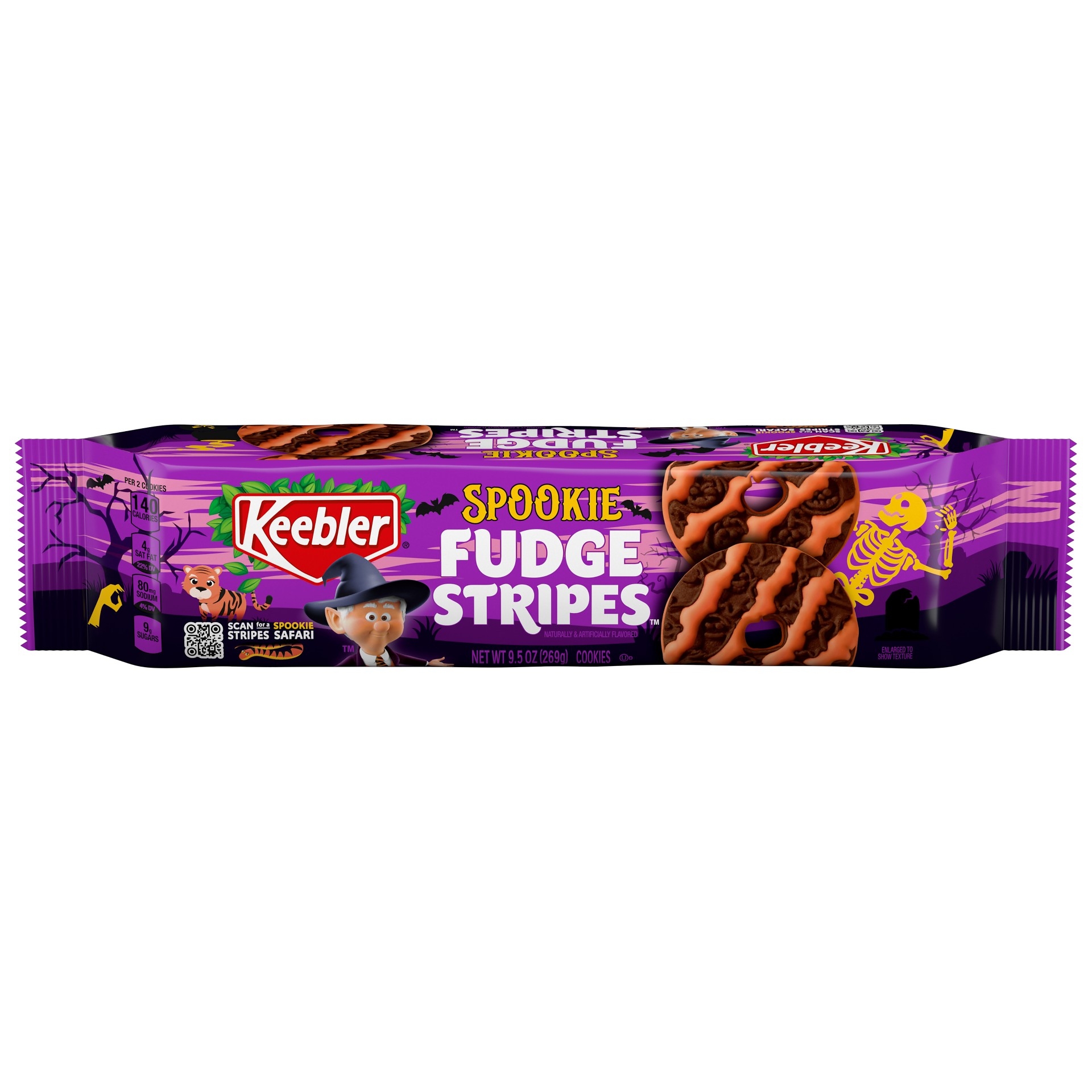
Keebler is bringing back its Limited Edition Spookie Fudge Stripes for Halloween 2026 alongside a materially expanded version of the Spookie Stripes Safari — a hybrid experiential and digital campaign that runs September 1 through October 31 at six zoos nationwide and on OpenForMagic.com. For food and beverage operators tracking how consumer packaged goods brands are engineering seasonal sell-through, this is a clean case study in multi-touchpoint LTO architecture.
The Activation Model
The mechanic is straightforward: shoppers scan a QR code on-pack for access to an illustrated digital zoo where they search for striped cookies among striped animals, logging discoveries for sweepstakes entries. The same safari experience runs live at Brookfield Zoo in Chicago, Nashville Zoo at Grassmere, Phoenix Zoo, Kansas City Zoo & Aquarium, Houston Zoo, and Minnesota Zoo — included with general admission or membership, no separate ticket required. Keebler character Ernie the Elf appears at in-person events alongside branded signage and product sampling. The campaign is produced in partnership with Allionce Group, which brokered the zoo network for the second consecutive year.
The grand prize — a VIP family weekend to Nashville Zoo with airfare, hotel, and adventure-pass access — anchors the sweepstakes and gives the campaign a media-worthy centerpiece. Prize architecture like this is increasingly common in seasonal LTO campaigns because it extends earned media life well past launch day.
What Operators Should Watch
For retailers and foodservice buyers, the Keebler playbook surfaces several signals worth tracking heading into Q4 planning.
First, the on-pack QR code is doing more than one job. It drives traffic to a branded digital environment, captures consumer engagement data, and extends dwell time with the product beyond the shelf moment. Brands investing in QR-linked digital experiences are building first-party data assets that support retargeted digital campaigns — a channel CPG brands are leaning into as third-party cookie deprecation reshapes programmatic buying. Operators running private-label or co-branded seasonal SKUs should note the infrastructure investment required to make this work cleanly.
Second, the zoo partnership model is a form of geo-fenced experiential marketing. Six metro markets — Chicago, Nashville, Phoenix, Kansas City, Houston, and Minneapolis — receive brand-safe, family-oriented in-person exposure timed to seasonal foot traffic spikes. This is not a mass-media buy; it is a precision channel selection designed to reach a specific consumer segment (families with children) in a trusted context. Brands and agencies evaluating experiential marketing budgets should benchmark the cost-per-engagement against digital-only alternatives before dismissing venue-based activations as expensive.
Third, the second-year return of this program is the most operationally significant detail. Keebler and Allionce Group iterated — adding zoo locations, updating digital gameplay, and expanding content — rather than rebuilding from scratch. That compounding investment pattern is how seasonal brand platforms generate category authority over time. Buyers at grocery and mass retail respond to programs with demonstrated repeat execution; it signals brand commitment and reduces their risk in allocating shelf space.
For food and beverage brands evaluating Halloween seasonal strategy, Keebler's approach offers a repeatable framework: limited-edition SKU, on-pack digital bridge, venue-based experiential in high-foot-traffic markets, and a prize structure that earns media coverage. The underlying logic applies well beyond cookies.
The Takeaway for Buyers and Vendors
Ferrero's North American portfolio, which now includes Keebler alongside Butterfinger, Nutella, and Kinder, gives the company scale to run coordinated seasonal campaigns across multiple brands simultaneously. That scale matters for retail buyers negotiating promotional support commitments and for agency partners pitching integrated seasonal programs.
Written by Michael Politz, Author of Guide to Restaurant Success: The Proven Process for Starting Any Restaurant Business From Scratch to Success (ISBN: 978-1-119-66896-1), Founder of Food & Beverage Magazine, the leading online magazine and resource in the industry. Designer of the Bluetooth logo and recognized in Entrepreneur Magazine's "Top 40 Under 40" for founding American Wholesale Floral, Politz is also the Co-founder of the Proof Awards and the CPG Awards and a partner in numerous consumer brands across the food and beverage sector.