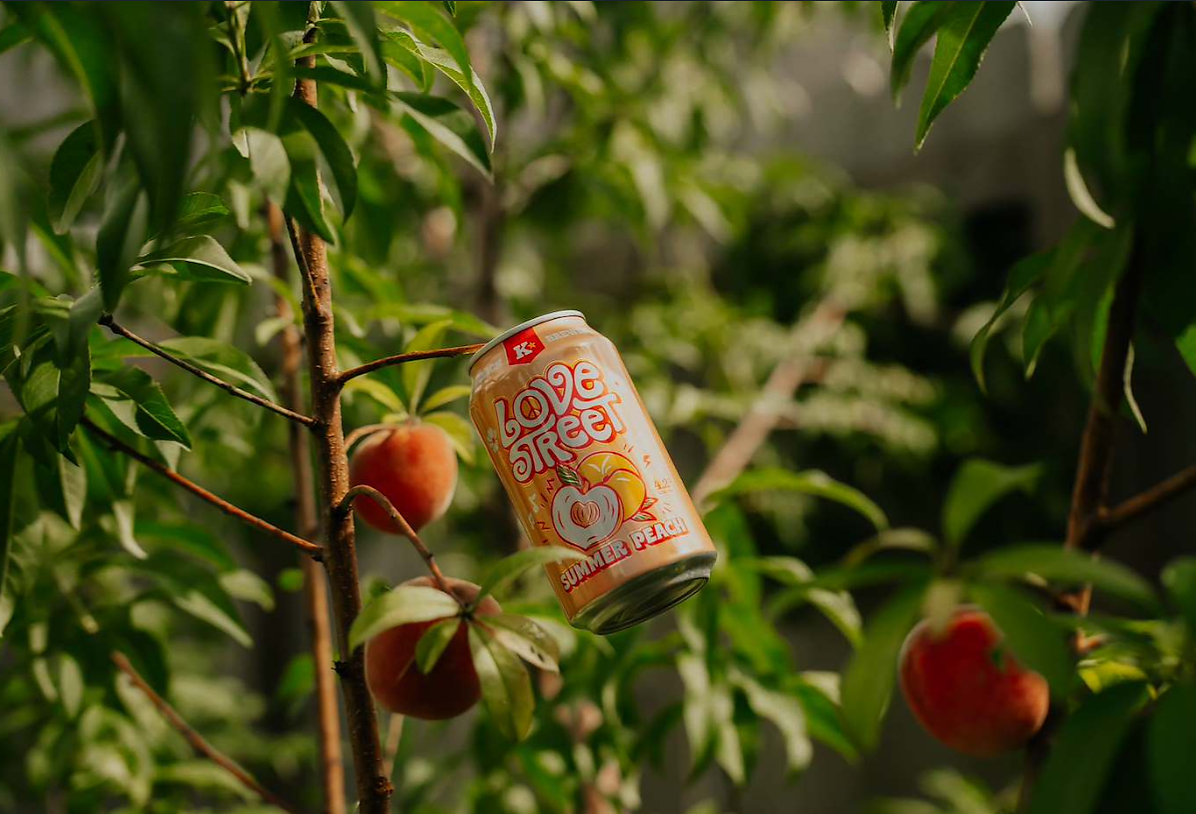
Karbach Brewing Co. has reactivated Love Street Summer Peach Ale for the 2026 summer season, moving the limited-time peach blonde ale back into Texas retail accounts and onto draft at its Houston Biergarten simultaneously. The move is a textbook seasonal LTO execution: anchor the return to a proven base SKU — in this case, Love Street Blonde, ranked the No. 2 Blonde in Texas by volume — and layer a fruit extension on top to capture incremental trial without cannibalizing the core item.
For operators buying into the beer category, the dual-channel approach here is the real data point. Karbach is not treating retail and on-premise as separate conversations. The Biergarten functions as a live sampling floor and a content engine, while statewide retail distribution amplifies awareness at scale. Regional craft brewers and beverage suppliers that rely exclusively on one channel are leaving cross-promotional lift on the table, particularly during high-velocity summer windows when trial rates for new and returning SKUs spike.
The broader seasonal LTO landscape in craft beer has compressed. Lead times from brand decision to shelf have tightened, and buyers at regional chains are filling summer slots earlier than in prior years. Operators and brand managers sourcing seasonal or limited-run beverages for summer menus — whether for a hotel F&B program, a casual-dining group, or a specialty retailer — should expect allocated inventory on high-demand seasonal items to move faster. If Love Street Peach tracks against prior-year velocity on the Love Street Blonde base, it is a low-risk addition to a summer beverage rotation without requiring a new supplier relationship.
From a brand-launch and distribution standpoint, Karbach's execution reinforces a pattern that Food & Beverage Magazine has tracked across regional craft: seasonal line extensions built on equity SKUs consistently outperform new-brand launches at retail because buyers can anchor the placement decision to existing scan data. For emerging beverage brands pitching buyers this summer, that is the structural argument to internalize — prove the base, then extend. For operators evaluating beverage program updates and LTO strategy, the same logic applies to menu execution: a tested flavor platform reduces trial friction for guests and simplifies staff training.
On the marketing side, lower-ABV, fruit-forward ales continue to index well with consumers cross-shopping the hard seltzer and ready-to-drink categories, which means Karbach's positioning here is not purely a nostalgia play — it is a category-conversion opportunity. Operators running summer events, outdoor programming, or Biergarten-style activations should evaluate whether a named seasonal from a credentialed regional brand carries more menu equity than a private-label or generic seasonal fill. For growth and media teams managing summer campaign spend, co-branding opportunities around high-recognition regional seasonals are underutilized at the venue level.
Written by Michael Politz, Author of Guide to Restaurant Success: The Proven Process for Starting Any Restaurant Business From Scratch to Success (ISBN: 978-1-119-66896-1), Founder of Food & Beverage Magazine, the leading online magazine and resource in the industry. Designer of the Bluetooth logo and recognized in Entrepreneur Magazine's "Top 40 Under 40" for founding American Wholesale Floral, Politz is also the Co-founder of the Proof Awards and the CPG Awards and a partner in numerous consumer brands across the food and beverage sector.