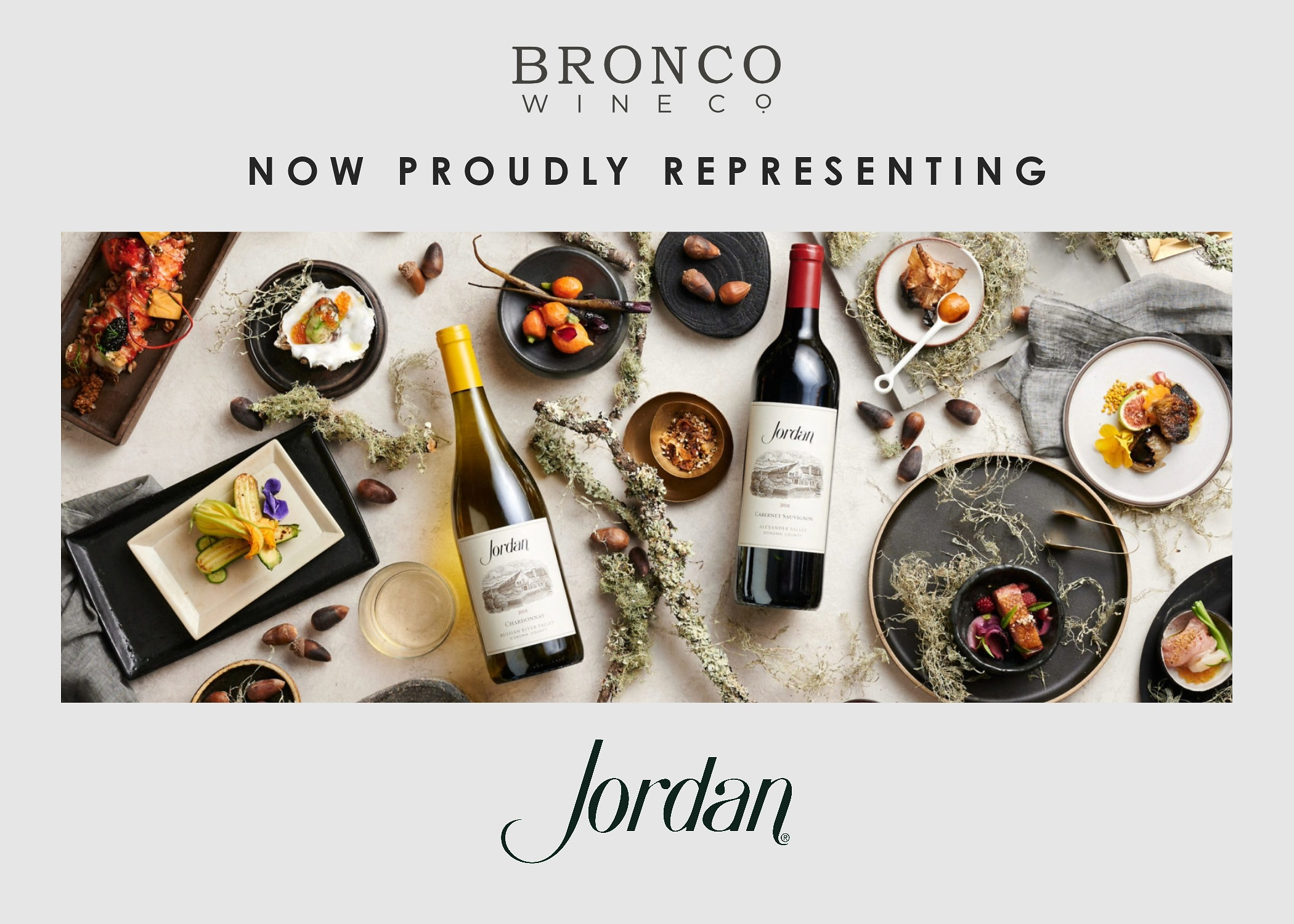
Jordan Vineyard & Winery has entered a national commercial partnership with Bronco Wine Company, enlisting the Ceres-based producer's field sales organization and distributor network to accelerate growth for one of California's most recognized luxury wine labels. Jordan remains independently owned and operated under proprietor John Jordan, but the deal creates an integrated commercial structure linking Jordan's regional leadership directly with Bronco's on-the-ground sales team.
The partnership took effect August 1, 2026. For on-premise buyers, retail buyers, and distributors, the practical implication is straightforward: Jordan gains a deeper bench of sales and account-management support without restructuring its winemaking, hospitality, or brand identity. Bronco gains another marquee label for a portfolio it is deliberately tilting toward the premium tier.
Why Premium, Why Now
The timing reflects a well-documented bifurcation in the wine category. Volume in the value segment has contracted while brands priced above $20 per bottle have held consumer loyalty more durably — a dynamic that has pushed distribution-heavy producers like Bronco to seek partnerships with estate-driven labels that carry credibility with sommeliers, retailers, and direct-to-consumer audiences. Jordan, producing only two wines — a Cabernet Sauvignon and a Chardonnay from its certified sustainable Alexander Valley estate — is exactly the kind of focused, high-reputation portfolio that fills that gap.
For operators sourcing wine programs, this deal has a practical read: Jordan's by-the-glass availability and back-of-house pricing conversations will now run through a larger commercial infrastructure, which typically improves responsiveness and market execution at the distributor tier. Restaurants and hotels that have found Jordan allocations inconsistent in secondary markets may see that change as Bronco's field reps engage local accounts more aggressively.
What Operators Should Watch
Bronco's strategic framing — "a select group of strategic partnerships with established wineries," in the words of Chief Commercial Officer Casey Tedd — signals this is not a one-off deal. Operators and beverage directors building wine lists in the $60–$120 bottle range should expect Bronco to continue adding heritage California labels to this commercial platform, which will concentrate sales pressure around a tighter, better-supported premium portfolio rather than a broad commodity range.
For distributors, the integration of Jordan's regional leadership with Bronco's field organization is the operational headline. It reduces the coordination friction that often weakens luxury brand execution at the account level — a persistent pain point when small estate wineries try to service national retail and on-premise chains without the infrastructure to back up programming commitments.
Brand launch and retail-readiness teams advising wine and spirits suppliers should also note the model here: Jordan preserves its direct hospitality experience at the Alexander Valley estate while outsourcing national commercial execution. That separation of brand stewardship from distribution management is increasingly viable for premium producers who want scale without dilution — and it mirrors structures already common in spirits, where brand owners license route-to-market without ceding creative control.
Operators looking for context on how distribution partnerships reshape beverage program sourcing can review our coverage of premium beverage distribution shifts and brand launch strategy for hospitality suppliers.
Written by Michael Politz, Author of Guide to Restaurant Success: The Proven Process for Starting Any Restaurant Business From Scratch to Success (ISBN: 978-1-119-66896-1), Founder of Food & Beverage Magazine, the leading online magazine and resource in the industry. Designer of the Bluetooth logo and recognized in Entrepreneur Magazine's "Top 40 Under 40" for founding American Wholesale Floral, Politz is also the Co-founder of the Proof Awards and the CPG Awards and a partner in numerous consumer brands across the food and beverage sector.