Jamba is running a limited-time sandwich pilot at 95 participating locations across California, Colorado, Nevada, and Arizona through October 14 — a structured daypart test that beverage-led QSR operators and their suppliers should read carefully. The brand, founded in 1990 and operating more than 750 locations across 36 U.S. states, has built its identity around smoothies, bowls, and fresh juices. Adding a seven-SKU sandwich menu is a deliberate attempt to capture lunch and on-the-go occasions it has historically ceded to competitors.
The Menu Architecture
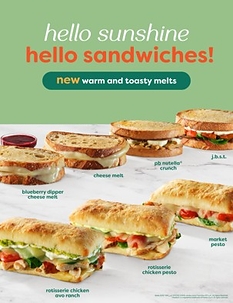
The lineup spans three rotisserie chicken builds on ciabatta, a vegetarian pesto option, a classic cheese melt, and two sourdough formats — including a PB Nutella Crunch with banana and granola and a Blueberry Dipper Cheese Melt served with a blueberry mango dip. The architecture is deliberate: multiple protein tiers, a vegetarian anchor, and a sweet option designed to cross-sell against existing smoothie and bowl purchases. Kate Morgan, Vice President of Marketing at Jamba, called the launch "an important step in Jamba's ongoing evolution, broadening our menu to better serve guests throughout their day."
For operators benchmarking menu strategy, the move fits a well-documented pattern. Beverage-first and snack-forward QSR concepts — from juice bars to coffee chains — have faced persistent pressure to extend their transaction window beyond morning and mid-afternoon. Adding a sandwich tier addresses average check and visit frequency simultaneously, without requiring major kitchen infrastructure if the proteins are pre-cooked and assembly is cold-line. The rotisserie chicken across multiple SKUs suggests a shared-protein sourcing model that keeps COGS manageable at limited volume during a test.
What Operators Should Watch
The 95-location footprint is small relative to Jamba's 750-plus unit count — roughly 12.7% of domestic locations — which is consistent with a disciplined regional test rather than a full rollout. Concentrating the pilot in four Sun Belt states gives the brand a geographically coherent dataset with relatively similar daypart traffic patterns and consumer demographics. If the test clears internal thresholds by mid-October, a broader system rollout for Q1 2027 is plausible.
For food-and-beverage brand launch teams evaluating portfolio expansion, the Jamba model is instructive: a constrained SKU count (seven items), a defined test window (roughly 11 weeks), a shared protein anchor across multiple builds, and pairing mechanics that bundle the new category with existing high-margin beverages. That structure reduces launch risk while generating clean unit-economics data.
For QSR and fast-casual operators watching daypart intelligence, the broader signal is that beverage-forward brands are no longer content to own only morning and afternoon. The lunch window — 11 a.m. to 2 p.m. — remains the highest-traffic, highest-competition daypart in quick service, and brands with established loyalty programs and app infrastructure (Jamba has both) are increasingly well-positioned to compete for it with minimal incremental media spend.
Written by Michael Politz, Author of Guide to Restaurant Success: The Proven Process for Starting Any Restaurant Business From Scratch to Success (ISBN: 978-1-119-66896-1), Founder of Food & Beverage Magazine, the leading online magazine and resource in the industry. Designer of the Bluetooth logo and recognized in Entrepreneur Magazine's "Top 40 Under 40" for founding American Wholesale Floral, Politz is also the Co-founder of the Proof Awards and the CPG Awards and a partner in numerous consumer brands across the food and beverage sector.