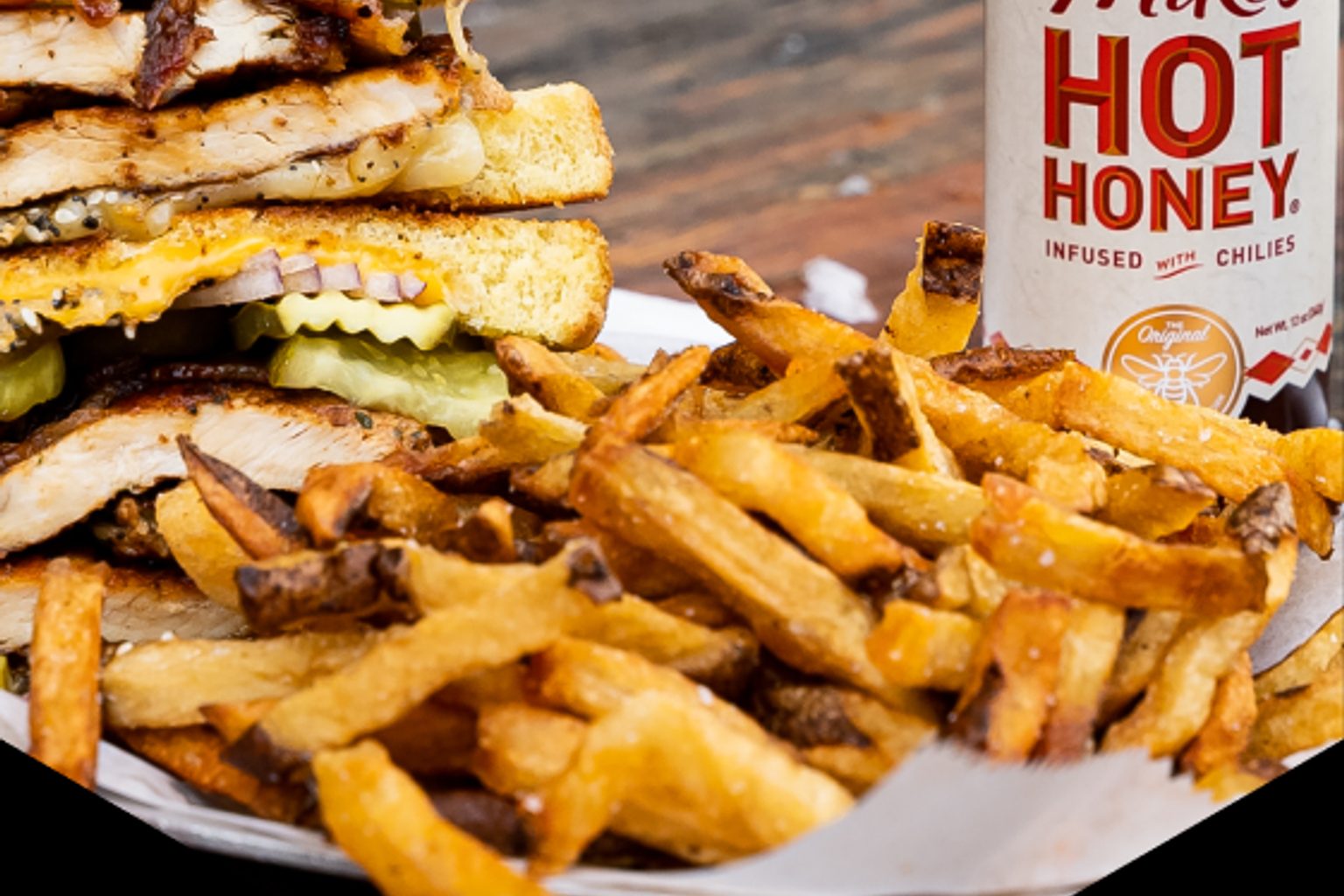
Hunt Brothers Pizza, the largest made-to-order pizza program in the convenience store channel, is rolling out the Hot Honey Ultimate Pepperoni Pizza in partnership with Mike's Hot Honey — a limited-time offering now live at participating locations across 16 states including Texas, Florida, Ohio, Tennessee, and Pennsylvania.
The pizza layers Hunt Brothers' signature pepperoni base with 50% more pepperoni and 100% natural part-skim mozzarella, finished post-bake with a drizzle of Mike's Hot Honey and the brand's proprietary Just Rite Spice seasoning blend. The dual-brand architecture here is deliberate: Hunt Brothers brings the footprint, and Mike's Hot Honey brings the consumer pull that can justify a trial purchase from a customer who might otherwise skip the hot case entirely.
Why This LTO Model Works
For c-store operators running a Hunt Brothers program, LTOs function as low-lift traffic mechanisms — no menu overhaul, no equipment change, just a new SKU in the rotation with co-branded marketing support. Robinson Hunt of Hunt Brothers Pizza noted the dual objective clearly: give customers a reason to try something new while giving store partners a tool to generate in-store excitement. That framing is the right way to think about foodservice LTOs in the convenience channel — they are traffic events, not just menu additions.
Mike's Hot Honey has moved well beyond a niche condiment positioning. The brand now appears in national retail, restaurant co-branded products, and foodservice applications from pizza to fried chicken, making it a credible flavor partner for operators who want to borrow consumer familiarity rather than build it from scratch. Hot honey as a flavor profile continues to index strongly across pizza, wings, and handheld formats — operators watching menu and beverage trend shifts in fast-casual and QSR will recognize this as a late-stage mainstream signal, not an early adopter play.
What C-Store Foodservice Operators Should Watch
Hunt Brothers operates across more than 11,000 locations without charging franchise, royalty, or marketing fees to its convenience store partners — a model that keeps the program attractive for independent and regional c-store operators who want branded foodservice without the overhead of a traditional franchise. That scale means a 16-state LTO like this one reaches a significant number of incremental transactions simultaneously, giving both brands measurable sell-through data quickly.
For suppliers and flavor brands evaluating c-store foodservice as a distribution channel, this partnership is a useful benchmark. The co-branded LTO format reduces the risk for the c-store operator, creates shelf-pull motivation for the flavor brand, and generates social content that neither party would easily produce alone. Operators evaluating their own brand launch or co-branding strategy in foodservice should note that the winning structure here pairs a program operator with strong operator relationships against a consumer brand with existing household recognition — the combination does the marketing work that either alone would struggle to execute at this scale.
The Hot Honey Ultimate Pepperoni is available while supplies last at participating locations in Alabama, Arkansas, Colorado, Florida, Indiana, Kentucky, Louisiana, Michigan, Mississippi, New Mexico, New York, Ohio, Oklahoma, Pennsylvania, Tennessee, and Texas.
Written by Michael Politz, Author of Guide to Restaurant Success: The Proven Process for Starting Any Restaurant Business From Scratch to Success (ISBN: 978-1-119-66896-1), Founder of Food & Beverage Magazine, the leading online magazine and resource in the industry. Designer of the Bluetooth logo and recognized in Entrepreneur Magazine's "Top 40 Under 40" for founding American Wholesale Floral, Politz is also the Co-founder of the Proof Awards and the CPG Awards and a partner in numerous consumer brands across the food and beverage sector.