A century-old Michigan ice cream maker is betting its next chapter on a simple regulatory line: real ice cream versus everything else.
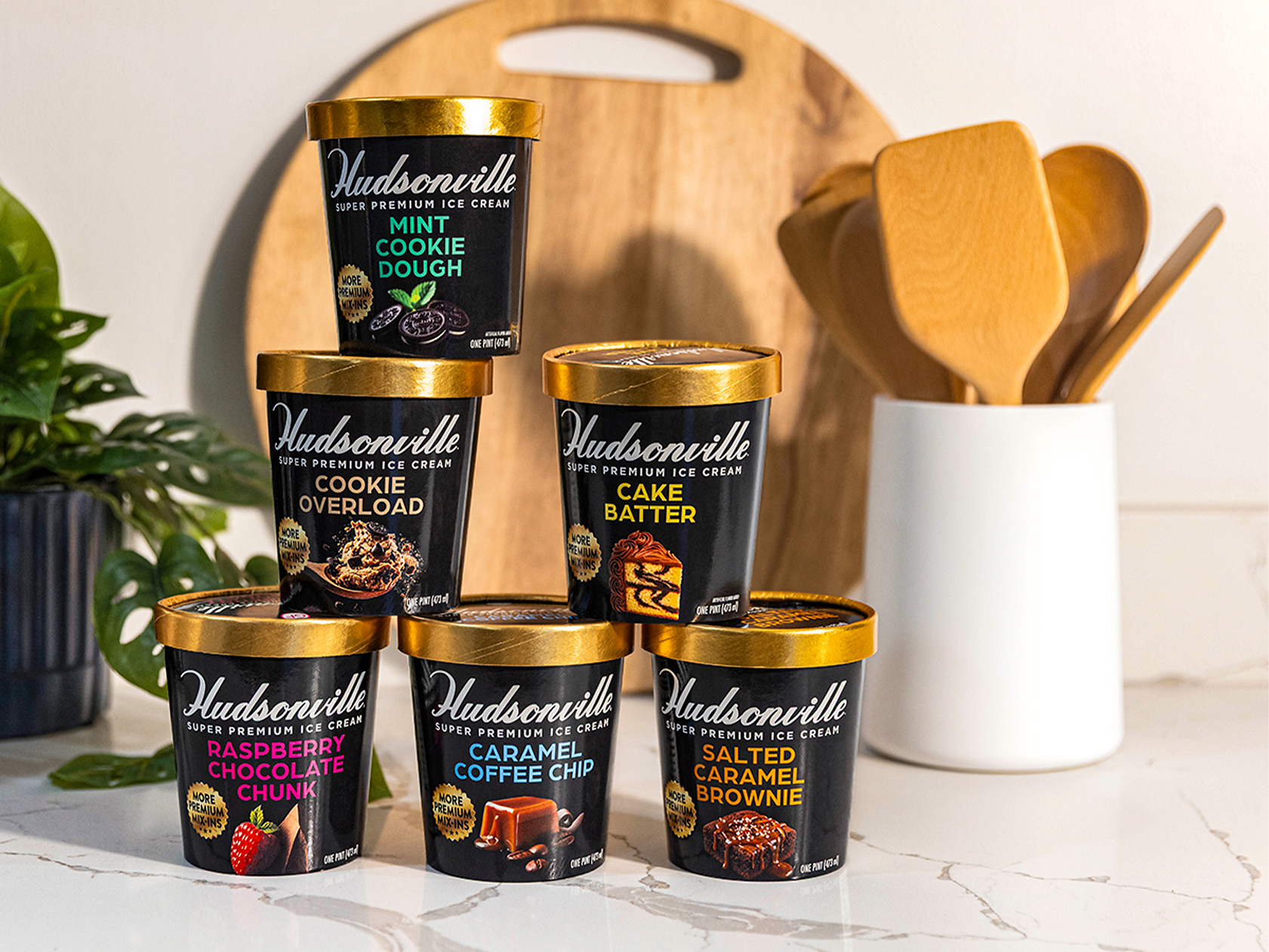
Hudsonville Ice Cream has refreshed its Super Premium Pint Collection with six flavors, each formulated at 13% to 15% milkfat — well above the FDA minimum of 10% required to legally carry the "ice cream" label. The move is less about novelty and more about positioning: as label-reading behavior accelerates at retail, Hudsonville is making milkfat percentage and local sourcing the centerpiece of its shelf argument.
The Regulatory Angle
The FDA's standard of identity for ice cream requires at least 10% milkfat and a minimum weight of 4.5 pounds per gallon. Frozen dairy desserts — a lower-cost alternative that occupies adjacent freezer real estate — do not meet that threshold. That distinction is now becoming a viable marketing lever. According to the International Food Information Council's June 2026 Spotlight Survey, 47% of Americans report always or often checking nutrition labels and ingredients while shopping. For operators sourcing ice cream for hotel dining, restaurant dessert programs, or foodservice distribution, that consumer awareness is beginning to translate into purchasing conversations.
Six Flavors, One Strategic Signal
The refreshed lineup covers familiar indulgence profiles: Cake Batter with pound cake pieces, Caramel Coffee Chip with a dulce de leche swirl, Cookie Overload, Mint Cookie Dough, Raspberry Chocolate Chunk, and Salted Caramel Brownie. The formulations lean into mix-in density and swirl complexity — category attributes that benchmark well against national super-premium competitors in the retail channel.
Product Developer Taylor Janisse framed the launch as a response to consumer scrutiny rather than a pivot: "For 100 years, we've focused on using real, locally sourced milk and cream, quality ingredients and no shortcuts. What's changing is that consumers are asking more questions about what goes into their food."
For buyers and category managers, the Hudsonville refresh reflects a broader dynamic in the frozen dairy segment: regional brands with vertically integrated or locally sourced supply chains are finding that provenance and ingredient integrity can offset scale disadvantages against national players. The clean-label signal is increasingly relevant in foodservice procurement, where operators are under pressure from guests who extend their retail label-reading habits to the dining experience.
What Operators Should Watch
Distribution remains regional — select Midwest retailers — which limits immediate foodservice applicability outside that footprint. But the strategic template is transferable. Family-owned manufacturers willing to foreground regulatory standards (milkfat thresholds, local sourcing documentation) as brand differentiators are giving buyers a defensible story for menu callouts and retail shelf sets. As the frozen dessert segment fragments between value-tier frozen dairy and premium dairy-forward products, the middle is getting harder to defend.
For operators evaluating brand launch and retail-readiness strategies for their own private-label or co-manufactured dessert programs, Hudsonville's approach — anchor on a legal standard, document sourcing, and build SKU density around indulgence formats — offers a replicable framework worth benchmarking.
Written by Michael Politz, Author of Guide to Restaurant Success: The Proven Process for Starting Any Restaurant Business From Scratch to Success (ISBN: 978-1-119-66896-1), Founder of Food & Beverage Magazine, the leading online magazine and resource in the industry. Designer of the Bluetooth logo and recognized in Entrepreneur Magazine's "Top 40 Under 40" for founding American Wholesale Floral, Politz is also the Co-founder of the Proof Awards and the CPG Awards and a partner in numerous consumer brands across the food and beverage sector.