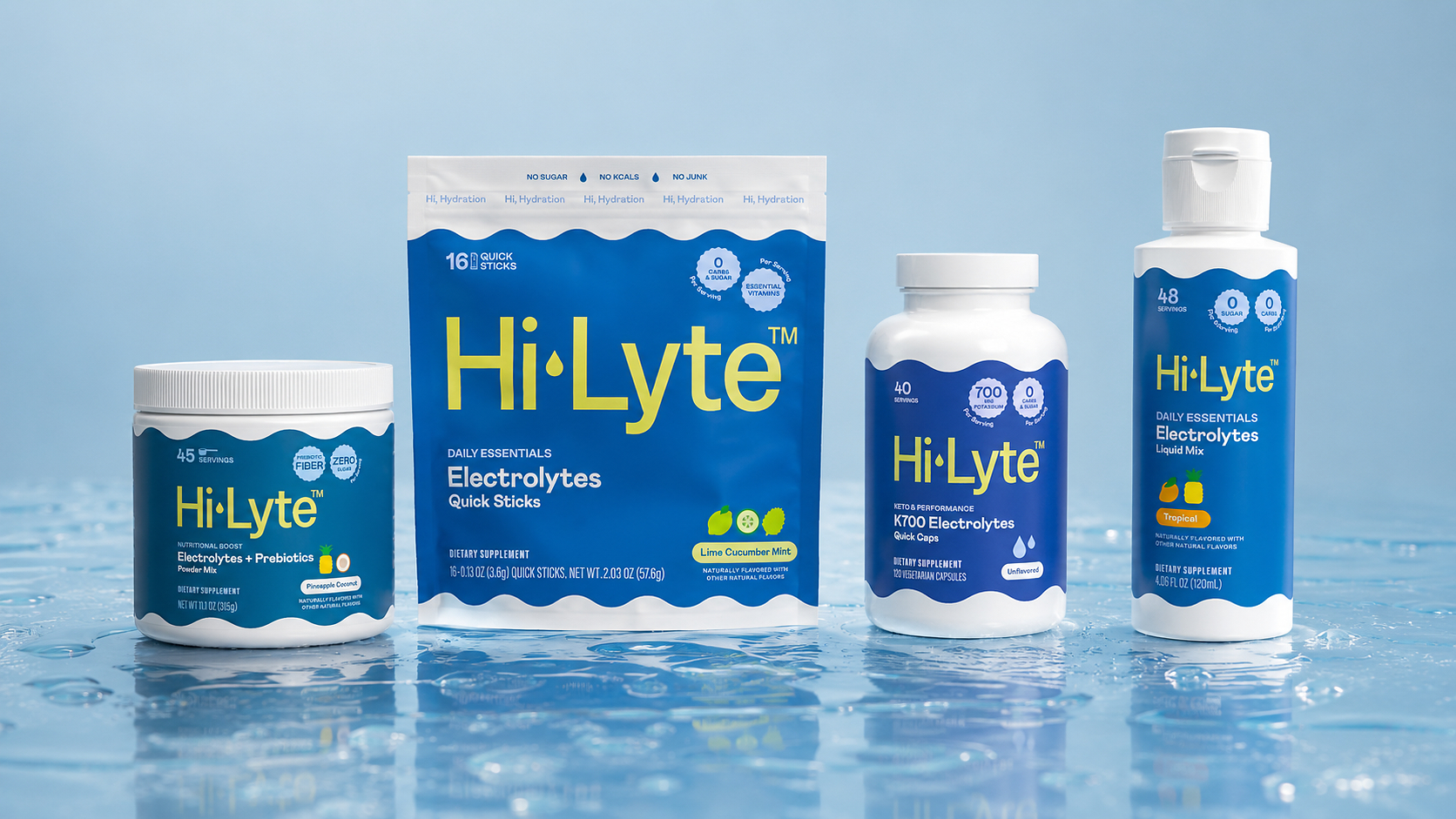
Zero-sugar electrolyte brand Hi-Lyte has relaunched its direct-to-consumer storefront with a quiz-based discovery tool and a fully segmented product architecture spanning three lines — Daily Essentials, Mineral-Powered, and Functional Blends — across four formats: Powder Mix, Quick Sticks, Liquid Mix, and Capsules. The move is a deliberate push to capture shoppers who are defecting from mass-market hydration products that default to high sugar and heavy flavoring.
For buyers and retail operators tracking the functional beverage shelf, Hi-Lyte's repositioning is worth noting. The brand has operated since 2016 under parent company Healthily, a 46-brand international consumer health portfolio headquartered in the U.S. with deep European manufacturing roots. That supply-chain maturity gives Hi-Lyte something many DTC wellness upstarts lack: NSF Certified, third-party-tested formulas with no seed oils, no maltodextrin, and no added dyes — credentials that are increasingly table stakes for natural and specialty retail placement.
The Portfolio Logic
The three-tier structure maps to distinct consumer occasions. Daily Essentials targets the everyday hydration habit — the unflavored Liquid Mix concentrate, which blends into coffee or smoothies without altering taste, is currently among the brand's top sellers on Amazon and Walmart.com. The Mineral-Powered tier centers on the K1000 line, delivering 1,000 mg of potassium per serving for active, fasting, and ketogenic routines. Functional Blends is the newest and most forward-looking tier: Electrolytes + Creatine, Electrolytes + Prebiotics, and Electrolytes + Protein Quick Sticks position Hi-Lyte squarely in the 2-in-1 performance supplement space that has drawn significant retail and foodservice attention over the past 18 months.
Cheryl Harrop, CEO and Registered Dietitian at Hi-Lyte, framed the brand's unflavored positioning as a direct response to market demand: "Not everyone wants sweet electrolytes," she said, pointing to the squeeze-into-coffee use case as a year-round entry point, not just a summer hydration play.
What This Signals for Operators
The quiz-driven storefront is the intelligence layer operators should pay attention to. As DTC beverage brands mature, the ones gaining retail leverage are those that arrive at buyer meetings with first-party data on consumer segmentation — which format converts, which formula retains, which occasion drives repeat purchase. A product discovery quiz is a relatively low-cost mechanism for building exactly that data set before scaling into wholesale or foodservice channels.
For foodservice and hospitality procurement teams, the unflavored concentrate format is the most immediately actionable SKU. A squeezable, flavorless electrolyte additive has obvious applications in hotel wellness amenities, fitness-facility beverage programs, and spa menus — categories where operators are actively looking for functional beverage upgrades that don't require menu overhauls.
Retail and grocery buyers evaluating the better-for-you hydration segment should also note Hi-Lyte's channel mix: Amazon, Walmart.com, and TikTok Shop alongside its own DTC site. That omnichannel footprint, backed by Healthily's manufacturing scale, positions the brand differently from indie electrolyte startups that remain Amazon-dependent. For brands considering DTC-to-retail expansion strategies, Hi-Lyte's architecture offers a reasonable benchmark for how to stage a portfolio before approaching traditional trade buyers.
Written by Michael Politz, Author of Guide to Restaurant Success: The Proven Process for Starting Any Restaurant Business From Scratch to Success (ISBN: 978-1-119-66896-1), Founder of Food & Beverage Magazine, the leading online magazine and resource in the industry. Designer of the Bluetooth logo and recognized in Entrepreneur Magazine's "Top 40 Under 40" for founding American Wholesale Floral, Politz is also the Co-founder of the Proof Awards and the CPG Awards and a partner in numerous consumer brands across the food and beverage sector.