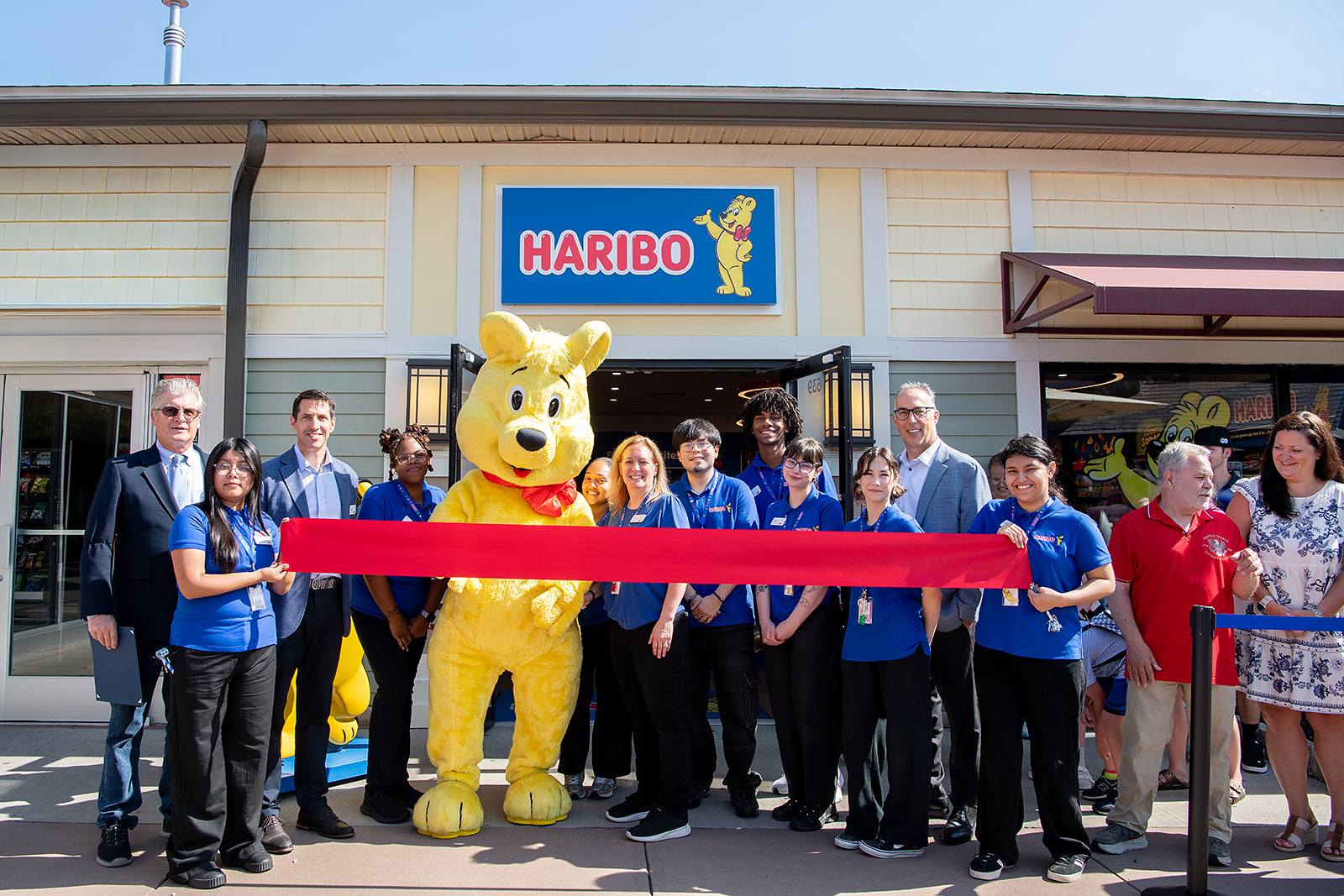
HARIBO of America opened its first-ever U.S. retail store at Woodbury Common Premium Outlets in Central Valley, New York on August 7, with a second location at Wrentham Village Premium Outlets in Massachusetts expected to follow in early August — a direct-to-consumer move that marks a meaningful strategic shift for the century-old gummi brand.
The openings coincide with the appointment of Jon Hughes as President & CEO of HARIBO of America. Hughes previously served as Managing Director for HARIBO U.K. & Ireland, giving him direct operational experience with the immersive retail concept the company has already proven in European markets. The timing is deliberate: new leadership and a new channel arriving together signal this is a coordinated growth strategy, not a pilot.
What the Format Signals
The stores are built around a customizable Pick-and-Mix wall, seasonal and limited-edition product drops, exclusive merchandise, and experiential brand moments. That format — familiar to European confectionery shoppers — translates the brand into a destination rather than a shelf fixture. For foodservice and specialty retail operators, it's a reminder that heritage CPG brands are increasingly willing to build their own consumer touchpoints rather than rely entirely on wholesale distribution.
Premium outlet centers are a deliberate venue choice. They draw high-traffic, value-oriented shoppers who are already in a discovery mindset, and they carry lower occupancy risk than street-level flagship retail. Other food and confectionery brands that have tested experiential retail — from Sugarfina to Dylan's Candy Bar — have used similar locations to validate a concept before broader rollout. Operators and brokers tracking candy and snack category trends should note that this model compresses the distance between brand marketing and point-of-sale.
Intelligence for Buyers and Vendors
For procurement teams and category managers, HARIBO's retail entry is worth watching on two levels. First, it creates a new data stream — direct consumer purchase behavior, basket composition, limited-edition sell-through — that will almost certainly inform future product development and packaging decisions. Brands with that kind of first-party data negotiate from a stronger position when they return to wholesale buyers.
Second, the leadership transition from a U.K. market veteran suggests HARIBO is treating the U.S. as a market that can absorb more sophisticated brand architecture. Hughes's European experience with experiential retail gives him a template that has already been iterated on. Operators in the specialty food and confectionery space — as well as suppliers pitching HARIBO on co-manufacturing, packaging, or ingredient partnerships — should expect a more aggressive innovation cadence under his tenure.
For a broader read on how confectionery and snack brands are restructuring their go-to-market strategies, see our coverage of emerging brand launch frameworks and direct-to-consumer channel shifts in specialty food.
Written by Michael Politz, Author of Guide to Restaurant Success: The Proven Process for Starting Any Restaurant Business From Scratch to Success (ISBN: 978-1-119-66896-1), Founder of Food & Beverage Magazine, the leading online magazine and resource in the industry. Designer of the Bluetooth logo and recognized in Entrepreneur Magazine's "Top 40 Under 40" for founding American Wholesale Floral, Politz is also the Co-founder of the Proof Awards and the CPG Awards and a partner in numerous consumer brands across the food and beverage sector.