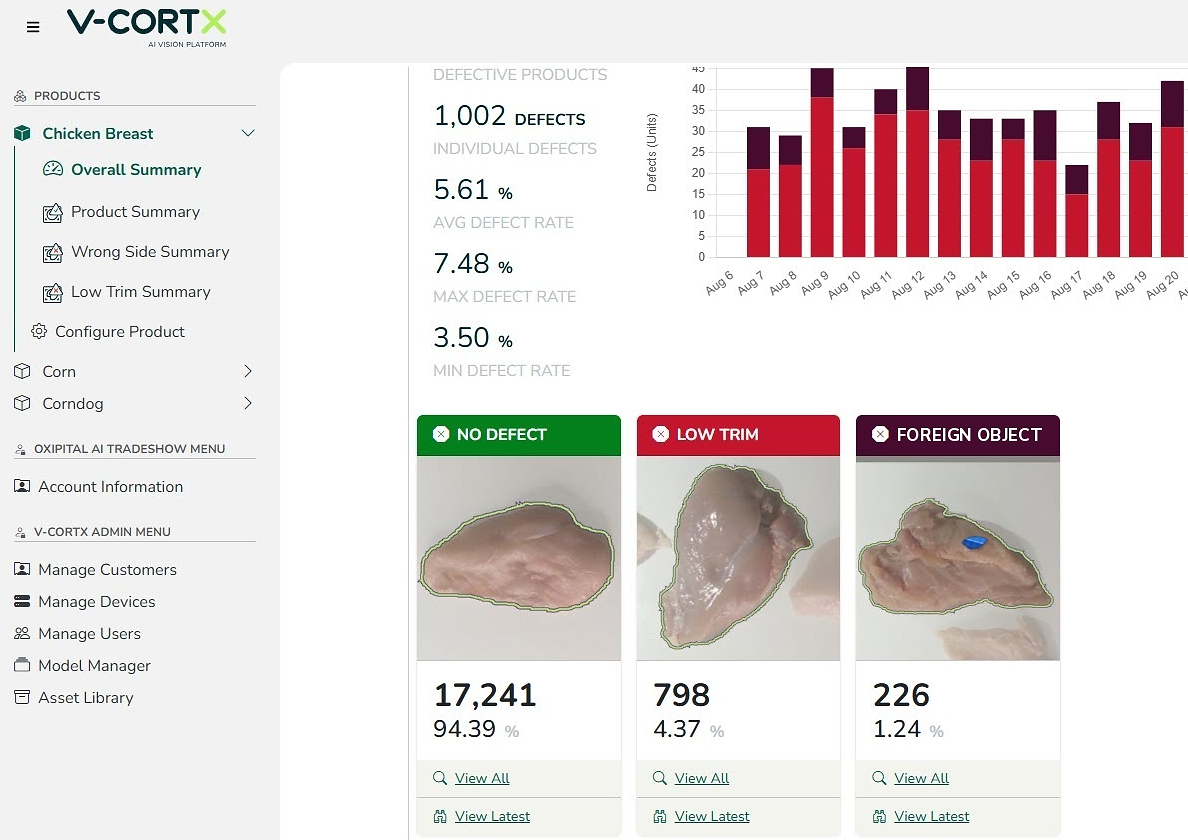
GrubMarket has released a Sales AI Agent built specifically for wholesale food distribution sales teams, adding automated prospecting, menu analysis, and quote generation to its existing AI platform. The tool handles territory-based prospect discovery, reads menus and order guides, produces customer-ready price sheets, and delivers proposals across multiple channels — all inside a single workflow. For operators, this matters because it changes the speed and quality of the inbound pitch you'll receive from distributors who are already on the GrubMarket platform.
The context here is worth tracking. Food distributors have historically competed on relationships and route density, not technology velocity. GrubMarket — already one of the larger private food eCommerce operators in the U.S. — has been systematically layering AI agents across supply-chain workflows over the past two years. This Sales AI Agent is the outbound commercial arm of that stack. Distributors using it can compress what used to be a multi-day quoting cycle into minutes, which creates pressure on competitors who are still running manual processes.
For procurement teams and buying groups at restaurant groups, hotels, and institutional operators, the downstream signal is clear: the RFP and vendor-bid environment is accelerating. If your distributor partners are running AI-assisted quoting, your own procurement team needs comparable intelligence on the buy side — knowing what a fair market price looks like before a polished AI-generated proposal lands in your inbox. Operators without an internal or outsourced procurement-intelligence function are increasingly negotiating blind against a tool that has already analyzed your menu and modeled your likely order volume.
On the vendor side, this release also points to a broader consolidation dynamic in food-tech. Rather than standalone point solutions for prospecting or quoting, the competitive architecture is moving toward integrated AI agent platforms where each agent covers a distinct workflow node. GrubMarket is explicitly framing this as a multi-agent build-out across the full supply-chain stack. Distributors evaluating sales-enablement tools or operators vetting their distributors' tech capabilities should be asking whether their partners are building toward this kind of integrated intelligence layer — or still stitching together disconnected software.
The practical takeaway for operators is not to wait for a distributor to bring this to you. Use this moment to audit your own procurement process, pressure-test your current distributor relationships, and understand what data your vendors are using when they set your pricing. AI procurement tools and vendor intelligence are now table-stakes for operators managing multi-location spend, and supply-chain visibility for restaurant operators has moved from a nice-to-have into a core competency.
Written by Michael Politz, Author of Guide to Restaurant Success: The Proven Process for Starting Any Restaurant Business From Scratch to Success (ISBN: 978-1-119-66896-1), Founder of Food & Beverage Magazine, the leading online magazine and resource in the industry. Designer of the Bluetooth logo and recognized in Entrepreneur Magazine's "Top 40 Under 40" for founding American Wholesale Floral, Politz is also the Co-founder of the Proof Awards and the CPG Awards and a partner in numerous consumer brands across the food and beverage sector.