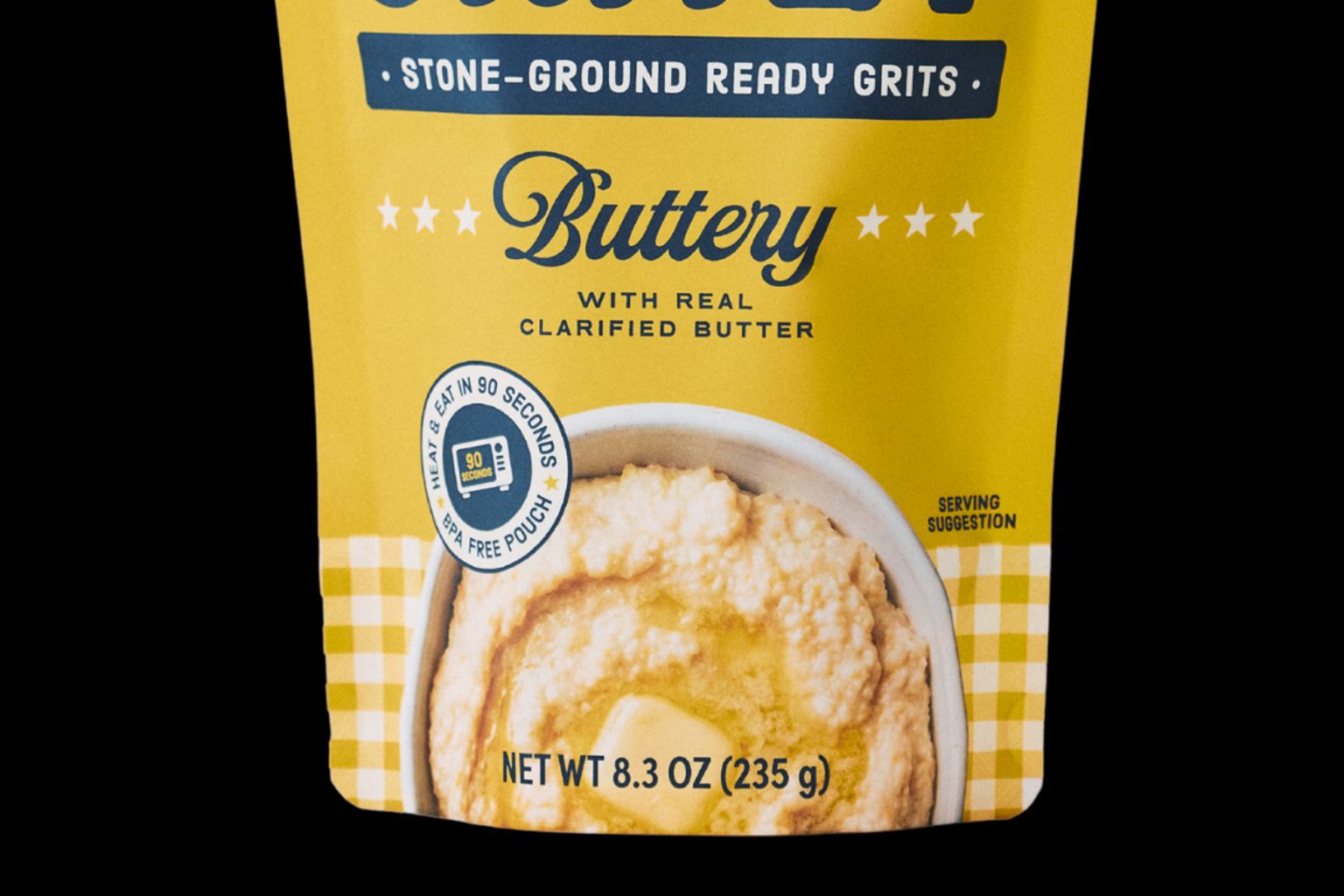
Stone-ground grits that heat in 90 seconds without added water are now on the market. Gritzy, founded by Rachel Williams Weiner, launched three six-pack SKUs priced at $29.99 each via its own website and Amazon — a classic DTC-first play designed to validate demand before approaching retail buyers. The move is worth watching for foodservice operators, grocery buyers, and brand launch consultants tracking where premium grain formats are moving next.
The Product Positioning
Gritzy enters the shelf-stable grain category with tight clean-label credentials: American-grown corn, gluten-free certification, and Non-GMO Project Verified status. The three SKUs — Classic Ready Grits, Buttery Ready Grits (made with real ghee), and a Classic & Buttery Variety Pack — cover both sweet and savory occasions, from breakfast to dinner sides. No stovetop, no added water, no cleanup. That convenience stack is the same formula that drove instant oatmeal and microwaveable rice into foodservice and hospitality grab-and-go programs over the past decade.
For operators running hotel breakfast programs, fast-casual Southern concepts, or brunch-forward venues, shelf-stable premium grits represent a real labor-cost play. A 90-second heat-and-eat format sidesteps the skilled prep time traditional stone-ground grits require — typically 20 to 45 minutes on the stovetop — without sacrificing the texture and ingredient story that premium menus demand.
What This Signals for Buyers
The launch follows a broader operator trend toward premium shelf-stable ingredients that reduce back-of-house complexity. Grits occupy an underlaunched shelf position: the category has historically been dominated by commodity quick-cook formats that carry little premium signal. Gritzy's Non-GMO verification and stone-ground process give it a differentiated retail story — the kind of credential set that speeds conversations with natural and specialty grocery buyers.
Williams Weiner built the brand around a specific regional authenticity gap she identified after relocating from rural Southern Virginia to New York City. That founder narrative, paired with clean-label specs and a DTC proof-of-concept, is precisely the package brand launch consultants recommend when preparing for a regional retail pitch or a specialty chain buyer meeting. The Amazon presence adds a sales-velocity data point that grocery buyers increasingly treat as validation before committing shelf space.
For hospitality procurement teams, this is a category to track. If Gritzy gains traction at the DTC and Amazon levels, expect distributor conversations to follow — and expect the premium convenience grain segment to attract additional entrants positioning against commodity grits in foodservice formats.
Takeaways for Operators
Written by Michael Politz, Author of Guide to Restaurant Success: The Proven Process for Starting Any Restaurant Business From Scratch to Success (ISBN: 978-1-119-66896-1), Founder of Food & Beverage Magazine, the leading online magazine and resource in the industry. Designer of the Bluetooth logo and recognized in Entrepreneur Magazine's "Top 40 Under 40" for founding American Wholesale Floral, Politz is also the Co-founder of the Proof Awards and the CPG Awards and a partner in numerous consumer brands across the food and beverage sector.