The Format Move
Gregorys Coffee, the New York City-born specialty brand within the Craveworthy Brands portfolio, opened its first Monmouth County location at 360 Route 9 in Manalapan, New Jersey — and the unit is doing something none of its 50-plus shops have done before: running a double-lane drive-thru. That format decision is the real story here, not the grand-opening giveaways.
For specialty coffee operators watching throughput become a competitive battleground, the double-lane configuration signals that Gregorys is engineering for suburban volume without sacrificing the craft positioning that built its urban following. The brand roasts its own coffee, bakes pastries in-house daily, and leans hard on barista skill as a differentiator — all of which creates real operational tension with drive-thru speed expectations. How Gregorys resolves that tension in Manalapan will matter to any multi-unit specialty operator eyeing suburban or drive-thru-first real estate.
Suburban Expansion Logic
The move into Monmouth County fits a pattern playing out across the specialty coffee segment: brands that built identity in dense urban corridors are following residential migration and remote-work patterns into commuter suburbs, where drive-thru coffee is already a habituated behavior anchored by national QSR chains. Competing in that environment requires more than quality product — it requires a physical format that can match or beat QSR lane times while justifying a price premium. The double-lane design is Gregorys' bet that it can do both.
Craveworthy Brands, which operates more than 20 concepts across 300-plus U.S. and international locations, provides the shared infrastructure — supply chain, technology, franchise development — that makes format experimentation like this lower-risk for an individual brand. Operators considering franchise investment in emerging specialty coffee concepts should pay attention to how parent-platform infrastructure affects unit-level economics, particularly in capital-intensive formats like dual drive-thrus.
What This Signals for Operators
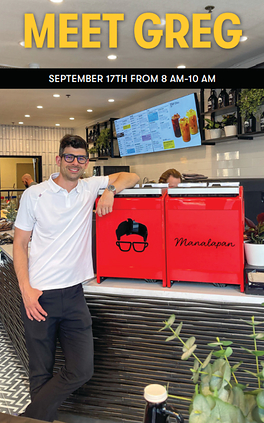
The Manalapan opening also functions as a brand-launch and community-activation playbook worth benchmarking. Gregorys structured two days around distinct audiences: an invite-only founder engagement on day one, followed by a public pricing event tied to brand milestones on day two — $1 coffee, hourly giveaways pegged to the brand's 20th anniversary, and signed product for loyalty-building. Founder Gregory Zamfotis worked both the café floor and the drive-thru lane during peak morning hours, a visibility play that generates earned media and social content without a paid media budget.
For operators planning location launches or market entries, that sequencing — controlled VIP preview, then high-volume public activation — is replicable at almost any scale and tends to generate stronger opening-week repeat visits than a single grand-opening day. Tying promotional mechanics to brand history (the 20th-anniversary hook) also gives press and local community partners a narrative handle that pure discount promotions lack.
See how other brands are structuring suburban market entry and drive-thru format decisions and what launch activation playbooks look like across the Craveworthy portfolio.
Written by Michael Politz, Author of Guide to Restaurant Success: The Proven Process for Starting Any Restaurant Business From Scratch to Success (ISBN: 978-1-119-66896-1), Founder of Food & Beverage Magazine, the leading online magazine and resource in the industry. Designer of the Bluetooth logo and recognized in Entrepreneur Magazine's "Top 40 Under 40" for founding American Wholesale Floral, Politz is also the Co-founder of the Proof Awards and the CPG Awards and a partner in numerous consumer brands across the food and beverage sector.