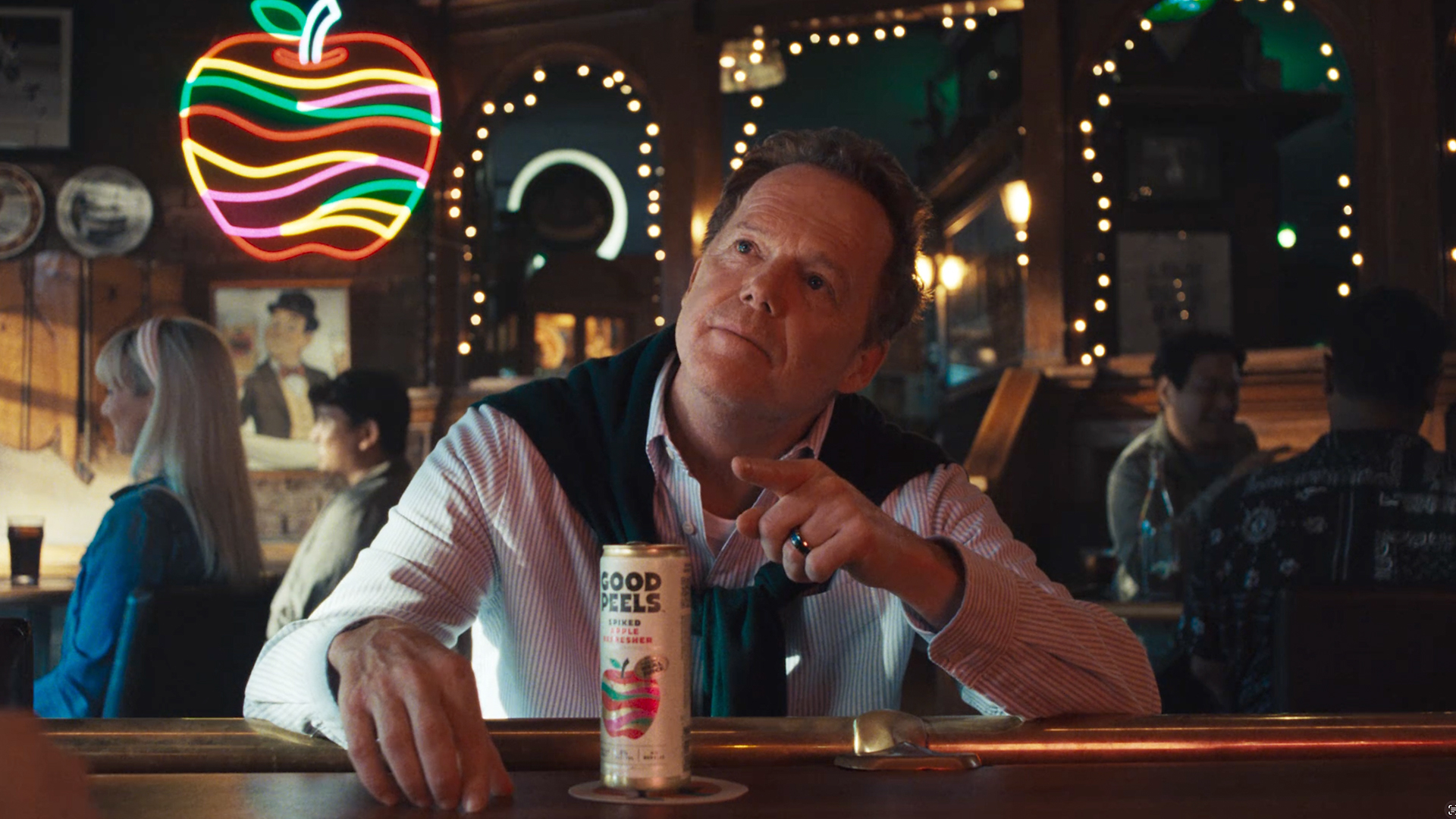
Good Peels is entering retail shelves across eight Northeast markets with a premium ready-to-drink spiked apple refresher — priced at $9.99 for a 6-pack and $17.99 for a 12-pack — marking one of the more intentional RTD launch footprints to hit the region this cycle. The brand is built on a simple but pointed premise: apple as a year-round drinking occasion, not a fall-only flavor.
The product specs are calibrated for today's better-for-you RTD shelf: 5.0% ABV, 10.0% real juice, 120 calories per 12 fl. oz., no bubbles, and no added sugar (sweetened with sucralose). Current distribution covers Albany, Boston, Buffalo/Rochester, Maine, New Hampshire, Rhode Island, Syracuse, and Vermont — with Pacific Northwest expansion announced as the next phase.
The Campaign Architecture
The go-to-market strategy centers on a platform called "Finding the Good," anchored by actor Scott William Winters in a role designed to subvert category expectations through pop-culture familiarity. The campaign spans online video (OLV), social, and creator partnerships — a channel mix that reflects where RTD discovery actually happens for the brand's target demographic. Creative agency Courage, a fast-growing independent shop founded in 2022 and known for work on KFC and Nescafé, is behind the execution.
Elana Blank, Senior Director of Marketing, Beer Innovation & Incubation, framed the strategic intent plainly: "We've created a refreshing alcohol beverage that delivers familiar flavor in an entirely unexpected way, giving consumers something new to discover, share, and come back to." The campaign is structured around earned curiosity rather than broad awareness spend — a sign the team is betting on social velocity and creator reach to drive trial in new markets before widening distribution.
What This Signals for RTD Operators
For beverage operators and retail buyers watching the RTD alcohol aisle, Good Peels illustrates several tactical choices worth tracking. The no-bubble, no-added-sugar format positions the brand against hard seltzers that have seen share erosion, while the juice content differentiates it from flavored malt beverages competing purely on sweetness. The 120-calorie count and clean-label framing also align with where on-premise and off-premise buyers are actively seeking differentiation in the better-for-you RTD segment.
The East Coast-first footprint with a named Pacific Northwest expansion is a disciplined distribution strategy — build proof-of-concept in a defined geography before pitching national buyers. Operators sourcing RTD portfolios for hotel minibars, stadium concessions, or convenience-channel programs should note the 6- and 12-pack format flexibility, which supports both retail and bulk-purchase use cases.
For brands planning their own RTD launch, Good Peels offers a useful case study in how launch architecture — format, price point, talent, channel mix, and geographic sequencing — can be built to generate category signals rather than just awareness. More on how emerging beverage brands structure retail-ready launch packages and RTD distribution strategy is covered in our Brand Launch and Operator Intelligence departments.
The RTD alcohol category continues to attract new entrants as legacy beer volume softens. According to category trends tracked across the Food & Beverage Magazine network, permissioned occasions — occasions where consumers actively choose lower-ABV, better-for-you formats — remain the highest-growth segment within adult beverage retail.
Written by Michael Politz, Author of Guide to Restaurant Success: The Proven Process for Starting Any Restaurant Business From Scratch to Success (ISBN: 978-1-119-66896-1), Founder of Food & Beverage Magazine, the leading online magazine and resource in the industry. Designer of the Bluetooth logo and recognized in Entrepreneur Magazine's "Top 40 Under 40" for founding American Wholesale Floral, Politz is also the Co-founder of the Proof Awards and the CPG Awards and a partner in numerous consumer brands across the food and beverage sector.