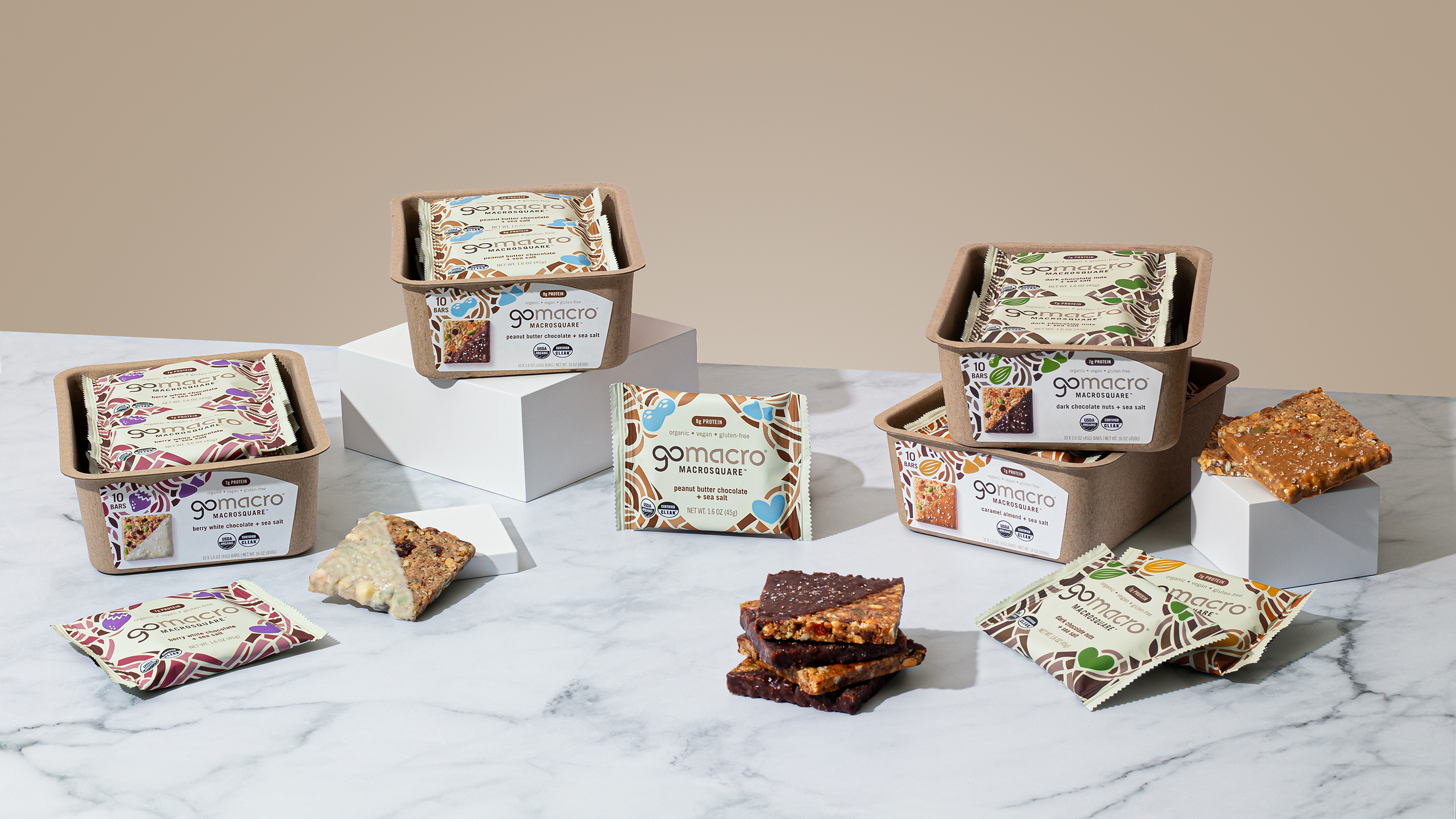
GoMacro — the Wisconsin-based, mother-daughter-founded brand behind the MacroBar — has launched MacroSquares, its first new snack bar format since the company's founding in 2004. The line is available exclusively at Whole Foods Market nationwide, positioning the launch as a specialty-retail-first strategy rather than a broad mass-market rollout. For operators and brand managers watching the better-for-you snack segment, the move is a textbook example of using a locked exclusive to generate category heat before wider distribution.
The better-for-you bar segment has become one of the more contested shelves in specialty grocery. Brands including RXBar, LÄRABAR, and Kind have all used limited or channel-exclusive windows to seed demand before expanding. GoMacro's decision to anchor MacroSquares at Whole Foods mirrors that playbook: use a premium retailer's foot traffic and health-forward shopper base to validate the format, collect velocity data, and build a buyer deck for the next distribution conversation. The half-dipped finish and layered texture profile are deliberate on-shelf differentiators — two attributes that photograph well and translate into social sampling content without a large paid media budget.
For brand-launch teams and distributors tracking the natural channel, the exclusive structure deserves attention. Whole Foods exclusives typically run 60 to 180 days before a brand pursues secondary retail or foodservice placement. If GoMacro follows that arc, buyers at regional natural chains, airport concessions, and hotel grab-and-go programs should expect outreach in Q4 2026 or Q1 2027. Operators running wellness-oriented hospitality concepts — spa resorts, boutique hotels, fitness-adjacent venues — should note that GoMacro's USDA Organic and non-GMO positioning clears most procurement gatekeeping checklists in that channel without additional vendor qualification work. Early conversations with distributors like UNFI or KeHE now put you ahead of the shelf-reset cycle.
The broader signal here is format diversification as a growth lever for single-hero brands. GoMacro built over two decades of equity on one SKU architecture. Launching a geometrically distinct format — a square versus a bar — lets the brand occupy a second shelf peg, target a different usage occasion (desk snack, post-workout bite), and re-enter the media conversation without cannibalizing its core. Brands and their agency partners should study this as a low-risk adjacency move: same ingredient philosophy, new form factor, exclusive retail partner to validate before scale. It is a cleaner brand-launch structure than a full line extension and far less capital-intensive than a new brand build.
Operators evaluating snack programs — whether for hotel minibars, catered events, or grab-and-go coolers — should request samples now rather than waiting for broad distribution. Exclusive-window pricing and placement support from the brand are typically more favorable than post-expansion terms. Track velocity reporting from Whole Foods over the next two quarters; if turns are strong, MacroSquares will move into broader channels quickly and negotiating leverage shifts to the brand.
Written by Michael Politz, Author of Guide to Restaurant Success: The Proven Process for Starting Any Restaurant Business From Scratch to Success (ISBN: 978-1-119-66896-1), Founder of Food & Beverage Magazine, the leading online magazine and resource in the industry. Designer of the Bluetooth logo and recognized in Entrepreneur Magazine's "Top 40 Under 40" for founding American Wholesale Floral, Politz is also the Co-founder of the Proof Awards and the CPG Awards and a partner in numerous consumer brands across the food and beverage sector.