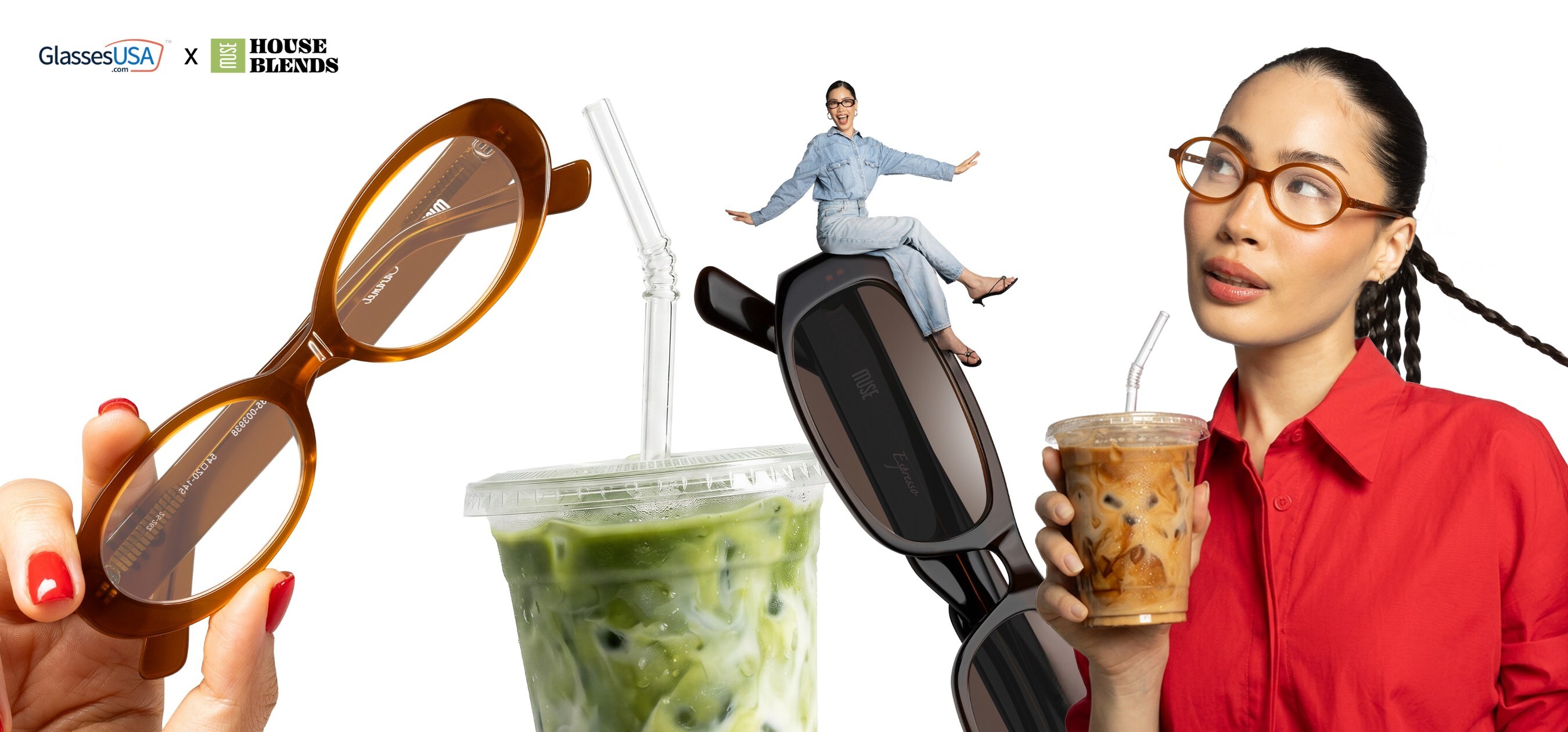
GlassesUSA.com launched its MUSE House Blends eyewear collection this week by leaning directly into the matcha, coffee, and café-order aesthetics dominating social feeds — then activated the launch with a Miami influencer event reaching a combined 5.4 million Instagram followers. The move is not a beverage story, but operators should read it as one: a consumer brand outside your category just used your visual language as a primary growth lever.
The café-culture trend has moved well past the cup. Matcha greens, latte browns, and cold-brew neutrals are functioning as shorthand for a specific aspirational lifestyle — one that hospitality brands, coffee concepts, and food-and-beverage suppliers helped build and now increasingly share with adjacent categories. When GlassesUSA deploys that palette to sell sunglasses in June, it signals the aesthetic has hit mainstream brand-strategy adoption. For operators, that has two practical implications: the visual territory is more crowded, and the influencer talent already fluent in café content is now being pursued by non-F&B budgets.
The influencer activation model GlassesUSA used — curated lifestyle creators, event-driven content, a single Miami market as the launch anchor — mirrors what mid-size restaurant groups and emerging beverage brands are executing on tighter budgets. The difference is scale and category discipline. F&B brands launching through influencer channels should audit whether their creator rosters are still café-native or whether they have drifted toward broader lifestyle positioning. Creators with 200,000 to 800,000 followers in the food-and-drink vertical are still the highest-conversion segment for most regional operators, according to standard influencer-ROI benchmarks — but that pool is being actively recruited by fashion and wellness brands. For a deeper look at how emerging beverage brands are structuring influencer budgets, see our coverage in Brand Launch Department and cross-reference the channel data in Growth Department.
For procurement and marketing leads at multi-unit operators, the intelligence here is straightforward: the cost to activate café-culture influencers is rising as demand from outside the category increases. If your brand has not locked in creator relationships or negotiated longer-term ambassador structures, expect rate pressure through the back half of 2026. The matcha-and-coffee aesthetic cycle is not ending — it is broadening — which means the content is still resonant, but the exclusivity window for F&B brands is narrowing.
Written by Michael Politz, Author of Guide to Restaurant Success: The Proven Process for Starting Any Restaurant Business From Scratch to Success (ISBN: 978-1-119-66896-1), Founder of Food & Beverage Magazine, the leading online magazine and resource in the industry. Designer of the Bluetooth logo and recognized in Entrepreneur Magazine's "Top 40 Under 40" for founding American Wholesale Floral, Politz is also the Co-founder of the Proof Awards and the CPG Awards and a partner in numerous consumer brands across the food and beverage sector.