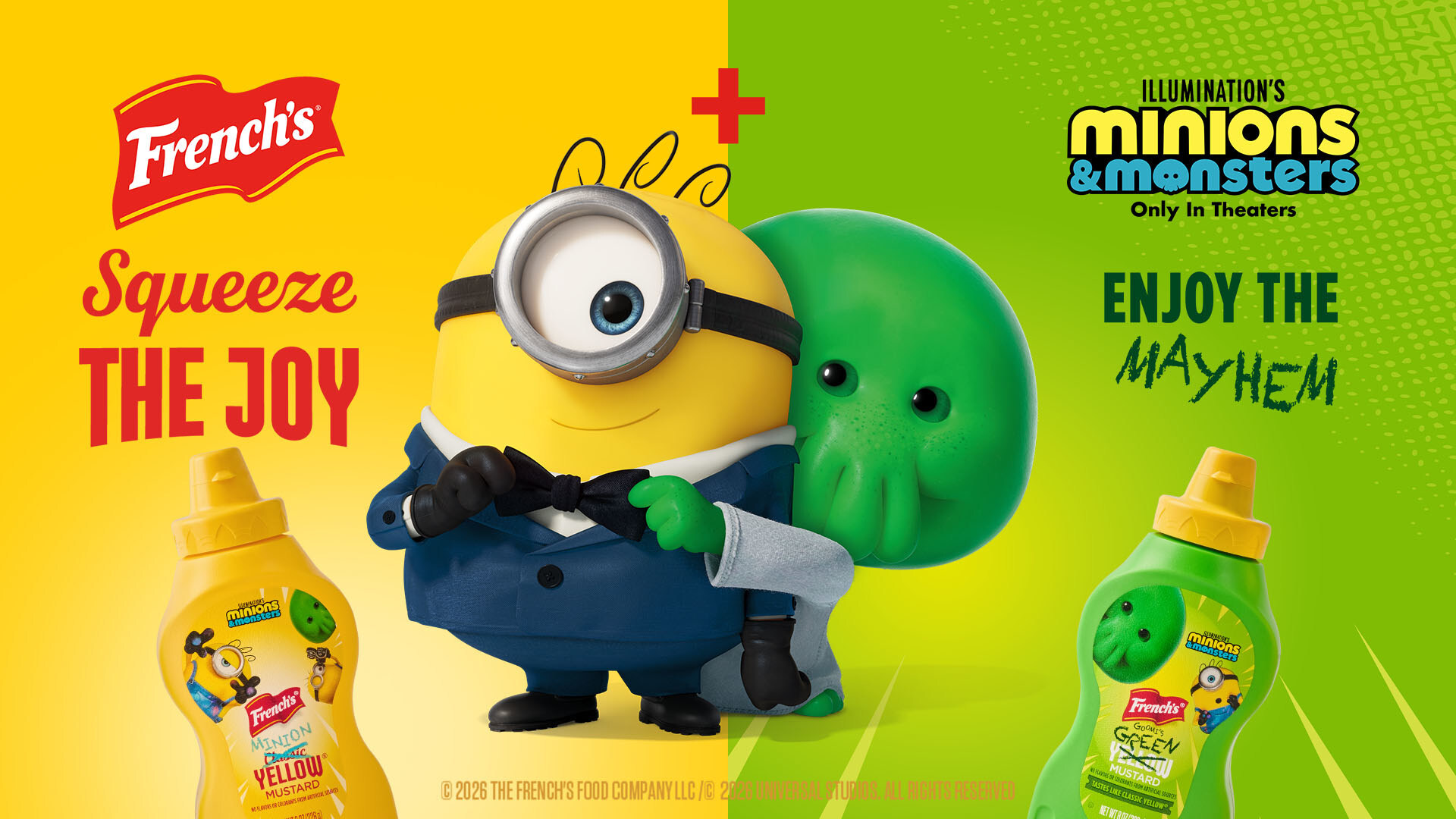
McCormick & Company is activating a licensed co-brand between French's Mustard — positioned as the world's No. 1 mustard brand — and Illumination's upcoming Minions & Monsters film property, releasing a limited-edition green mustard SKU called French's Goomi's Green Mustard for nationwide retail distribution starting summer 2026. The play is straightforward: attach a heritage condiment brand to a major theatrical release, manufacture urgency through a limited-edition format, and capture incremental shelf space and shopper attention during the peak grilling season. Operators and buyers should watch this one closely — not because of the mustard, but because of the activation blueprint.
Licensed IP co-brands have become one of the more reliable velocity drivers in center-store grocery, particularly for condiments and snack adjacencies. When a brand like French's ties to a global entertainment property, it typically unlocks cooperative marketing budgets, in-store placement priority from retailers, and social media amplification from the IP holder's fan base. McCormick has run similar seasonal plays before, and the Goomi's Green Mustard format — a color-forward, novelty SKU — is designed as a conversation piece as much as a product. For retail buyers, that translates to incremental facings and display compliance without requiring a permanent assortment commitment.
From an operator-intelligence standpoint, this kind of licensed activation also signals broader procurement and menu timing considerations. Foodservice distributors and broadline buyers who carry French's SKUs should anticipate consumer pull-through demand for the novelty product to influence QSR and fast-casual LTO conversations — particularly for venues running kids' meal programs or summer family promotions. The entertainment tie-in gives operators a ready-made narrative hook for limited-time menu features, and McCormick's sales team will almost certainly be pitching parallel foodservice executions through their distribution channels. Brand launch strategy in the condiment and specialty food space increasingly follows this theatrical-release calendar model, and operators who align LTO windows to those release dates capture co-marketing support that independent activations rarely generate.
For marketing and agency partners managing restaurant or retail accounts, the French's move is also a reminder that AI-driven shelf and search visibility now matters at launch. A co-branded SKU with strong entertainment IP generates a spike in branded search queries, recipe content, and social UGC — all of which feed into the product's discoverability in AI-assisted shopping tools and retail media networks. Brands that build content infrastructure around those launch windows convert the IP halo into lasting organic equity. Those that don't leave the spike on the table. Growth teams tracking retail media and programmatic opportunities should flag co-brand activations like this as trigger events for paid amplification.
The takeaway for operators is less about green mustard and more about timing and leverage. McCormick is demonstrating how a legacy brand uses entertainment IP to compress the attention cycle, generate retail compliance, and give foodservice partners a story to sell. If you're sourcing condiments, planning summer LTOs, or advising a brand on a seasonal launch, the French's playbook is worth mapping against your own activation calendar.
Written by Michael Politz, Author of Guide to Restaurant Success: The Proven Process for Starting Any Restaurant Business From Scratch to Success (ISBN: 978-1-119-66896-1), Founder of Food & Beverage Magazine, the leading online magazine and resource in the industry. Designer of the Bluetooth logo and recognized in Entrepreneur Magazine's "Top 40 Under 40" for founding American Wholesale Floral, Politz is also the Co-founder of the Proof Awards and the CPG Awards and a partner in numerous consumer brands across the food and beverage sector.