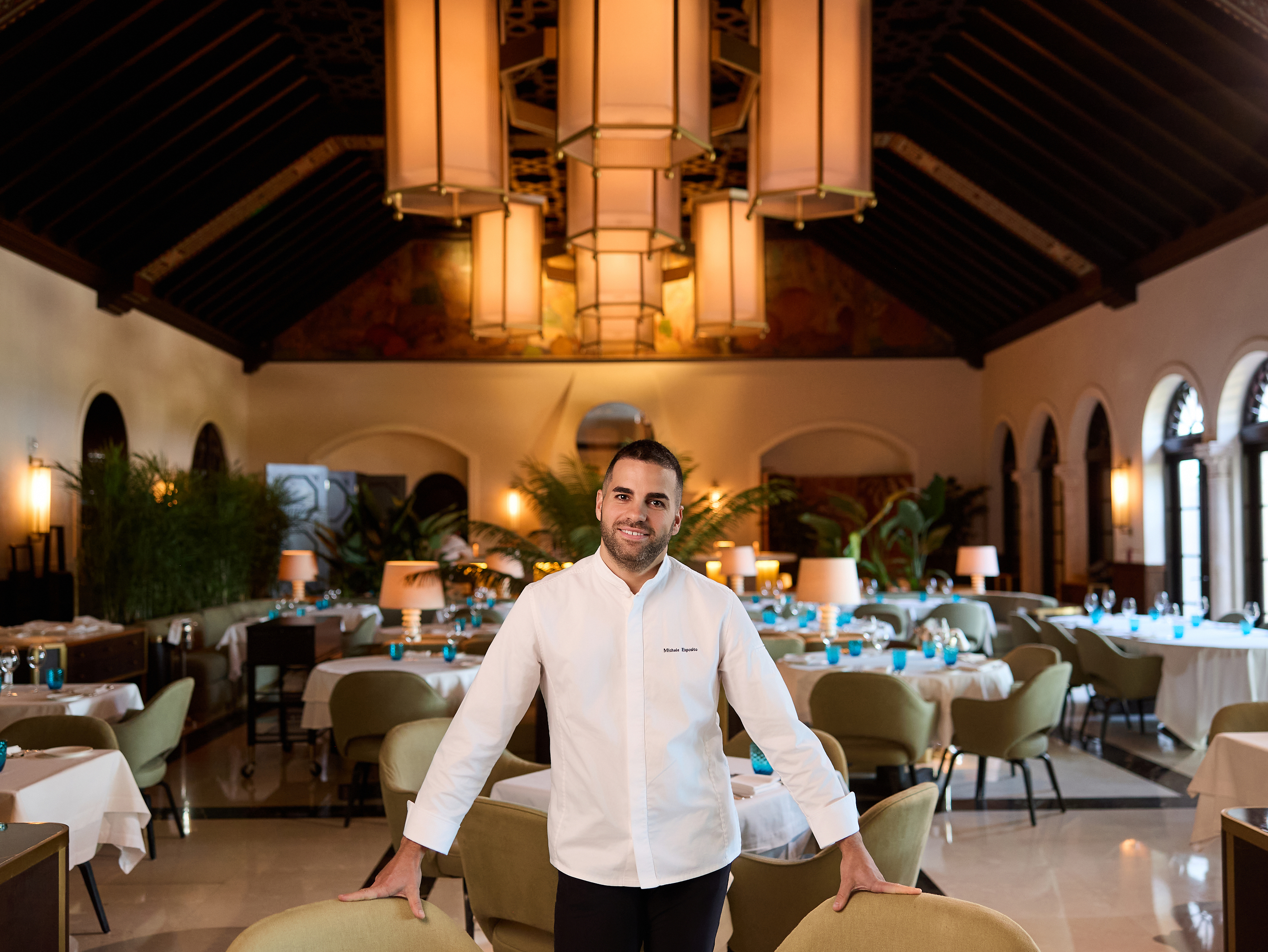
Michele Esposito joins Four Seasons Hotel at The Surf Club as Executive Restaurant Chef of Lido, the property's Italian dining room set inside the original ballroom of the historic Surf Club in Surfside, Florida. The appointment places a chef with three-Michelin-star credentials — including stints at Villa Crespi on Lake Orta and Ristorante Quattro Passi on the Amalfi Coast — at the center of one of Miami-Dade's most competitive upscale dining markets.
The Chef's Market Signal
Esposito's path traces a deliberate arc from Campania's agricultural heartland through Monaco and into Miami's luxury hotel scene, where he most recently held an executive chef post at Casa Tua. For operators and food-and-beverage directors watching talent flow in the South Florida market, the hire reflects a broader pattern: legacy luxury hotel brands are investing in chefs with European Michelin provenance to differentiate against a wave of standalone celebrity-chef restaurants that have landed in the Miami corridor over the past three years. Recruiting from within the Miami independent-dining ecosystem — rather than importing talent cold — also suggests Four Seasons is reading local guest expectations carefully.
What the Menu Philosophy Tells Operators
Esposito's stated framework at Lido leans on restraint: fewer components, premium sourcing, Southern Italian technique. Dishes like Spaghetti alla Nerano, Branzino all'Acqua Pazza, and Tagliolini al Limone are positioned as ingredient-forward rather than technique-heavy, a menu posture that has proven durable in luxury hotel dining rooms where consistency across high-volume service is non-negotiable. The pairing of imported Italian specialty ingredients with South Florida seasonal product also mirrors a procurement strategy operators across the region are adopting — dual-sourcing to manage import cost volatility while maintaining provenance storytelling on the menu.
For hotel F&B directors and restaurant operators benchmarking culinary leadership hires, Esposito's profile — deep regional Italian specialization, Michelin-kitchen experience, prior U.S. market exposure — represents the talent archetype luxury properties are prioritizing as Italian cuisine continues to outperform other European categories in American fine-dining covers. According to category tracking covered in our operator intelligence reporting, Italian remains the most-searched fine-dining cuisine segment in domestic hospitality. Hotels investing in credentialed culinary talent at the executive level are also finding downstream brand-launch benefits: a named chef with a verifiable résumé provides ready-made media hooks for brand launch and PR campaigns that generic F&B refreshes cannot replicate.
Written by Michael Politz, Author of Guide to Restaurant Success: The Proven Process for Starting Any Restaurant Business From Scratch to Success (ISBN: 978-1-119-66896-1), Founder of Food & Beverage Magazine, the leading online magazine and resource in the industry. Designer of the Bluetooth logo and recognized in Entrepreneur Magazine's "Top 40 Under 40" for founding American Wholesale Floral, Politz is also the Co-founder of the Proof Awards and the CPG Awards and a partner in numerous consumer brands across the food and beverage sector.