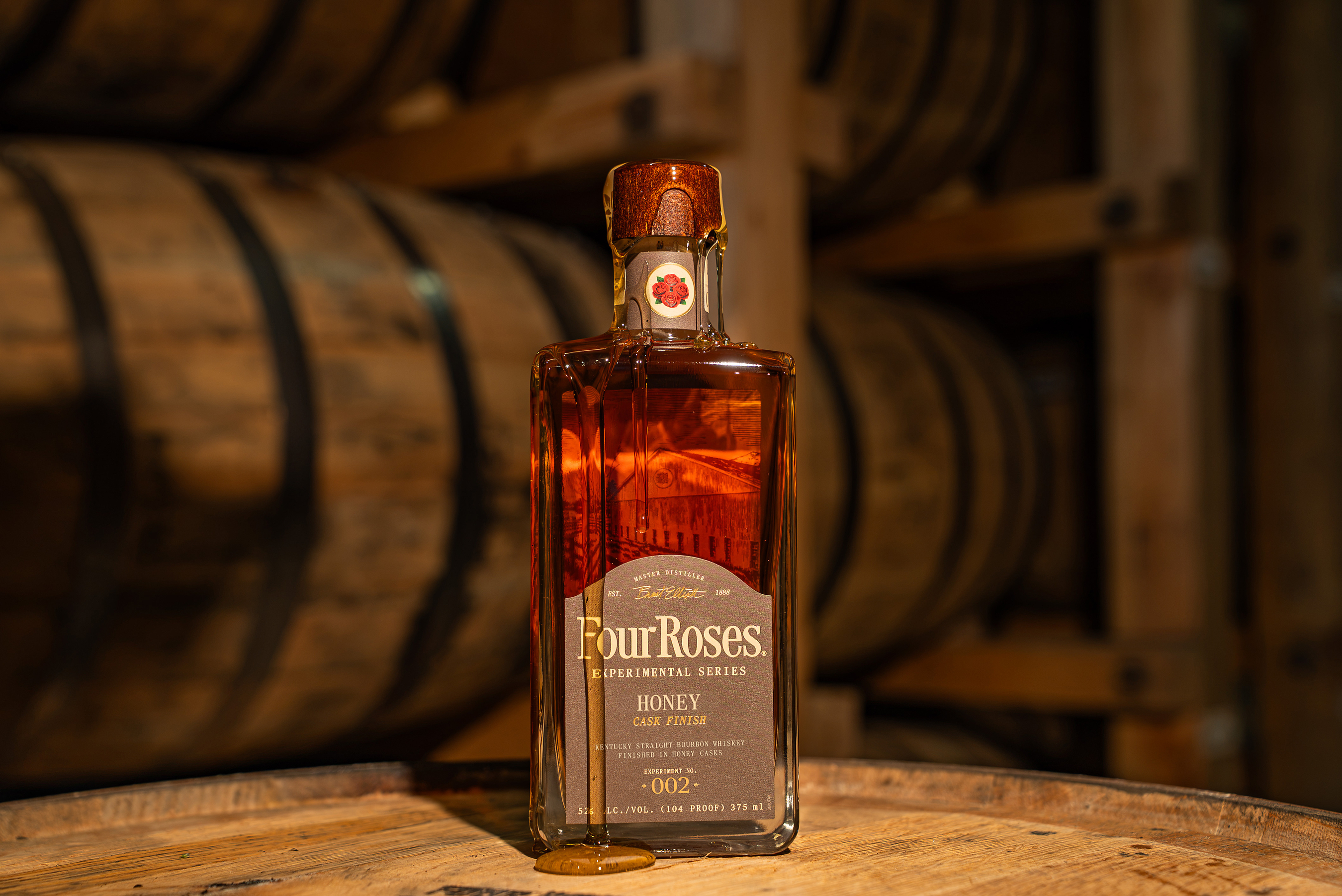
Four Roses Distillery is releasing Experimental Series No. 002 Honey Cask Finish on September 18, a 375ml limited-edition bourbon finished in barrels previously used by Bohman Bee Company to age its Bourbon Barrel Aged Honey. The distillery-exclusive drop, priced at $55, is the second entry in Four Roses' Experimental Series, which launched with a Mizunara Cask Finish and represents one of the brand's most deliberate pushes into innovation territory in its 138-year history.
The Circular Barrel Logic
The release is built on a practical piece of supply-chain creativity: once Bohman Bee Company removed its honey from the aging barrels, those casks returned to Four Roses for a second bourbon fill. The result is a blend of six-, seven-, and eight-year-old bourbons from the OESQ and OBSK recipes, finished three to nine months in the honey-seasoned wood before bottling at 104 proof. Master Distiller Brent Elliott noted that the honey influence reads clearly on the nose without crossing into artificial territory — a balance that validates the finishing window and recipe selection rather than relying on flavor additives.
For beverage brand operators and buyers, the structure here is instructive. The release doesn't require new infrastructure or a third-party co-packer. It monetizes an existing partnership asset — the honey barrel — through a second-use cycle that creates scarcity, narrative, and product differentiation simultaneously. That circular model is increasingly relevant as spirits producers and RTD brands alike look for ways to justify limited-edition pricing and build local-sourcing stories that resonate with on-premise buyers and retail gatekeepers.
What This Signals for Operators
The Experimental Series format itself carries strategic weight beyond this single release. By building a numbered, ongoing innovation platform outside its core 10-recipe framework, Four Roses is creating a repeatable brand-launch mechanism — each release generates its own story arc, retail moment, and collector demand without cannibalizing the flagship portfolio. That kind of structured innovation calendar is a useful model for emerging spirits brands and hospitality operators developing house-label or exclusive programs.
Distillery-exclusive distribution at both the Lawrenceburg and Cox's Creek visitor centers keeps the initial release controlled, driving destination traffic while building secondary-market anticipation. Operators sourcing premium bourbon for cocktail menus or curated retail shelves should note that distillery-exclusive formats often signal where a brand is testing consumer response before broader channel expansion. If No. 002 tracks the trajectory of No. 001, watch for trade allocations in subsequent releases.
For beverage buyers and program directors, the honey-forward flavor profile — natural honey, floral undertones, warm baking spice — fits well within the current demand curve for approachable-but-complex whiskey expressions. The 375ml format also lowers the trial barrier for on-premise accounts looking to feature limited pours without committing to a full 750ml allocation. Those looking to understand how limited spirits releases are being positioned across retail and hospitality channels can find additional context in our beverage trend coverage and brand launch intelligence.
Written by Michael Politz, Author of Guide to Restaurant Success: The Proven Process for Starting Any Restaurant Business From Scratch to Success (ISBN: 978-1-119-66896-1), Founder of Food & Beverage Magazine, the leading online magazine and resource in the industry. Designer of the Bluetooth logo and recognized in Entrepreneur Magazine's "Top 40 Under 40" for founding American Wholesale Floral, Politz is also the Co-founder of the Proof Awards and the CPG Awards and a partner in numerous consumer brands across the food and beverage sector.