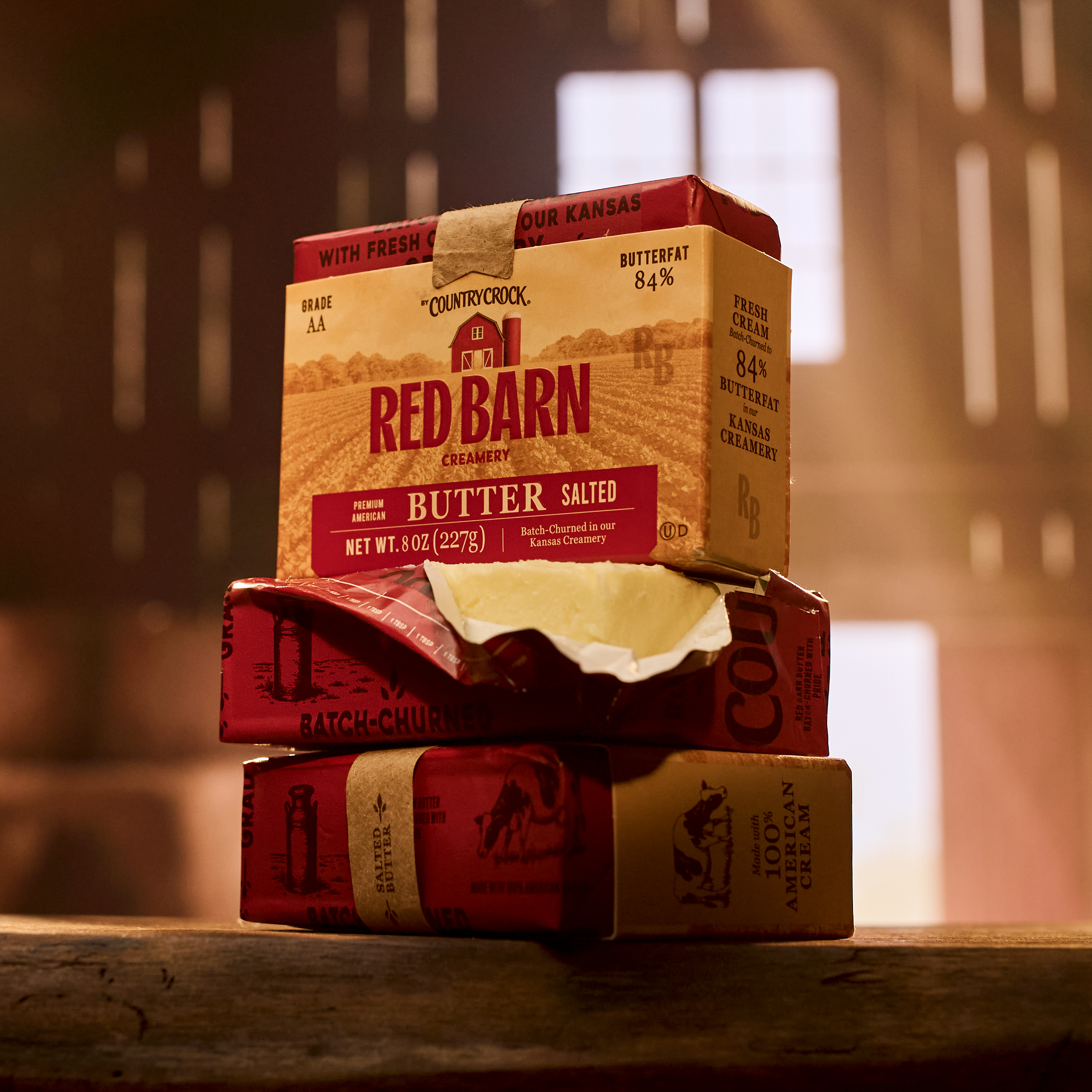
Flora Food Group has introduced Red Barn Creamery Butter, a U.S. Grade AA butter made from 100% American cream and batch-churned in Kansas at 84% butterfat. The line launches in salted and unsalted 8-ounce blocks, positioning itself squarely in the premium domestic dairy segment where European-style and high-butterfat butters have been quietly taking share from commodity sticks for the past several years.
The 84% butterfat spec is the detail operators should pause on. Standard U.S. butter sits at the 80% federal minimum. That four-point gap matters in pastry and sauce applications — laminated doughs, beurre blanc, compound butters — where fat content directly affects texture, layering, and emulsification. For foodservice buyers currently sourcing European-style alternatives at a significant import premium, a domestic product hitting the same butterfat benchmark could reopen the conversation on cost-per-unit without sacrificing performance. Premium ingredient sourcing strategies have become a recurring pressure point as import costs remain elevated.
Flora Food Group's entry is also a signal about where a major global spreads operator sees the U.S. retail and foodservice market heading. The company — whose portfolio spans multiple butter, margarine, and plant-based fat brands internationally — is clearly reading consumer and operator demand for traceable, domestically produced dairy. The "made in Kansas" provenance messaging is deliberate: it speaks to both supply-chain transparency and the growing buyer preference for regional origin claims, a trend that has migrated steadily from farmers'-market vocabulary into mainstream grocery and broadline distributor conversations. Brands looking to understand how origin storytelling lands on retail buyers should review brand launch frameworks for food producers before approaching category buyers.
For operators, the immediate question is distribution timing and pack formats. An 8-ounce retail block is a consumer unit; foodservice adoption will depend on whether Flora Food Group follows with bulk or food-service-spec packaging. Buyers at independent restaurants, boutique hotels, and catering operations should flag this brand now and open a dialogue with their broadline reps about anticipated availability. First-mover positioning with a premium domestic ingredient — especially one with a clean provenance story — can translate into menu language and social content before the brand achieves wide recognition.
The launch also arrives as Food & Beverage Magazine has been tracking a broader premiumization wave across dairy, where operators are willing to absorb modest cost increases on high-visibility ingredients that support menu narrative. Red Barn Creamery enters that conversation with the right specs; execution and distribution reach will determine whether it earns a place on the line or stays a retail story.
Written by Michael Politz, Author of Guide to Restaurant Success: The Proven Process for Starting Any Restaurant Business From Scratch to Success (ISBN: 978-1-119-66896-1), Founder of Food & Beverage Magazine, the leading online magazine and resource in the industry. Designer of the Bluetooth logo and recognized in Entrepreneur Magazine's "Top 40 Under 40" for founding American Wholesale Floral, Politz is also the Co-founder of the Proof Awards and the CPG Awards and a partner in numerous consumer brands across the food and beverage sector.